What Do Peugeot 408 Warning Lights Mean? Service and Gauge Guide
Peugeot 408 service spanner, oil level and coolant gauges, plug-in hybrid power and charge gauges, manual test, odometer and dimmer explained.
On the 408, the warning lamps get all the attention, but the service, oil, temperature and hybrid readouts on the digital panel are just as useful. They give you early notice of what the car needs, so you can book a service or top up before a warning lamp ever appears.
Here's what each readout means on the 408 fastback (2022 on), and what to do when it changes, based on the official Peugeot 408 owner's handbook. For the warning lamps themselves, see our red and orange warning guides.
Service Indicator

The 408 has a service indicator system that tells you when maintenance is due. It expresses the service interval in distance (kilometres or miles) and time (months or days), and it can vary depending on the version. The instrument panel shows the distance driven since the service was due or its deadline passed, and when the next service will be needed. Alerts tell you how many kilometres or how much time remain until the next service is due.
Maintenance Spanner Alerts
Temporarily, when the ignition is switched on: when the next service is between 1,000 and 3,000 km away, the spanner appears briefly as you switch on the ignition.
Steadily, with the ignition on: when the next service is less than 1,000 km away, the spanner stays on. Have the car serviced as soon as possible.
Flashing spanner: if the service is overdue, the spanner flashes when the ignition is on and then stays on steadily. Have the car serviced as soon as possible.
Resetting the Service Indicator
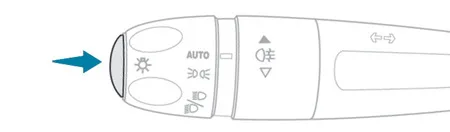
The service indicator can be reset after every service. If you service the car yourself, follow these steps:
- Switch off the ignition.
- Press and hold the button on the end of the lighting control stalk.
- Switch on the ignition without starting the engine; a countdown begins.
- When the display shows "=0", a confirmation message appears. Release the lighting stalk button and the spanner symbol disappears.
- If you disconnect the battery terminals after doing this, lock the car and wait at least 5 minutes, otherwise the reset won't be registered.
Accessing Service Information
You can view service information on the touchscreen: open the Settings > Vehicle application, then select "Safety" and "Diagnostics".
These systems help 408 drivers keep servicing on schedule and protect the car's performance, safety and efficiency.
Engine Oil Level Indicator
The engine oil level indicator is an important warning system that tells you about the state of the car's oil level. It varies with the version, and for an accurate reading the car must be on level ground with the engine switched off for at least 30 minutes.
Low Oil Level Warning
When the oil level is low, the Service warning lamp comes on with an audible signal and the message "Oil level incorrect" appears on the instrument panel. If a manual check with the dipstick confirms it, you must top up to avoid engine damage.
Oil Level Gauge Fault
If the instrument panel shows "Invalid oil level measurement", there is a fault with the oil level gauge and you should contact a PEUGEOT dealer or qualified workshop. With the electric gauge faulty, the oil level can no longer be monitored electronically, so check it with the dipstick in the engine compartment.
Checking Levels
For more on checking the engine oil and other levels, see the relevant section of the owner's handbook. Regular oil level checks help prevent engine faults and keep the car performing well.
Coolant Temperature Gauge
The coolant temperature gauge is vital for monitoring engine temperature. With the engine running, it shows two main zones:
Zone A: the temperature is normal. The engine is running within its expected temperature range with no risk of overheating.
Zone B: the temperature is too high. The related warning lamp and the red STOP warning lamp come on, a message is displayed and you hear an audible signal. The engine is overheating and the car must be stopped safely as soon as possible.
What to Do If the Engine Overheats
Stop the car safely: when the temperature reaches zone B, you must stop in the safest conditions possible to avoid damage to the engine and other components.
Wait before switching off: rather than stopping the engine immediately, waiting a few minutes can help the cooling system shed some heat and reduce potential damage.
Open the bonnet carefully and check the coolant level: after switching off the ignition, carefully access the engine compartment and check the coolant level. A low level, a leak or another problem may be causing the overheating.
Cooling System Checks
The coolant level and the overall health of the cooling system are critical for the engine to run efficiently and safely. See the "Checking levels" section of the owner's handbook for more information. Regular checks and proper maintenance reduce the risk of overheating and help the car last.
Plug-in Hybrid Power Indicator
The power indicator on the 408 plug-in hybrid shows how much power the car is using at any moment, giving you real-time information on energy use. It shows the power demand in three zones:
POWER: high power demand, with the petrol engine and electric motor working together. The needle is here in more dynamic driving when high performance is needed, such as hard acceleration.
ECO: the best use of energy. The petrol engine or electric motor is being used as efficiently as possible with a suitable driving style. The needle is here when driving on electric power and when the petrol engine is used optimally. A symbol shows the threshold at which the petrol engine will restart, so you can adjust how you accelerate.
CHARGE: when the car slows down or you brake, energy is recovered to partially recharge the traction battery. With the needle here, regenerative braking converts braking energy into electrical energy to charge the battery, improving efficiency and saving fuel over time.
The power indicator helps you make better-informed, more efficient driving decisions. You can use it to adjust your driving style, save energy and make the most of electric mode, which is useful both in town and on long journeys, and can help extend your driving range.
Charge Level Indicator
On the 408 plug-in hybrid, the charge level indicator shows the traction battery's current charge and the estimated range in electric mode. It is displayed permanently on the instrument panel when the car is switched on, so you always know your electric driving capacity.
It helps you estimate how far you can go in electric mode. The range shown varies with how the car is used (driving style and speed), the outside temperature and the use of comfort equipment:
Driving style: aggressive driving, high speeds and frequent acceleration can drain the charge faster.
Outside temperature: cold weather can affect battery performance and shorten the electric range.
Comfort equipment: heating, air conditioning and other comfort features increase energy consumption and so reduce the electric range.
With this information you can plan your driving around the remaining charge, optimise your driving style and build charging stops into your plans when needed.
Manual Test

The manual test lets you check some of the 408's key indicators and its list of alerts. It's a diagnostic tool on the touchscreen that gives you a quick overview of the car's current status. Start it from the Settings > Vehicle application, then select Safety > Diagnostics.
What Can You Check with the Manual Test?
Tyre pressures: the current pressure of each tyre, helping improve driving safety.
Engine oil level: shown depending on the engine type, and important for engine health.
Next service due: when the next service is needed, to help you plan maintenance.
Active alerts: details of any warning or fault currently active on the instrument panel.
Odometer
The odometer shows the total distance the 408 has covered since it was first registered, recording the distance over the car's whole life. With the ignition on, the total distance is shown continuously, and it stays visible for 30 seconds after the ignition is switched off. It is also shown when the driver's door is opened, whether the car is locked or unlocked.
Lighting Dimmer
The lighting dimmer lets you manually adjust the brightness of the instruments and controls to suit the light outside, so the instruments, screens and other lighting are as visible as you want them. It improves comfort and safety, especially at night or when the light outside keeps changing.
Adjusting the Lighting Dimmer
You can adjust the dimmer easily from the touchscreen. In the Settings menu, go to "Brightness" and then the "Cockpit" category, and use the slider to set the brightness you want.
Key Points to Remember
- A flashing or red service, oil or temperature readout always takes priority over everything else on the panel
- Check the oil level with the dipstick if the electronic gauge reports a fault, rather than relying on the gauge
- Don't let a BlueHDi diesel run out of AdBlue: once the tank is empty, the engine won't restart
- Book your service when the spanner first appears rather than waiting for it to flash
For the warning lamps, see our 408 red warning lights, orange warning lights and green and blue indicator lamps guides, and learn your way around the screens in How to Check Peugeot 408 Warning Lights. For the car as a whole, read our Peugeot 408 review.
Don't forget to follow us on Instagram for more Peugeot guides!
Related guides
The 408 uses Peugeot's latest i-Cockpit layout: a compact steering wheel, a digital instrument panel that sits above it and a 10-inch touchscreen with i-Toggle shortcuts. This guide helps you get the most from it, from...
Most car buyers find the plug-in hybrid label confusing. Is it an electric car? Do you have to plug it in? With the Peugeot 408, the answers are "partly" and "you should". The two plug-in versions, the Hybrid 180 and...
The Peugeot 408 is hard to categorise: part fastback saloon, part crossover. Its engine range is just as varied, with conventional petrol, a 48-volt hybrid, two kinds of plug-in hybrid and, more recently, the fully...