Peugeot 408 Review 2026: The Essential Guide
Our Peugeot 408 review looks at the fastback-crossover design, cabin space, 536-litre boot, PureTech performance, safety rating and standout equipment.
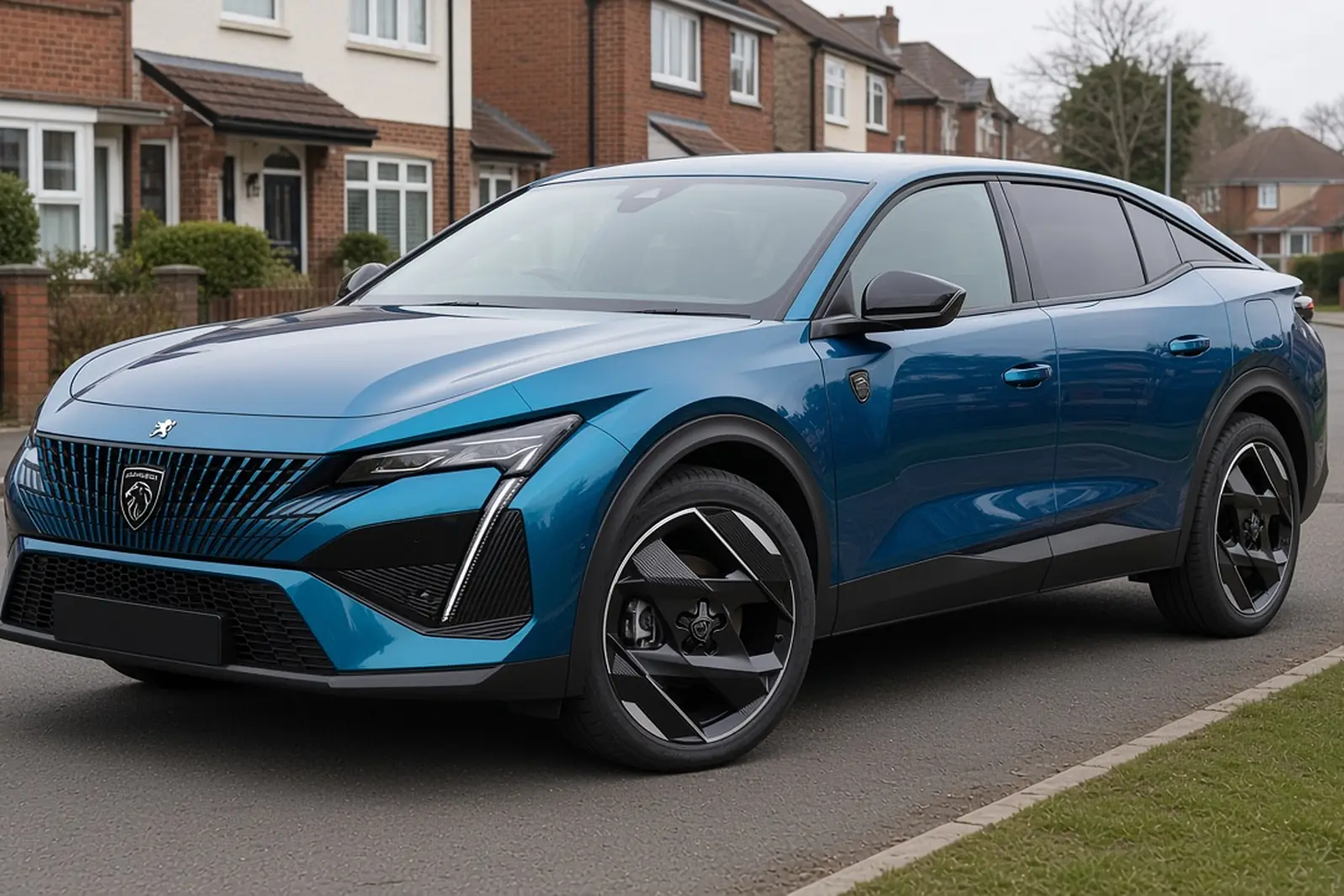
Please note: the specifications and equipment in this guide reflect the 2023-2024 Peugeot 408. Engine options and trims have changed since, so use this as background rather than a current price-list reference.
Is it a saloon, a hatchback or an SUV? Peugeot calls the 408 a "fastback", and the honest answer is that it borrows a little from each: the raised stance of a crossover, the sloping roofline of a coupe and the practicality of a large family hatch. It's also the car that set the internet comparing it to a Lamborghini Urus. Here's what you need to know before you buy one.
Why People Notice the 408
The Urus comparisons aren't as far-fetched as they sound. Head-on the resemblance is faint, but from the rear three-quarter and in profile the steeply raked rear window, chunky haunches and wedge-shaped silhouette really do echo the Lamborghini, at a small fraction of the price.
The details are pure modern Peugeot: a wide grille, slim LED headlights, "lion's fang" daytime running lights cutting down through the bumper, and dynamic tail lights with twin exhaust finishers at the back. The shape is also aerodynamically efficient, which helps fuel economy on the motorway.
Dimensions
The 408 is a big car: 4.69 m (15 ft 5 in) long, 1.85 m (6 ft 1 in) wide and just 1.48 m (4 ft 10 in) tall, which is low for something with crossover styling.
Cabin, Comfort and Technology
Inside you get the latest version of Peugeot's i-Cockpit: a compact steering wheel, a 10-inch digital instrument display mounted high on the dash (3D on upper trims), and a 10-inch central touchscreen with wireless Apple CarPlay and Android Auto. Underneath sit the i-Toggles, customisable touch shortcuts for the functions you use most. Material quality is high and the dashboard is cleanly laid out.
If you haven't driven a recent Peugeot, the small, sporty steering wheel takes a short while to get used to. Some drivers find it too small, but I've lived with this design for years and think it's one of the best things about these cars.
How much room is there?
Up front there's 1.44 m of elbow width and 89 cm of headroom. In the back the elbow width stays at 1.44 m, but headroom drops to 85 cm because of the sloping roofline. That 4 cm loss is the price you pay for the styling: passengers over about 185 cm (6 ft 1 in) may find it a bit claustrophobic in the back, although legroom is generous and most adults will be comfortable.
Boot Space: a Genuine Strength
This is where the 408 surprises. The boot holds 536 litres with the rear seats up and 1,611 litres with them folded, which is very competitive for the class and more than many SUVs offer.
The rear seatback splits one-third/two-thirds, and there's a through-load opening so you can reach into the boot from the back seat, which I found handy on long trips. A powered tailgate was available on higher trims.
Performance and Engines
Peugeot offered the 408 with petrol and plug-in hybrid powertrains. The volume seller in many markets, and the version I'm describing here, was the 130 hp 1.2 PureTech three-cylinder turbo petrol with the eight-speed EAT8 automatic, sold in Allure and GT trims in 2023.
According to Peugeot, the 1.2 PureTech 130 EAT8 accelerates from 0-100 km/h (0-62 mph) in 10.4 seconds, slower than the 208's roughly 9 seconds because the 408 is a much larger car. More relevant for overtaking, it goes from 80-120 km/h (50-75 mph) in 7.6 seconds.
If you want more pace, look at the hybrid versions covered in our Peugeot 408 hybrid engine review.
Fuel economy
Peugeot's WLTP figure for the 1.2 PureTech 130 is 6.0-6.1 l/100 km combined. In heavy city traffic, or if you use Sport mode a lot, expect something in the region of 7.0-8.5 l/100 km. With the air conditioning running in summer, around 8 l/100 km is a realistic town figure.
Driving Experience
The 408 rides on MacPherson struts at the front and a multi-link rear suspension. The set-up leans towards comfort, soaking up urban bumps well, but the steering is responsive and the car holds the road confidently. If you've owned a Peugeot before, it drives exactly as you'd expect; if not, you'll find it a genuinely enjoyable car to drive. A drive mode selector lets you choose between more relaxed and sportier settings, and paddle shifters are fitted behind the steering wheel.
Safety
Euro NCAP tested the 408 in 2022 and awarded it four out of five stars. The full report is on the Euro NCAP website.
The basics are covered with ABS, electronic brake-force distribution, traction control, airbags, ISOFIX mounts on the outer rear seats and seatbelt reminders. The driver-assistance list included:
- Adaptive cruise control
- Active lane keeping and lane positioning assist
- Blind-spot monitoring with detection up to 75 m
- Rear cross-traffic alert when reversing out of a space
- Extended traffic sign recognition
- The VisioPark pack: front, rear and side sensors, a 360-degree view from four cameras and door mirrors that dip automatically in reverse
Standout Equipment (2023-2024 GT Specification)
The top GT trim was generously equipped. The features that stood out most:
Seats: Alcantara and leather-effect upholstery with Adamite green stitching; an AGR-approved driver's seat with 10-way electric adjustment, memory, heating, an adjustable thigh support and massage; and an AGR-approved passenger seat with 6-way electric adjustment, lumbar support, heating and massage.
Comfort: fully automatic climate control with rear air vents, keyless entry and start, a heated leather GT steering wheel, an opening glass sunroof, ambient lighting, the Clean Cabin air filtration system, an auto-dimming rear-view mirror, an illuminated and ventilated glovebox and a twin-lid centre armrest.
Lighting and styling: Matrix Beam full LED headlights, 3D LED rear lights, a body-coloured GT grille, gloss-black mirrors and tailgate trim, tinted rear windows and 19-inch Graphite alloy wheels.
Sport driving pack: sharper gearshifts, higher shift points, sportier steering feel and more responsive throttle mapping when Sport mode is selected.
The Verdict
The Peugeot 408 is a car you buy with your heart as much as your head, but it doesn't punish you for it. You get head-turning styling, a beautifully finished cabin, a huge boot and a comfortable, composed drive. The compromises are modest: rear headroom suffers for the roofline, and the 130 hp petrol is about adequate rather than quick in a car this size. If you want something more distinctive than the usual family SUV, it's well worth a test drive.
Want to understand the 408's dashboard? Start with our guide to what the Peugeot 408 warning lights mean.
Related guides
The 408 uses Peugeot's latest i-Cockpit layout: a compact steering wheel, a digital instrument panel that sits above it and a 10-inch touchscreen with i-Toggle shortcuts. This guide helps you get the most from it, from...
On the 408, the warning lamps get all the attention, but the service, oil, temperature and hybrid readouts on the digital panel are just as useful. They give you early notice of what the car needs, so you can book a...
Most car buyers find the plug-in hybrid label confusing. Is it an electric car? Do you have to plug it in? With the Peugeot 408, the answers are "partly" and "you should". The two plug-in versions, the Hybrid 180 and...