Peugeot 408 Hybrid Engine and Performance Review
Peugeot 408 Hybrid 180 and 225 compared: power, 0-62 mph, electric-only speed, battery, charging times and drive modes, plus the Hybrid 136 explained.
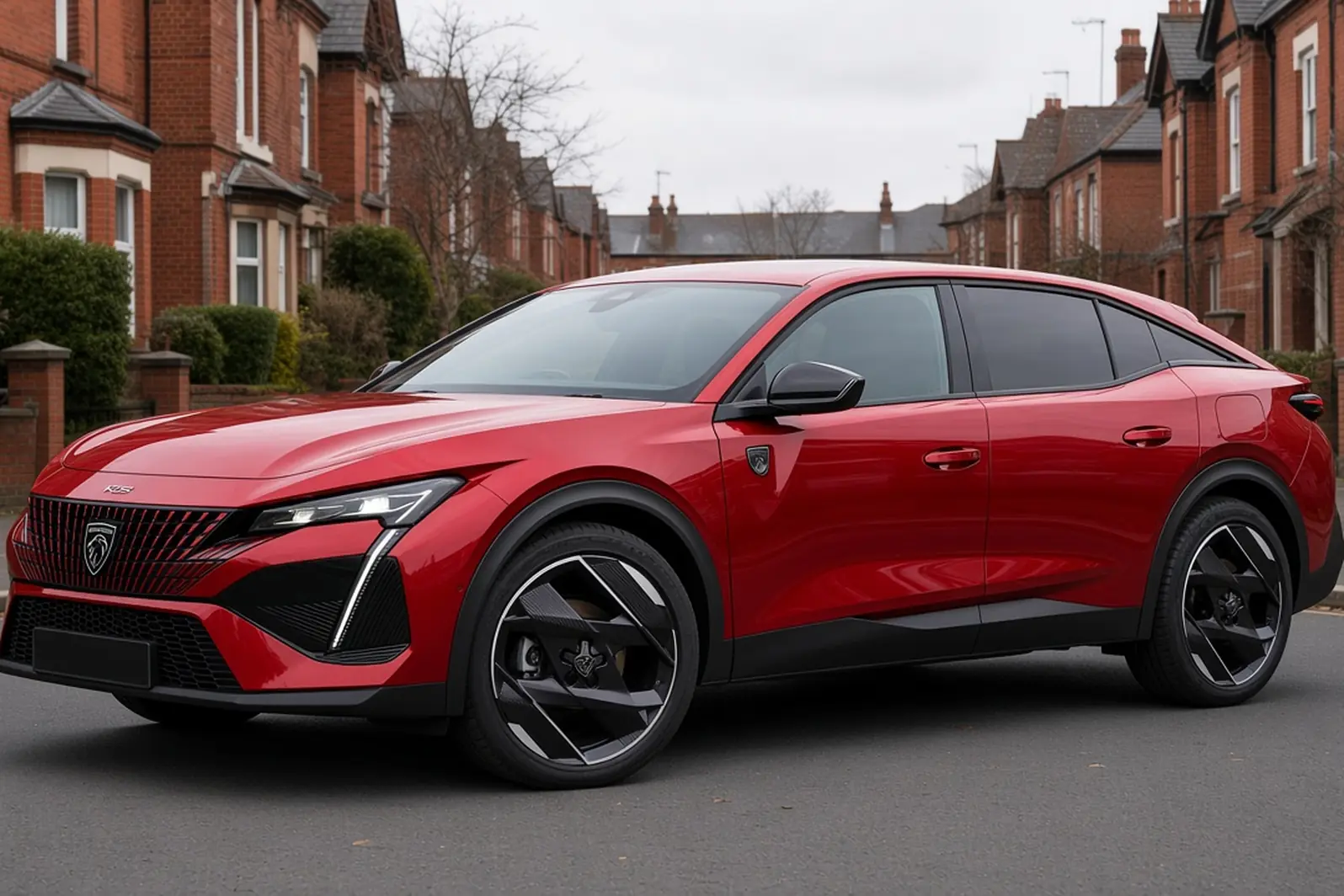
Most car buyers find the plug-in hybrid label confusing. Is it an electric car? Do you have to plug it in? With the Peugeot 408, the answers are "partly" and "you should". The two plug-in versions, the Hybrid 180 and Hybrid 225, can cover a typical commute on electricity and use the petrol engine for longer trips. Here's what you get and how to get the best from it.
Hybrid 180 vs Hybrid 225
Both use a 1.6-litre PureTech turbo petrol engine, an 81 kW electric motor and an 8-speed e-EAT8 automatic gearbox. The difference is how much power the petrol engine makes.
Scroll the table sideways.
| Hybrid 180 e-EAT8 | Hybrid 225 e-EAT8 | |
|---|---|---|
| Petrol engine (handbook) | PureTech 150, 1,598 cc, 110 kW | PureTech 180, 1,598 cc, 132 kW |
| Electric motor (handbook) | 81 kW | 81 kW |
| Combined power (handbook) | 133 kW (180 hp) | 165 kW (225 hp) |
| Combined torque | 360 Nm | 360 Nm |
| Battery (handbook) | Lithium-ion, 12.4 kWh | Lithium-ion, 12.4 kWh |
| 0-62 mph (0-100 km/h) | 8.1 s | 7.8 s |
| Top speed | 225 km/h (approx. 140 mph) | 233 km/h (approx. 145 mph) |
| Top speed in Electric mode | 135 km/h (approx. 84 mph) | 135 km/h (approx. 84 mph) |
| WLTP combined fuel use | 1.0-1.3 l/100 km | 1.0-1.3 l/100 km |
| Braked trailer (handbook) | 1,400 kg | 1,400 kg |
Handbook data comes from the English Peugeot 408 owner's handbook. The handbook also lists a later Plug-in Hybrid 225 e-DCS7, with a 7-speed dual-clutch gearbox, a 92 kW motor, a larger 17.2 kWh battery and a 1,290 kg braked towing limit.
Which one? The 0.3-second gap in acceleration is small. The Hybrid 180 makes more sense for most buyers, while the 225 suits drivers who want the extra punch for overtaking or who regularly drive with a fully loaded car.
A Note on WLTP Fuel Figures
Official plug-in hybrid fuel figures of around 1 l/100 km assume that you start the test with a full battery. You'll only get close to that if you charge regularly and most of your trips are short. On a long motorway journey with a flat battery, a 408 plug-in behaves like a 1.6 petrol car carrying a heavy battery, so expect much higher consumption.
Charging
Peugeot's 2024 launch figures for the 12.4 kWh battery:
Scroll the table sideways.
| Charging setup | Approx. time to full |
|---|---|
| 3-pin domestic socket (2.3 kW) | 5 h 30 min |
| 7.4 kW wallbox with the standard 3.7 kW on-board charger | 3 h 25 min |
| 7.4 kW wallbox with the optional 7.4 kW on-board charger | 1 h 40 min |
The standard car came with a 6-metre Mode 3 Type 2 cable. You can schedule charging to start later, for example to make use of a cheaper overnight electricity tariff. The battery was covered by an 8-year/100,000-mile warranty at launch.
If you're buying used, check whether the car has the optional 7.4 kW on-board charger. It halves wallbox charging times.

Drive Modes and Regeneration
The plug-in 408 has three main modes:
- Electric: runs on battery power alone, up to 135 km/h (84 mph), while there's enough charge
- Hybrid: the car chooses between petrol and electric power, or uses both, for the best efficiency
- Sport: both power sources together for maximum performance
Selecting B on the gear selector increases regenerative braking. The car slows more noticeably when you lift off the accelerator and puts more energy back into the battery, which is handy in town and on long descents. The paddles behind the steering wheel let you take manual control of the gearbox.
The Hybrid 136: Not a Plug-in
The 408 range also includes the Hybrid 136 e-DCS6, a mild hybrid. A 100 kW PureTech 136 petrol engine works with a 21 kW electric motor and a small 48 V, 0.9 kWh battery. It charges itself as you drive and can't be plugged in. It doesn't offer much electric-only range, but it cuts fuel use in stop-start traffic and can tow 1,300 kg. It's a good alternative for drivers with nowhere to charge.
Is a 408 Plug-in Right for You?
A plug-in 408 is worth it if:
- You can charge at home or at work
- Most of your daily driving is within the car's electric range
- You're a UK company-car driver, where low official CO2 can mean lower benefit-in-kind tax
It's less suitable if you mostly drive long distances or can't charge regularly. In that case, the PureTech 130 or Hybrid 136 will usually be cheaper to buy and run. Compare all the options in our Peugeot 408 engine and performance review, or read the full Peugeot 408 review.
Related guides
The Peugeot 408 is hard to categorise: part fastback saloon, part crossover. Its engine range is just as varied, with conventional petrol, a 48-volt hybrid, two kinds of plug-in hybrid and, more recently, the fully...
The 408 uses Peugeot's latest i-Cockpit layout: a compact steering wheel, a digital instrument panel that sits above it and a 10-inch touchscreen with i-Toggle shortcuts. This guide helps you get the most from it, from...
On the 408, the warning lamps get all the attention, but the service, oil, temperature and hybrid readouts on the digital panel are just as useful. They give you early notice of what the car needs, so you can book a...