Peugeot 508 II 12V Battery and Jump Starting
Hello and welcome. This article covers the 12 V battery on the Peugeot 508 II (2018-2023): reaching it, jump starting, charging with a charger, and disconnecting and reconnecting it. We also look at t
Peugeot 508 AdBlue tank holds about 17 litres, good for around 6,500 km. How much to add, how to refill from a pump or can and what to do if it freezes.
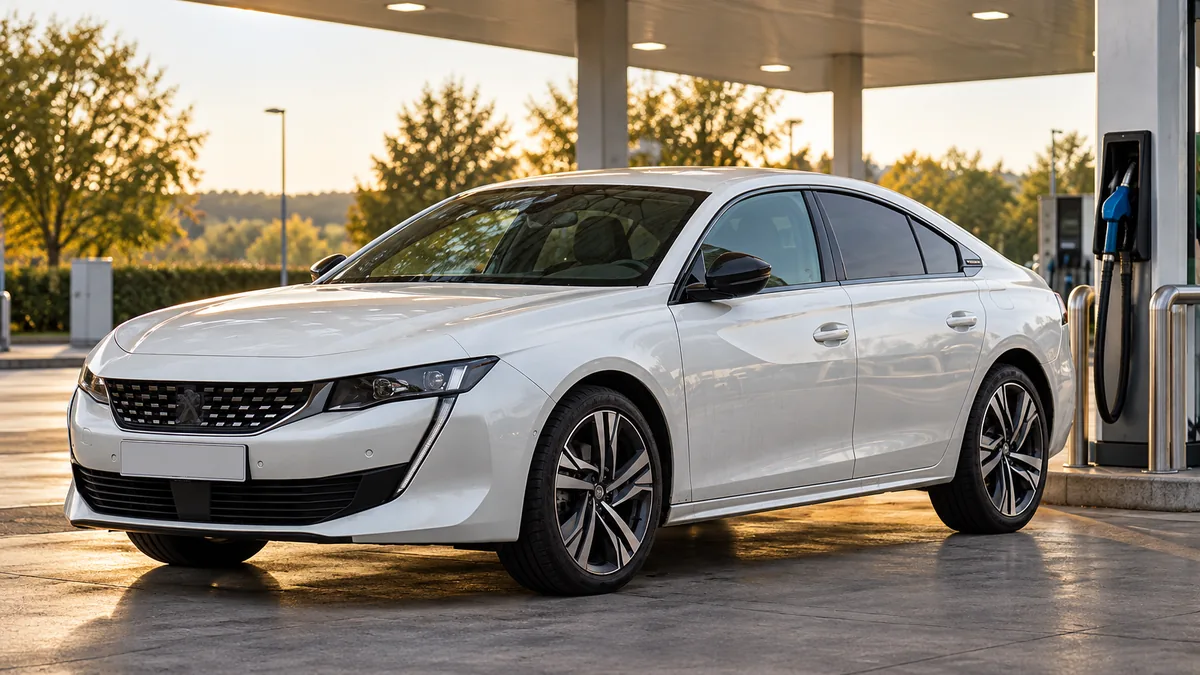
The AdBlue tank on the Peugeot 508 II, built from 2018 to 2023, holds about 17 litres. That covers roughly 6,500 km before you need to refill it. The BlueHDi diesel versions use AdBlue to clean their exhaust, and if the tank runs dry the engine will not restart, so it pays to know how much to add and how to do it properly.
The Peugeot 508 has an AdBlue tank of about 17 litres. A full tank lasts approximately 6,500 km, or roughly 3,900 miles, though that figure can vary considerably with how you drive.
AdBlue is a urea-based liquid used by the SCR, or Selective Catalytic Reduction, system on BlueHDi diesel engines. The SCR system works alongside the Diesel Particle Filter. A catalytic converter uses the AdBlue to turn up to 85% of the nitrogen oxides in the exhaust into nitrogen and water, which are harmless to health and the environment. This is how the diesel 508 meets the Euro 6 standard without giving up performance or fuel economy.
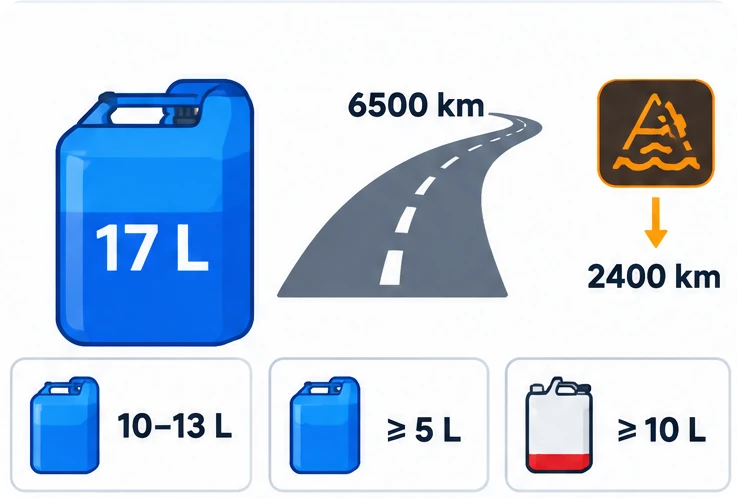
When the level reaches the reserve, the car warns you. From that first alert you can still drive about 2,400 km before the tank is empty. Refill as soon as that first alert appears rather than waiting.
Once the tank is completely empty, a device required by law prevents the engine from being restarted. The car will say so with the message "Top up AdBlue: Starting impossible".
A faulty SCR system means the car's emissions no longer meet Euro 6. If a malfunction is confirmed, take the car to a PEUGEOT dealer or a qualified workshop. You have 1,100 km, about 685 miles. After that, a device automatically stops the engine from starting.
When the tank is low and when there is an SCR fault, a range indicator shows how far you can still drive before the car is stopped.
You can refill the tank yourself from a container or at a service station pump designed for passenger cars. Park on flat, level ground before you start.
Never pour AdBlue into the diesel fuel tank.
Scroll the table sideways.
| Situation | Amount |
|---|---|
| Refilling from containers | 10 to 13 litres, to avoid overfilling |
| Refilling at a pump | Stop at the first automatic cut-out |
| Smallest top-up the system will register | 5 litres |
| Tank completely empty, starting impossible | At least 10 litres |
If you are refilling because the tank ran dry, the order matters. After adding the AdBlue, wait about 5 minutes before switching on the ignition. During that time, do not open the driver's door, do not unlock the car and do not bring the electronic key into the passenger compartment. Then switch on the ignition and wait 10 seconds before starting the engine.
The car may not recognise the top-up straight away. It can take a few minutes of driving before the new level is detected.
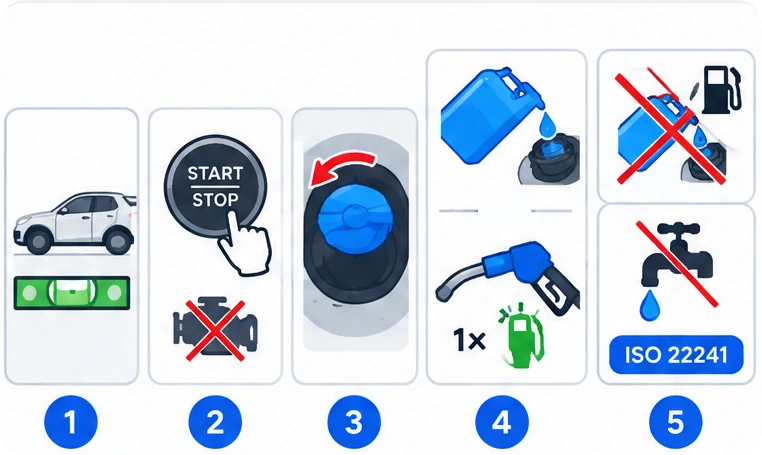
Use only AdBlue that meets the ISO 22241 standard. You can buy it from a PEUGEOT dealer or a qualified workshop, or at service stations with AdBlue pumps specially designed for passenger vehicles.
The SCR system depends on clean fluid, so:
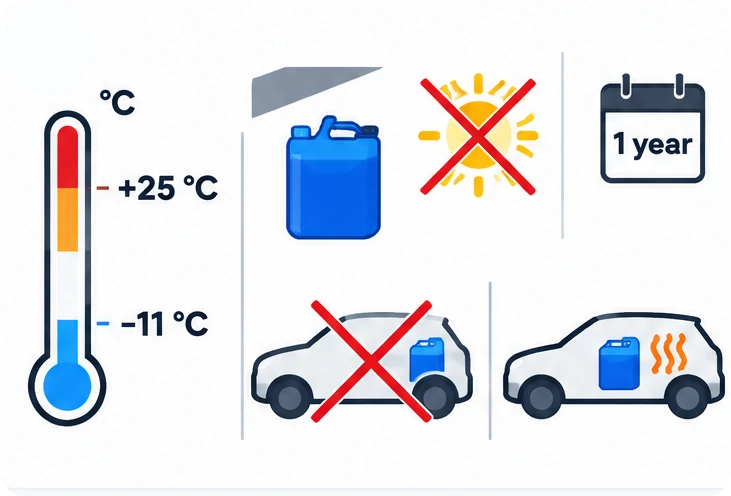
AdBlue freezes at around -11°C. The SCR system has a heater for the AdBlue tank, so you can continue driving in very cold conditions.
Refilling in winter is a different matter. If the car's temperature is below -11°C, the AdBlue may be frozen and you will not be able to pour it into the tank. Park the car somewhere warmer for a few hours, then refill.
AdBlue is non-flammable, and it is colourless and odourless when kept cool. It still needs some care.
In some conditions, such as high temperatures, AdBlue can release ammonia. Do not inhale it, as ammonia vapour irritates the eyes, nose and throat.
The tank holds about 17 litres. When refilling from containers, add between 10 and 13 litres so you do not overfill it. At a pump, stop at the nozzle's first automatic cut-out.
Around 6,500 km, roughly 3,900 miles, though driving style can change that considerably. Once the reserve alert appears, you have about 2,400 km left before the tank is empty.
A device required by law stops the engine from restarting, and the message Top up AdBlue: Starting impossible appears. Add at least 10 litres, wait about 5 minutes without opening the driver's door, unlocking the car or bringing the key inside, then switch on the ignition and wait 10 seconds before starting.
Detection is not always instant, and it can take a few minutes of driving before the new level shows. The system also ignores top-ups under 5 litres, so a small splash from a container may not be counted.
Keep a container of ISO 22241 AdBlue at home, somewhere cool rather than in the boot, and the reserve alert becomes a quick job on the driveway instead of a detour to find a pump.
Don't forget to follow us on Instagram for more Peugeot guides!
This is an independent guide, not an official Peugeot publication. If in doubt, contact a PEUGEOT dealer or a qualified workshop before carrying out any work.
Related guides: Peugeot 508 model guides; Peugeot 508 II fuel and refuelling; Peugeot 508 II 12 V battery; Peugeot 508 II driving and stop-start.
Cover adapted from a photograph by Vauxford — Wikimedia Commons, CC BY-SA 4.0 (AI edited).
Hello and welcome. This article covers the 12 V battery on the Peugeot 508 II (2018-2023): reaching it, jump starting, charging with a charger, and disconnecting and reconnecting it. We also look at t
Hello and welcome. This article looks at the under-inflation detection system on the Peugeot 508 II (2018-2023). We cover what the alert means, reinitialising the system after adjusting pressures, and
Hello and welcome. In this post we look at the 12 V battery on the Peugeot 508 I (2014-present). We cover jump starting from another battery, charging with a charger, disconnecting and reconnecting, a