Peugeot 508 II 12V Battery and Jump Starting
Hello and welcome. This article covers the 12 V battery on the Peugeot 508 II (2018-2023): reaching it, jump starting, charging with a charger, and disconnecting and reconnecting it. We also look at t
Fuel tank capacities, low fuel warning, safe refuelling, Diesel misfuel prevention and priming the fuel system after running out on the Peugeot 508 II.
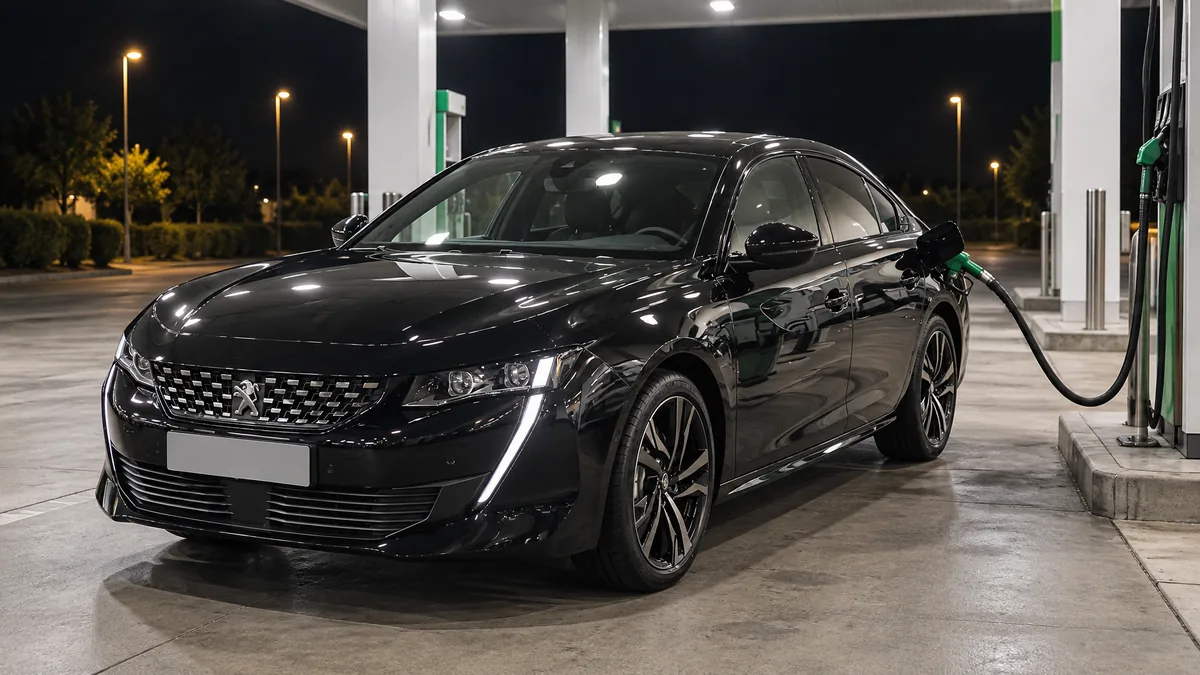
Hello and welcome. In this post, we'll look at the fuel tank capacity, the correct fuel type and how to refuel on the Peugeot 508 II (2018-2023). It covers the tank capacities and the low fuel warning, how to refuel safely, the Diesel misfuel prevention device, and what to do if you run out of Diesel. It covers the Peugeot 508 II (2018-2023), including vehicles produced from 01/04/2021. Some items depend on the version or equipment fitted, such as the type of filler cap or the misfuel prevention device, so not everything here will apply to every 508. Some items depend on the version or equipment fitted, such as the type of filler cap or the misfuel prevention device, so not everything here will apply to every 508.
Use the fuel type on the filler flap and in the registration document. Tank capacity depends on the version and is shown on the flap or in the technical data.
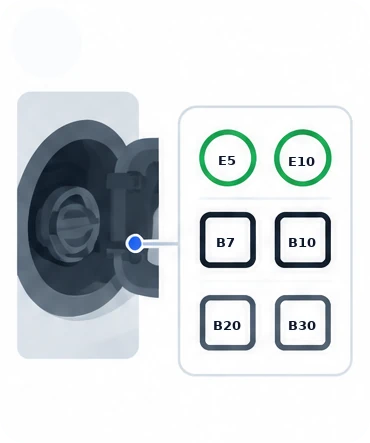
Scroll the table sideways.
| Section | In short |
|---|---|
| Low fuel level | Tank capacities, reserve level and the low fuel warning |
| Refuelling | Step-by-step safe refuelling and correct fuel type |
| Misfuel prevention (Diesel) | Device that stops petrol going into a Diesel tank |
| Running out of fuel (Diesel) | How to prime the Diesel fuel system after running out |
Your 508's fuel tank capacity depends on the engine type:
When the fuel reaches the low level, the low fuel warning lamp lights up on the instrument panel with a message and an audible signal. When it first comes on, about 6 litres of fuel remain.
Until you add enough fuel, the lamp, message and audible signal appear every time you switch on the ignition. While you drive, the message and audible signal repeat more and more often as the fuel level drops towards 0. Refuel as soon as possible so you do not run out. If you do run out on a Diesel, see the Running out of fuel (Diesel) section below.
A small arrow next to the warning lamp shows which side of the car the fuel filler flap is on.
Stop & Start: never refuel while the engine is in STOP mode. You must switch off the ignition first.
Add at least 10 litres each time you refuel, otherwise the fuel gauge will not register the extra fuel. When you open the filler flap, you may hear air rushing in. This is entirely normal and comes from the sealed fuel system. Depending on the version, the filler cap is either built into the filler flap or has to be unscrewed.
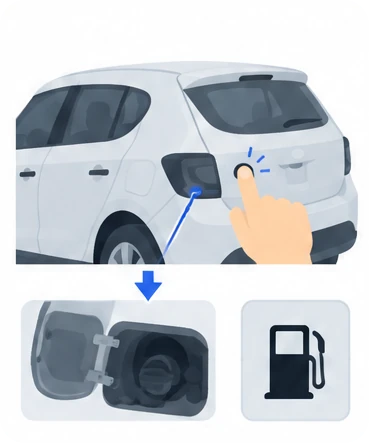
To refuel in complete safety:
Rechargeable hybrid vehicles: after you press the button on the dashboard, the filler flap may take several minutes to open, and you will hear a sound when it does. If the flap gets stuck, press and hold the dashboard button for more than 3 seconds. If you close the flap by accident before refuelling, you cannot open it by hand. Restart the engine, move the car a few metres, then press the filler flap opening button again.
Your car has a catalytic converter, which helps reduce harmful exhaust emissions. Petrol engines must use unleaded fuel, and the narrower filler neck only accepts unleaded petrol nozzles.
If you put the wrong fuel in, you must have the tank drained and filled with the correct fuel before you start the engine.
Depending on the country of sale, Diesel 508s have a mechanical misfuel prevention device that stops you filling the tank with petrol. It sits in the filler neck, and you can see it when you remove the filler cap.
If you put a petrol nozzle into the filler neck, it touches the device's flap, which stays closed and blocks filling. Do not force it: use a Diesel nozzle instead.
The device does not stop you filling from a jerrycan, whatever the fuel type. Diesel pump nozzles can be different in other countries, so the device may make refuelling impossible abroad. Before you travel, check with a PEUGEOT dealer that your car suits the pumps in the countries you will visit.
If you run out of fuel with a Diesel engine, you must prime the fuel system. Before you start, it is essential to put at least 5 litres of Diesel into the tank. On non-BlueHDi versions, the fuel system components are in the engine compartment, possibly under a removable cover.
1.5 BlueHDi engines:
If the engine does not start at the first attempt, do not keep trying. Start the procedure again.
2.0 BlueHDi engines:
If the engine does not start at the first attempt, do not keep trying. Start the procedure again.
Non-BlueHDi engines:
It is approximately 62 litres for Petrol, 55 litres for Diesel and 43 litres for the Rechargeable hybrid. The reserve level is approximately 6 litres.
When the low fuel warning lamp first comes on, about 6 litres of fuel remain. Refuel as soon as possible.
After you press the dashboard button, the flap may take several minutes to open. If it is stuck, press and hold the button for more than 3 seconds.
Put at least 5 litres of Diesel in the tank, then prime the fuel system using the procedure for your engine. For BlueHDi engines this means switching the ignition on and off before starting.
Refuelling your Peugeot 508 is simple once you know where the filler flap is and which fuel to use. Keep an eye on the low fuel warning, switch off the ignition before you refuel, and keep this guide handy in case you ever run out of Diesel.
To find out what the low fuel lamp and other warnings mean, see our guides to Peugeot 508 red warning lights, Peugeot 508 orange warning lights and Peugeot 508 green and blue indicator lamps.
Don't forget to follow us on Instagram for more Peugeot guides!
This is an independent guide, not an official Peugeot publication. If in doubt, contact a PEUGEOT dealer or a qualified workshop before carrying out any work.
Related guides: Peugeot 508 model guides.
Cover adapted from a photograph by Vauxford — Wikimedia Commons, CC BY-SA 4.0 (AI edited).
Hello and welcome. This article covers the 12 V battery on the Peugeot 508 II (2018-2023): reaching it, jump starting, charging with a charger, and disconnecting and reconnecting it. We also look at t
Hello and welcome. This article looks at the under-inflation detection system on the Peugeot 508 II (2018-2023). We cover what the alert means, reinitialising the system after adjusting pressures, and
Hello and welcome. In this post we look at the 12 V battery on the Peugeot 508 I (2014-present). We cover jump starting from another battery, charging with a charger, disconnecting and reconnecting, a