Peugeot 508 II 12V Battery and Jump Starting
Hello and welcome. This article covers the 12 V battery on the Peugeot 508 II (2018-2023): reaching it, jump starting, charging with a charger, and disconnecting and reconnecting it. We also look at t
Peugeot 508 I (2014-present) tyre under-inflation detection: how it works, what to do when the warning comes on, faults and the tyre pressure label.
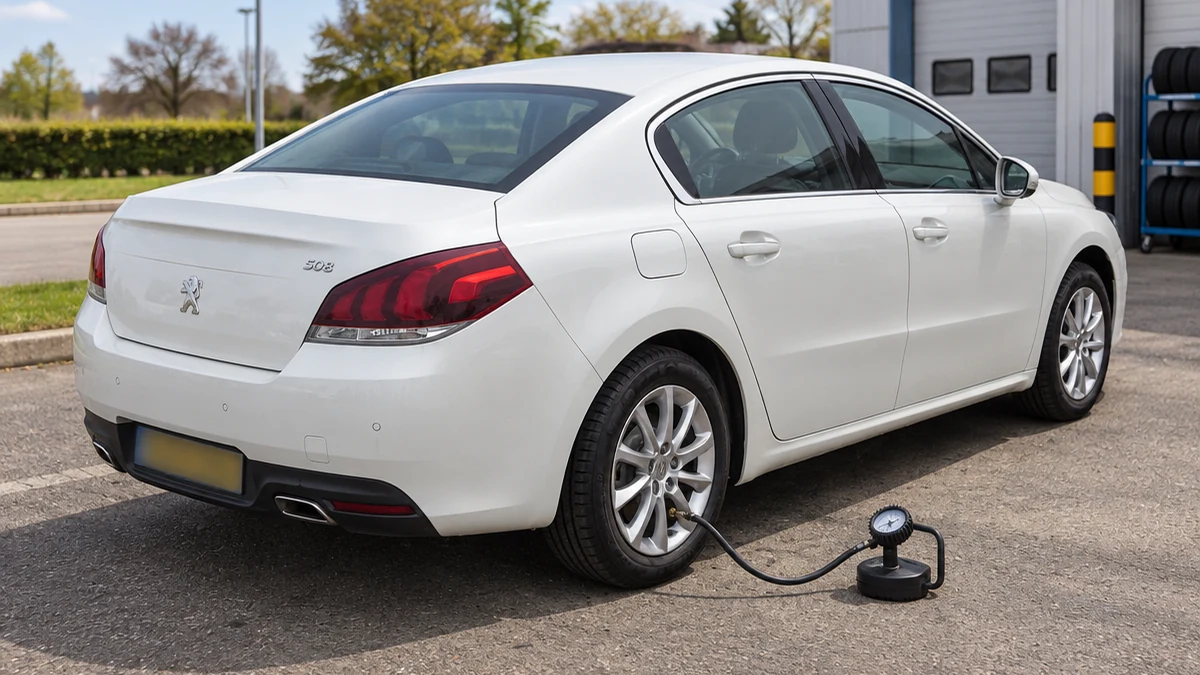
Hello and welcome. In this post we look at tyre under-inflation detection on the Peugeot 508 I (2014-present). We cover how the system works, what to do when the warning comes on, what a fault looks like and where the tyre pressure labels are.
Scroll the table sideways.
| Section | In short |
|---|---|
| Tyre under-inflation detection | How the system monitors your four tyres |
| Under-inflation warning | Warning lamp on: slow down and stop |
| Operating fault | Flashing then fixed lamp means a system fault |
| Identification markings | Where to find VIN, labels and tyre pressures |
The tyre under-inflation detection system automatically checks the pressures of your tyres while you are driving.
The system is a driving aid and does not replace your own vigilance. You still need to check the tyre pressures, including the spare wheel, every month and before a long journey.
Driving with under-inflated tyres worsens road-holding, lengthens braking distances and wears the tyres out early, especially with heavy loads, at high speeds or on long journeys. It also increases fuel consumption.
You will find the correct pressures for your car on the tyre pressure label. Check them when the tyres are cold, which means the car has been stopped for 1 hour or has covered less than 6 miles (10 km) at moderate speeds. Otherwise, add 0.3 bar to the values on the label. The Identification markings section below shows where the label is.
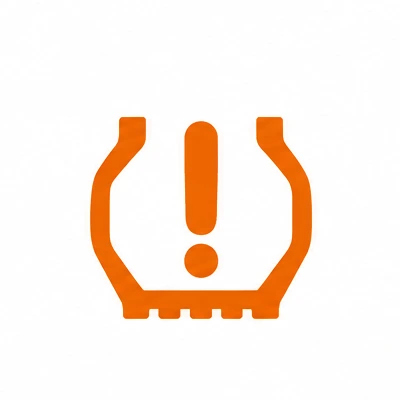
An under-inflation alert is shown by the warning lamp staying on, an audible signal and, depending on equipment, a message on the screen. If only one tyre is affected, a symbol or message may show you which one, depending on equipment.
A tyre that has lost pressure does not always bulge visibly, so do not rely on just looking at it. The alert stays on until the tyre is re-inflated, repaired or replaced. The spare wheel, whether a space-saver or a steel rim, does not have a sensor.
If the under-inflation warning lamp flashes and then stays on, together with the service warning lamp, there is a fault with the system. Your tyre pressures are no longer being monitored.
You will also see this alert when one or more wheels has no sensor, for example when a space-saver or steel spare wheel is fitted.
Your 508 carries several markings that identify the car and give you key details, including the tyre pressures.
Scroll the table sideways.
| Marking | What it is | Where to find it |
|---|---|---|
| A | Vehicle Identification Number (VIN) | Engraved on the bodywork under the bonnet, near the suspension damper mounting |
| B | Vehicle Identification Number (VIN) | On a label on the dashboard, visible through the windscreen |
| C | Manufacturer's label (tamper proof) | On the centre pillar, right or left side |
| D | Tyre / paint label | On the centre pillar on the driver's side |
The manufacturer's label shows:
The tyre / paint label shows:
Your car may have been fitted from new with tyres that have higher load and speed indices than those on the label. This does not affect the inflation pressures.
Checking tyre pressures: check them when cold, at least once a month. The pressures on the label are for cold tyres. If you have driven for more than 10 minutes, or more than 6 miles (10 kilometres) at more than 30 mph (50 km/h), the tyres will be warm, so add 0.3 bar (30 kPa) to the pressures on the label. Never reduce the pressure of a warm tyre. Low tyre pressures also increase fuel consumption.
Reduce speed straight away, avoid sharp steering and sudden braking, and stop as soon as traffic allows. Then check all four tyres when cold with a compressor, or use the puncture repair kit or spare wheel if a tyre is punctured.
If it flashes then stays on with the service warning lamp, the system has a fault and your tyre pressures are no longer monitored. It also happens when a wheel without a sensor, such as the spare, is fitted, so see a PEUGEOT dealer or a qualified workshop.
The tyre / paint label is on the centre pillar on the driver's side. It gives the pressures with and without load, the tyre specification and the spare tyre pressure.
Add 0.3 bar (30 kPa) to the pressures on the label if the tyres are warm. Never reduce the pressure of a warm tyre.
The under-inflation detection system on your Peugeot 508 is a useful extra pair of eyes, but it works best alongside your own monthly checks. Keep your tyres at the pressures on the label, and you will get better grip, shorter braking distances and longer-lasting tyres.
To understand the other lamps on your dashboard, see our guides to Peugeot 508 orange warning lights, Peugeot 508 red warning lights and Peugeot 508 green and blue indicator lamps.
Don't forget to follow us on Instagram for more Peugeot guides!
This is an independent guide, not an official Peugeot publication. Check your vehicle’s own manual before carrying out any work.
Related guides: Peugeot 508 model guides.
Cover adapted from a photograph by Navigator84 — Wikimedia Commons, CC BY-SA 4.0 (AI edited).
Hello and welcome. This article covers the 12 V battery on the Peugeot 508 II (2018-2023): reaching it, jump starting, charging with a charger, and disconnecting and reconnecting it. We also look at t
Hello and welcome. This article looks at the under-inflation detection system on the Peugeot 508 II (2018-2023). We cover what the alert means, reinitialising the system after adjusting pressures, and
Hello and welcome. In this post we look at the 12 V battery on the Peugeot 508 I (2014-present). We cover jump starting from another battery, charging with a charger, disconnecting and reconnecting, a