Peugeot 208 Engine and Performance Review
Every Peugeot 208 engine explained: PureTech 75/100/130, Hybrid 100/136, BlueHDi 100 and e-208, with power outputs, gearboxes and towing limits.
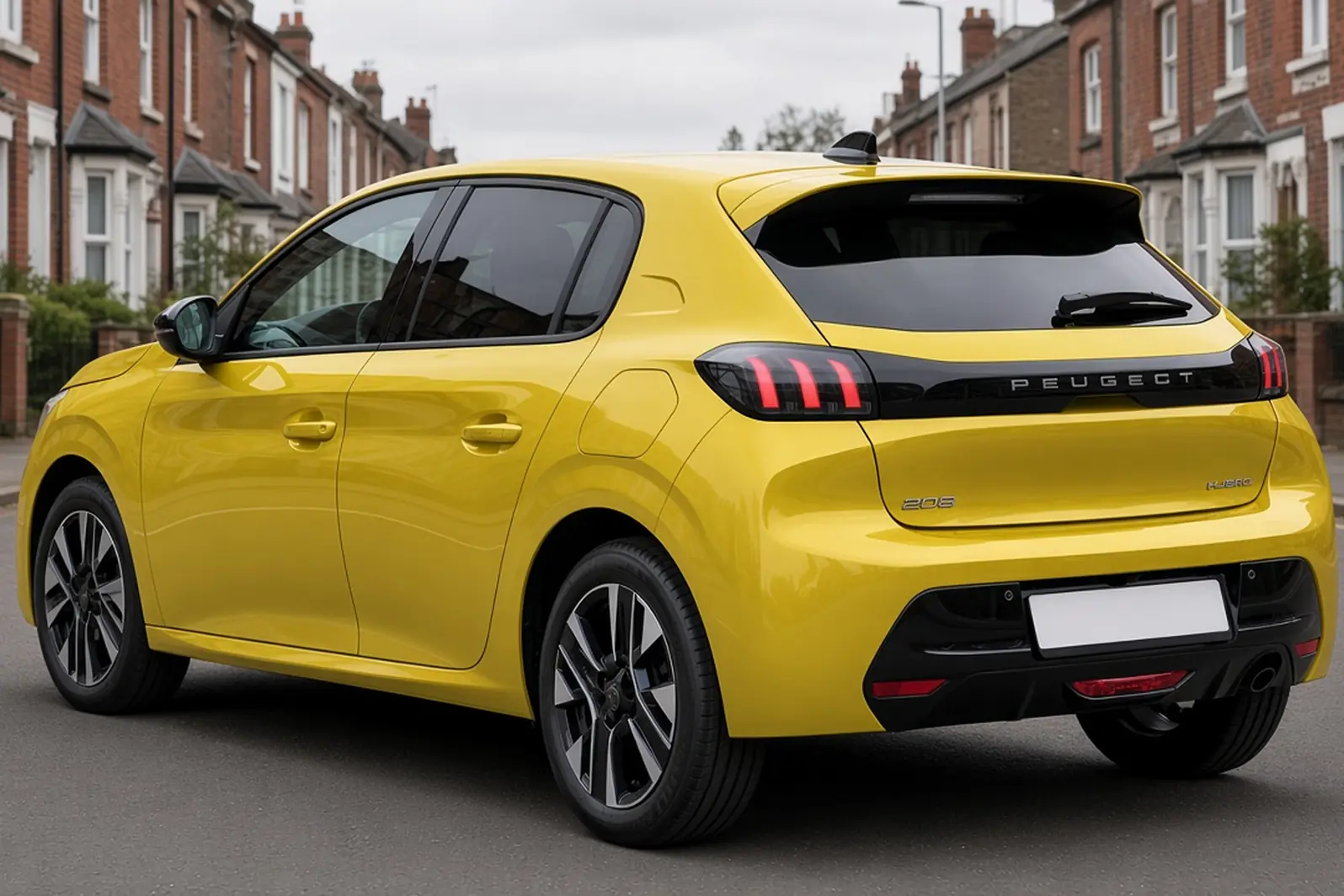
The second-generation Peugeot 208 (launched in 2019) has been sold with more powertrains than almost any other small car: non-turbo and turbo petrols, a diesel, a 48-volt hybrid and a fully electric version. This guide explains how they differ, using official figures from the English-language Peugeot owner's handbook, and which one makes most sense for the way you drive.
The 208 Engine Line-Up at a Glance
The table below summarises the engines listed in the 2023 edition of the Peugeot 208 owner's handbook. Not every engine was sold in every country.
Scroll the table sideways.
| Engine | Gearbox | Max power (EC) | Fuel | Braked trailer |
|---|---|---|---|---|
| 1.2 PureTech 75 | 5-speed manual | 55 kW | Unleaded, RON 91/95 min. | 500 kg |
| 1.2 PureTech 100 S&S | 6-speed manual or EAT8 automatic | 74 kW | Unleaded, RON 95 min. | 1,200 kg |
| 1.2 PureTech 130 S&S | EAT6 or EAT8 automatic | 96 kW | Unleaded, RON 91/95 min. | 500-1,200 kg |
| 1.5 BlueHDi 100 S&S | 6-speed manual | 75 kW | Diesel | 1,200 kg |
| Hybrid 100 e-DCS6 | 6-speed electric dual-clutch automatic | 74 kW petrol + 21 kW electric | Unleaded | 1,200 kg |
| Hybrid 136 e-DCS6 | 6-speed electric dual-clutch automatic | 100 kW petrol + 21 kW electric | Unleaded | 1,200 kg |
| e-208 (electric) | Single-speed | 115 kW (156 hp) | Electricity, 51 kWh battery | Not permitted |
All petrol versions use the same 1,199 cc three-cylinder block; the diesel is a 1,499 cc four-cylinder. Braked trailer limits apply on a 10-12% gradient within the gross train weight, and the maximum nose weight on the towball is 55 kg for every combustion and hybrid version. The handbook notes that towing limits drop by 10% for every 1,000 metres of altitude above 1,000 metres, and that you should never exceed 62 mph (100 km/h) when towing, or less if local law requires.
Which 208 Engine Should You Choose?
Mostly town driving, tight budget: the PureTech 75 is the only engine in the range without a turbocharger. It's simple and adequate around town, but it feels breathless on the motorway and its towing limit is just 500 kg.
All-rounder: the turbocharged PureTech 100 is the sweet spot for most buyers. It's noticeably livelier than the 75, comfortable at motorway speeds and available with a manual or automatic gearbox.
Want some pace: the PureTech 130 is the most powerful petrol and comes only with an automatic. It's the version that makes the 208 feel genuinely brisk.
High mileage: the 1.5 BlueHDi 100 diesel suits drivers who do lots of long motorway runs, though diesel versions are becoming rare.
Mostly urban, want lower fuel bills: the Hybrid 100 and Hybrid 136 (listed in the 2023 handbook) pair a PureTech engine with a 21 kW electric motor built into a six-speed dual-clutch gearbox and a small 48-volt, 0.9 kWh lithium-ion battery. They can't be plugged in; instead they recover energy when slowing down and use it to help the engine, especially in stop-start traffic.
Home charging available: the electric e-208 (see below) is the quietest and smoothest option and has no tailpipe emissions, but note that the handbook does not permit it to tow at all.
Performance and Economy (Pre-2023 Petrol Models)
For the earlier PureTech petrol engines, brochure figures were as follows. Treat these as historical: fuel and CO2 figures depend on the test cycle and wheel size, and later cars may differ.
Scroll the table sideways.
| Engine | Power | Torque | Combined fuel | CO2 |
|---|---|---|---|---|
| 1.2 PureTech 75 | 75 hp | 118 Nm | 4.1 l/100 km | 94 g/km |
| 1.2 PureTech 100 | 100 hp | 205 Nm | 4.3 l/100 km | 99 g/km |
| 1.2 PureTech 130 | 130 hp | 230 Nm | 4.5 l/100 km | 103 g/km |
Scroll the table sideways.
| Engine | Urban | Extra-urban |
|---|---|---|
| 1.2 PureTech 75 | 4.8 l/100 km | 3.7 l/100 km |
| 1.2 PureTech 100 | 5.1 l/100 km | 3.9 l/100 km |
| 1.2 PureTech 130 | 5.4 l/100 km | 4.0 l/100 km |
The PureTech 100 covers 0-100 km/h (0-62 mph) in 10.8 seconds with a top speed of 188 km/h (117 mph). The PureTech 130 cuts the sprint to 8.7 seconds and reaches 208 km/h (129 mph). Expect real-world fuel consumption to be higher than these official numbers, particularly in town.
Gearboxes
The EAT8 eight-speed automatic is the pick: it shifts smoothly and quietly, and its wide spread of ratios helps economy at motorway speeds. Older PureTech 130 models used the six-speed EAT6. The manual gearboxes are light and easy, though the shift can feel a little rubbery. The hybrids use their own six-speed electric dual-clutch automatic (e-DCS6).
What It's Like to Drive
The 208's newer platform makes it light and agile, which suits town driving: it darts through traffic and is easy to park. The steering is quick and accurate, if a little short on feel, and the small i-Cockpit steering wheel can feel odd at first, though most drivers adapt quickly. The suspension soaks up bumps well and body roll is kept in check, while good sound insulation keeps the cabin quiet. It's not a hot hatch, but with the PureTech 130 it's genuinely fun.
PureTech Ownership: What You Need to Know
The 1.2 PureTech is a turbocharged three-cylinder engine, and turbo petrol engines like this need looking after. Some earlier PureTech engines suffered from premature wear of the oil-immersed timing belt, which can shed debris and lead to low oil pressure or, in the worst cases, serious engine damage. Other reported issues include higher oil consumption (especially when driven hard), carbon build-up on the intake valves and sensitivity to oil quality.
To keep yours healthy:
- Stick to the service schedule and use the oil grade specified by Peugeot. Don't stretch oil-change intervals.
- Check the oil level regularly between services.
- Drive gently until the engine is warm.
- Have the timing belt and the auxiliary (drive) belt inspected as the mileage rises. The auxiliary belt usually lasts at least 70,000 km (about 43,000 miles), but it's worth having it checked once you pass that.
- Investigate warning lights promptly. Our guides to Peugeot 208 red warnings and orange warnings explain what each symbol means.
Electric: the e-208
The first e-208 used a 50 kWh lithium-ion battery and a 134 hp electric motor, completing 0-62 mph in 8.1 seconds. The updated version listed in the 2023 handbook has a 51 kWh battery and a 115 kW (156 hp) motor. According to the handbook it supports Mode 2 domestic charging (230 V single-phase, 8 or 16 A), Mode 3 accelerated AC charging (230 V single- or three-phase, 16 or 32 A) and Mode 4 rapid DC charging (400 V). Real-world range and charging times depend on the version and on-board charger, so check the specification of the car you're considering.
The Bottom Line
For most drivers, the PureTech 100 is the best all-round 208 engine, with the PureTech 130 the choice if you want more performance. If you do a lot of town driving, the newer hybrids are worth a look, and if you can charge at home the e-208 is the most refined of all. Whatever you choose, regular servicing is the key to a trouble-free PureTech.
For the bigger picture, read our full Peugeot 208 review.
Related guides
Your 208's dashboard and touchscreen can tell you far more than most owners ever look at: trip data, fuel or energy use, the remaining range and, on the e-208, how energy is flowing between the battery and the motor...
Most of the information on a Peugeot 208's instrument panel isn't a warning at all. The service spanner, oil level reading, temperature gauge and, on diesels, the AdBlue range readout are there to tell you how the car...
Please note: this review is based on 2024 model-year data and my own ownership experience from 2022 to 2023. Specifications, equipment and engine line-ups may have changed for 2026. Few superminis turn heads like the...