Peugeot 208 Review: Must-Read 2026 Guide
An owner's Peugeot 208 review: design, i-Cockpit interior, boot space, PureTech engines, real-world fuel use, known issues, safety and equipment.
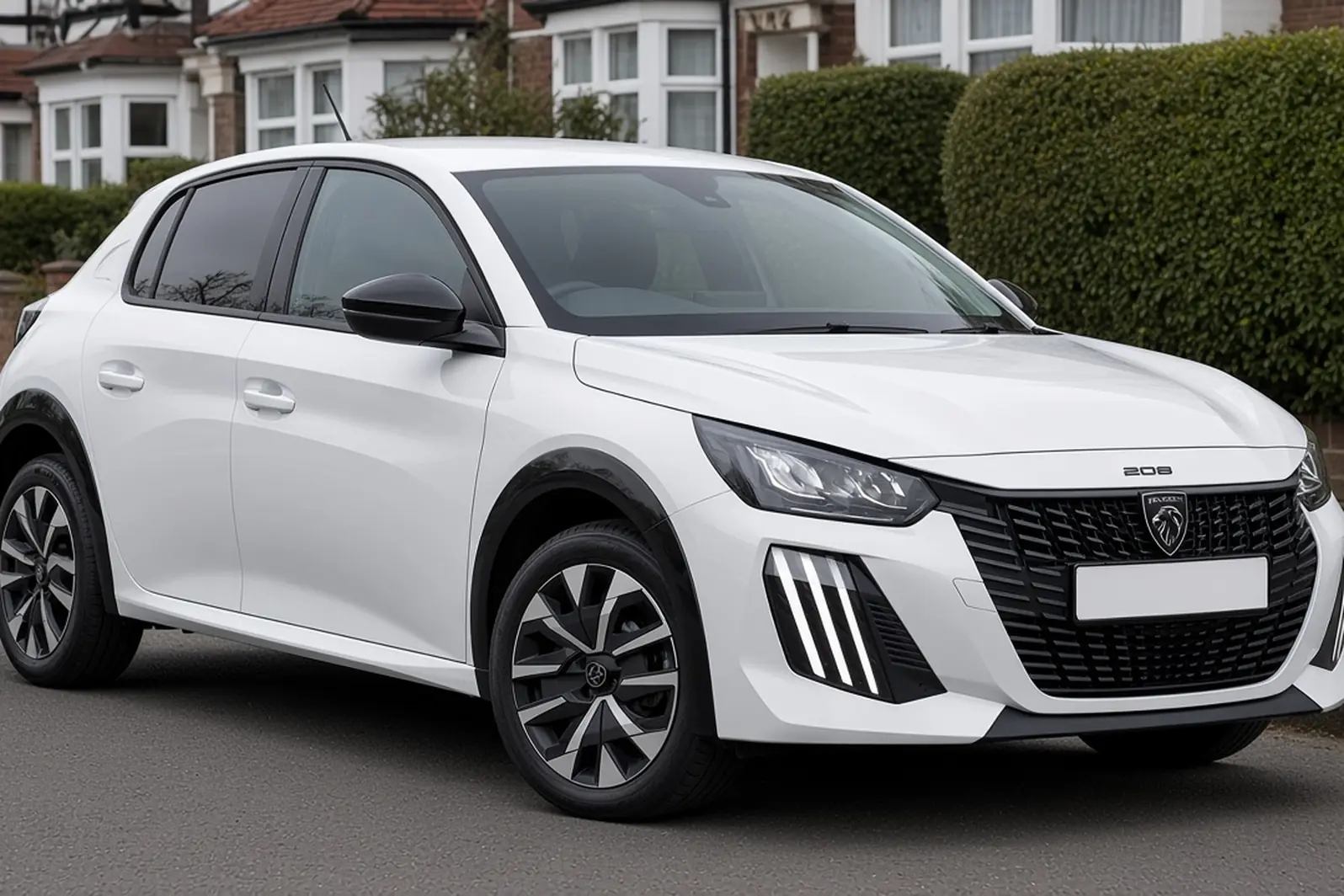
Please note: this review is based on 2024 model-year data and my own ownership experience from 2022 to 2023. Specifications, equipment and engine line-ups may have changed for 2026.
Few superminis turn heads like the current Peugeot 208. I owned a 1.2 PureTech 130 automatic from 2022 to 2023, and this review combines that ownership experience with Peugeot's 2024 specifications. That means two years of real fuel data, the problems I came across and the things I'd want to know before buying one again.
The Short Version
What's good
- Distinctive styling that looks more expensive than it is
- A genuinely upmarket cabin, with the i-Cockpit layout and 3D digital instruments
- A comfortable, quiet ride and light, precise steering
- The PureTech 130 with the EAT8 automatic is lively and smooth
What's not
- Tight rear seats for adults and an average 311-litre boot
- The 1.2 PureTech has known issues (timing belt, oil consumption) and needs careful servicing
- Touchscreen freezes on some facelifted cars
- Real-world fuel use in town was well above the official figure in my case
Rivals to compare: Volkswagen Polo, Renault Clio, Vauxhall/Opel Corsa, Skoda Fabia and Toyota Yaris.
Exterior Design
The Peugeot 208 makes an impression at first glance. Its low, wide stance and sharp body lines give it a sporty look that stands out from the crowd. The prominent grille and distinctive "claw" tail lights are Peugeot signature design elements, and on the facelifted models the three-claw LED light signature has made its way into the daytime running lights too. Add the large grille with chrome detailing and the bold gloss-black rear trim, and it looks far more distinctive than its predecessor and its rivals. You can see Peugeot's forward-looking, innovative approach in every line.
LED headlights and 17-inch alloy wheels on the higher trims add to the premium look. Overall, I think Peugeot nailed the design: the 208 looks more expensive than it is. It's stylish, modern and very attractive from every angle. The front has Peugeot's signature claw-shaped LED lights, a large grille and a sleek front bumper. The side profile is shaped by a rising waistline and creases along the doors. At the back, full-width LED tail lights and a small integrated spoiler give the 208 a sporty air. When I test-drove the car, I happened to get the launch colour, Faro Yellow, and as luck would have it, the car I bought was Faro Yellow too.
The funniest thing I can say about the Faro Yellow paint is that it's the same colour as taxis here in Turkey, where I live, and people regularly mistake it for one. I thought I'd bought something closer to Lamborghini's Urus yellow, but every time I took it out, someone would take it for a taxi at least once. At first I didn't understand what was going on, but I've got used to it. A few times people even walked up at red lights and tried to get in before realising at the last second. So now I lock the doors as soon as I get in!
In terms of dimensions, the 208 is just over 4 metres long. You can see the full exterior dimensions below:
Interior Design and Comfort
The 208's interior impresses on function as well as looks. Peugeot's i-Cockpit layout gives the driver a more immersive experience. The infotainment system has a 7.0-inch touchscreen with DAB radio, Bluetooth, Apple CarPlay and Android Auto, and the material quality is better than many rivals in this class.
The small steering wheel and raised instrument panel make up the "i-Cockpit" layout. That compact wheel, which really catches the eye, is the defining feature of Peugeot's i-Cockpit design. It takes a little getting used to, but I quickly came to love the go-kart feel. Don't let "small" put you off: it's a genuinely sporty wheel. That said, some drivers don't like it, and if you're on the shorter side, depending on your seating position, the rim can block your view of the instruments.
With my height and seating position I can see the instruments over the top of the wheel, and I'm very happy with how light it is. My only complaint is the blind spots created by the thick windscreen pillars.
The two-tier dashboard looks great and the quality is excellent. Soft-touch materials, real metal accents and piano-black details make the cabin feel genuinely upmarket. The 3D digital instrument panel stands out with its holographic display, showing the key driving information in a clear, easy-to-read format. I also appreciate how configurable it is: you can set it up to show exactly what you want.
On to seating comfort. Up front, supportive seats and a wide range of adjustment make it easy to find a comfortable driving position, and the seats are very comfortable both on long journeys and in heavy town traffic. The cars sold in my market don't have massage seats, though I understand this feature is available in some other countries. The rear is tighter: leg and head room are a bit cramped for taller passengers, and if you're over 180 cm (about 5 ft 11 in) your knees may feel squeezed. To be fair, that's normal for the class. The high seating position gives good visibility, and children will fit better than long-legged adults.
Rear legroom is a little tight: even average-height adults may feel their knees brushing the front seats, and rear headroom is slightly limited too. It's about average for the class; the Polo and Skoda Fabia offer more passenger space. The front passenger seat, by contrast, offers plenty of room.
Boot Space and Storage
According to the brochure, the Peugeot 208 offers 311 litres of boot space, which is about right for the segment; no one buys a supermini expecting a huge load bay. With the rear seats folded, the 208 easily swallowed more than five carry-on bags, which is average for a small hatchback. The boot floor sits a little low, leaving a lip when loading, and there's no adjustable boot floor or other clever load features. On the plus side, the hatchback opening makes it easy to load bulky items, and I find the low height ideal for lifting heavy bags. If you're going on holiday as a family of four, it may be a squeeze. Fold the rear seats and capacity rises to an impressive 1,100 litres, enough for several large suitcases plus hand luggage.
Engine, Performance and Driving Dynamics
The 208 comes with a range of engines to suit different needs: three 1.2-litre petrol engines, a 1.5 diesel and a fully electric version. The electric e-208 is ideal for town driving in particular, but the petrol and diesel engines are also very satisfying in terms of performance and fuel economy.
Engine Options
The engine line-up depends on the market. In Turkey, for example, the 1.5 diesel wasn't offered and the electric version hadn't yet arrived when this review was written. The table below shows the versions available in the Turkish market in 2024.
If you're buying a 208, you'll be happy with the efficient 1.2-litre petrol engine, available with 100 hp and 130 hp. Mine is the 130 hp version, and it's very lively for the class. My research shows a 75 hp version is also sold in some markets; personally, I'd skip the entry-level 74 hp engine, which can feel a bit slow. If you want performance, the 8-speed automatic is a great choice. I can say the 1.2 PureTech engine, paired with Peugeot's EAT8 gearbox, is a stable, well-made unit. Having looked at the whole range, I think the ideal choice is the mid-range 130 hp 1.2-litre turbo petrol. Fuel economy is impressive too, and I'll share my real-world figures below. For most buyers, this engine strikes the perfect balance between performance and efficiency.
Ride Comfort
One of the 208's strengths is its excellent ride quality. It deals with bumps and road imperfections better than most small hatchbacks, and even the GT models, with their firmer set-up, soak up rough roads well. That balance makes the 208 a comfortable everyday car. I think the insulation is very good: you hear very little road noise, though it becomes a bit more noticeable above 100 km/h (about 62 mph). On 16-inch wheels, the 208 offers an ideal blend of comfort and quiet that its rivals often can't match.
It's an easy car to rack up the miles in. Don't let the 208's model-like looks fool you: it was built to be driven. The steering is precise and well weighted, letting you place the car exactly where you want it. It's one of the lightest steering set-ups I've used, which makes tight manoeuvres very easy.
The EAT8 Automatic Gearbox
The eight-speed automatic on higher-spec 208s is a gearbox Peugeot has used for years. Shifts are very smooth, and it picks the right gear better than some dual-clutch gearboxes. It isn't lightning-fast, but it's relaxing to drive, and having eight ratios helps fuel economy.
Real-World Fuel Consumption: An Owner's Data
Every buyer wants to know how much a car really uses. As a 208 owner, I've tracked my car's fuel consumption for about two years through the MYPEUGEOT app, and here's what I found. Up to October 2023, my average was 7.4 L/100 km (about 38 mpg UK / 32 mpg US). My best month was January 2023 at 6.1 L/100 km (about 46 mpg UK), and my worst was August 2023 at 8.7 L/100 km (about 32 mpg UK). If you're wondering what a 208 really uses before you buy, the table below gives you one owner's average.
Here are the cumulative figures for 2022 and 2023 together:
Over two years the numbers are very similar. I use the car about 90% in town, usually in traffic. Fuel consumption depends heavily on how you drive, so your figures may differ.
The official figures are quite different. According to Peugeot, the 208's combined consumption is 4.5 L/100 km (about 63 mpg UK) and its urban consumption 5.4 L/100 km (about 52 mpg UK), well below what I see in my own data.
It's worth saying that I don't drive in Eco mode: I'd estimate 60% Normal and 40% Sport. Drivers who take it easy in less congested places will probably see lower consumption.
Peugeot 208 Known Problems
As mentioned, the 208 was facelifted in recent years and given a fresh look. The changes made by the Stellantis group went beyond looks and also fixed chronic problems from earlier years, so the facelifted 208 has few known issues. Even so, while it feels solidly built, there are a few common problems worth keeping on your radar. Since the 208 uses the 1.2 PureTech engine, let's start with that engine's known issues:
Timing belt problems, oil consumption, carbon build-up and turbo failures are the known chronic issues of the 1.2 PureTech in the Peugeot 208. On the facelifted model, touchscreen freezes are another one: especially in moving traffic, the screen sometimes freezes and won't respond. This is a software problem, and you can usually fix it by updating your touchscreen software. As with other small turbo petrol engines, regular oil changes are recommended to prevent premature wear.
Twin-clutch gearboxes can be jerky in stop-start traffic, and the 1.2-litre petrol engine can suffer oil leaks in some cases. In my research, some GT owners also reported rattles from the panoramic sunroof. Just stay on top of regular servicing and take any problem to a workshop promptly.
Safety and Technology
The Peugeot 208 stands out for safety as well as design and performance. Features such as Adaptive Cruise Control, Lane Positioning Assist and Automatic Emergency Braking improve driving safety, and the in-car technology and driver aids are very impressive.
The 208 received four stars from Euro NCAP, and its Euro NCAP test results are solid. All models come as standard with the latest driver assistance technology, including automatic emergency braking, pedestrian detection and lane departure warning.
The top GT trim adds extras such as blind spot monitoring and adaptive cruise control. With six airbags and stability control, the 208 offers a high level of passive safety, while short stopping distances and responsive steering help you avoid accidents in the first place. For its size, the 208 gives little away to bigger cars on safety. Drivers now expect their cars to help avoid collisions proactively, and the 208 delivers, with autonomous emergency braking, lane departure warning, blind spot monitoring and other high-tech safety features either standard or optional.
Facelifts and Design Updates
The 208 was reinvented in 2019, then facelifted again in July 2023, with the facelifted car reaching the roads in 2024. I think both versions look superb. The new 208 has a far more striking, modern exterior than the previous generation, with LED headlights and tail lights, coupé-like styling and a very attractive profile. Inside, Peugeot's distinctive i-Cockpit layout and high-quality materials make the cabin radically different from before.
Equipment Highlights (2024 Model Year)
The list below is taken from the 2024 brochure for the market where I bought my car (Turkey), for an entry-level specification. Equipment and trim names differ in the UK, US and elsewhere, so treat it as a guide and check your local Peugeot brochure.
Scroll the table sideways.
| Area | Equipment |
|---|---|
| Safety | Electronic Stability Programme (ESP); Anti-lock Braking System (ABS); Electronic Brakeforce Distribution (EBD); Hill Start Assist; Six Airbags; Tyre Pressure Warning; cruise control with speed limiter, Driver Attention Alert, Active Lane Keeping Assist, Active Safety Brake (camera) |
| Interior | Low Console and Manual Handbrake; Four One-Touch Electric Windows; Height- and Reach-Adjustable Leather Steering Wheel; Height-Adjustable Driver's Seat; 60/40 Split-Folding Rear Seats; "PNEUMA" Fabric Upholstery with Calcite Green Stitching |
| Technology | 3.5-Inch LCD Matrix Analogue Instrument Panel; 10-Inch Touchscreen and USB-C Port; Rear Parking Sensors; PEUGEOT LED Headlights; LED Daytime Running Lights (Below the Headlights); LED Rear Lights; Manually Folding, Electrically Adjustable Heated Door Mirrors; Automatic Wipers; Automatic Welcome Lighting (on Unlocking); Follow Me Home |
| Multimedia | Radio, MP3, Six Speakers and Bluetooth; Wireless Mirror Screen (Apple CarPlay and Android Auto) |
| Exterior | Black Front Grille; Gloss Black Door Mirrors; New Three-Claw LED Rear Lights; New "PEUGEOT" Lettering; Black Rear Spoiler; 16-Inch NOMA Alloy Wheels |
Higher trims add features such as the 3D digital instrument panel, larger alloy wheels, ambient lighting and an optional Focal premium sound system, depending on the market. The brochure extract below shows how interior equipment varies by version.
Verdict: Should You Buy a Peugeot 208?
The Peugeot 208 stands out in its segment for both design and engineering. That's not to say it's perfect: as you'd expect for the class, rear space for adults is limited. But overall, I can say with confidence that the 208 is one of the best choices in its segment.
If you're shopping for a new car, I'd definitely recommend considering the 208. If you want a companion for both town driving and long trips, it could be just right for you.
The 208 is a smart choice for buyers who want eye-catching style and a comfortable, sophisticated drive. Its sharp interior design and technology make it feel more upmarket than its price suggests. Just be ready for the tight rear seats and a boot that isn't huge. The striking exterior is matched by a futuristic, upmarket cabin, while strong petrol performance, agile handling and a smooth ride make it a pleasure to drive. It's a thoroughly modern small car packed with the latest technology and safety features.
For buyers who want a fashionable but practical city car, the 208 deserves a test drive. Its blend of style, quality, driving pleasure and practicality makes living with this French supermodel a real pleasure. After driving the updated 208, it's easy to see why it was named European Car of the Year: the Peugeot 208 won Car of the Year 2020. With its striking looks, versatile engine range and smooth ride, Peugeot has built an impressive car. It's not a sports car, but it succeeds at being stylish, comfortable and efficient.
For more detail on the engines, see our Peugeot 208 engine and performance review, and get to know the dashboard with our guides to 208 red warning lights and what the 208's warning lights mean.
Don't forget to follow us on Instagram for more Peugeot guides!
Related guides
Your 208's dashboard and touchscreen can tell you far more than most owners ever look at: trip data, fuel or energy use, the remaining range and, on the e-208, how energy is flowing between the battery and the motor...
Most of the information on a Peugeot 208's instrument panel isn't a warning at all. The service spanner, oil level reading, temperature gauge and, on diesels, the AdBlue range readout are there to tell you how the car...
The second-generation Peugeot 208 (launched in 2019) has been sold with more powertrains than almost any other small car: non-turbo and turbo petrols, a diesel, a 48-volt hybrid and a fully electric version. This guide...