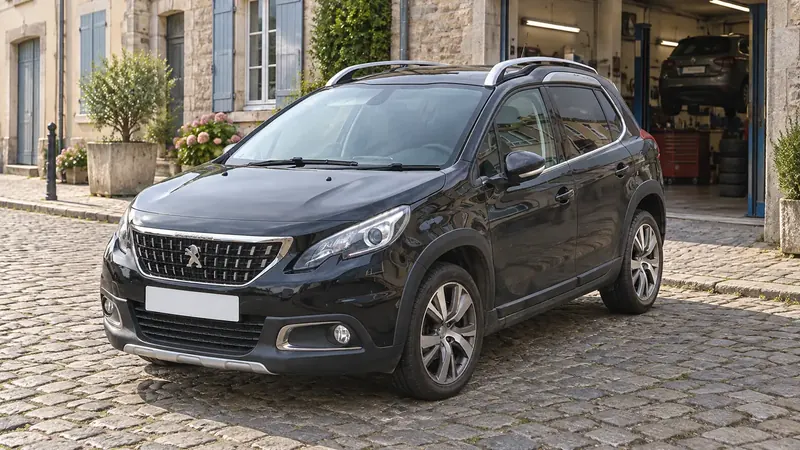
Peugeot 2008Updated 23 min read

Peugeot 2008 I Start-Stop, Parking Brake and Gearbox

How to start, drive and park your Peugeot 2008 I: manual, ETG6 and EAT6 gearboxes, parking brake, hill start assist, Stop & Start and towing advice.

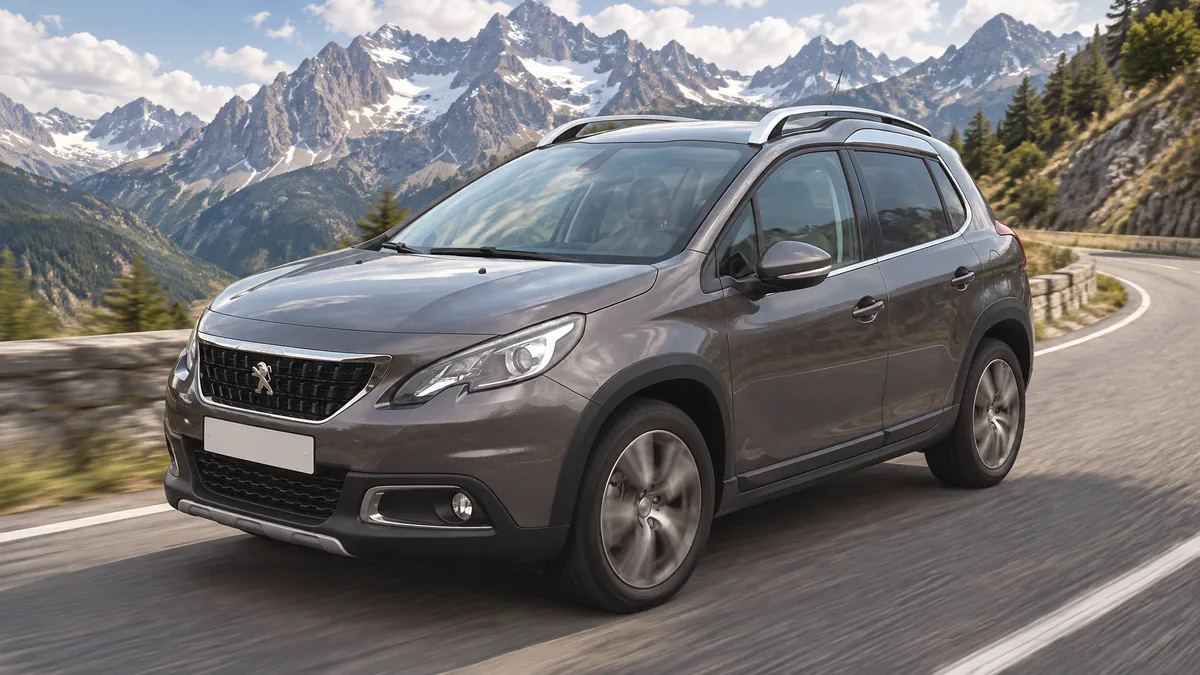
Peugeot 2008 (2016-present) driving on a winding mountain road
Image adapted from a photo by Vauxford, CC BY-SA 4.0.

Hello and welcome. In this post, we'll look at starting the engine, the parking brake, the gearbox and Stop & Start on the Peugeot 2008 I (2016-present). It also includes advice on driving through water and towing a trailer. It covers the Peugeot 2008 I (2016-present), including vehicles produced from 02/05/2018. Some items depend on the version or equipment fitted, such as the type of gearbox or engine, so not everything here will apply to your 2008. Some items depend on the version or equipment fitted, such as the type of gearbox or engine, so not everything here will apply to your 2008.

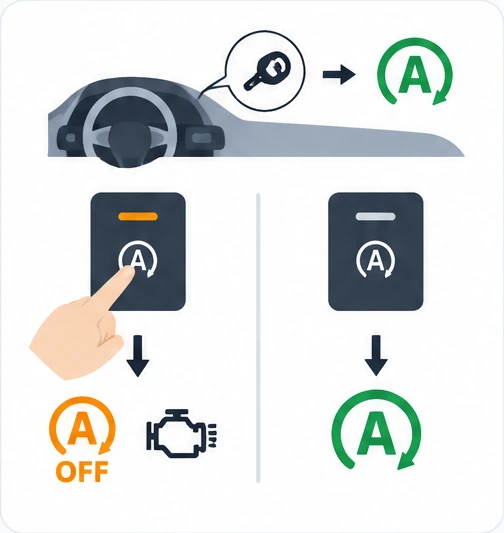
How do you switch off Stop & Start on a Peugeot 2008 I?

Press the Stop & Start control on the dashboard; an amber A OFF tell-tale shows the system is off until you switch it back on or next start the engine, depending on the version.

Peugeot 2008 I Stop & Start dashboard control and the green A and amber A OFF tell-tales

Quick Reference

Scroll the table sideways.

SectionIn short
Driving recommendationsSafe driving, flooded roads and towing a trailer
Starting/Switching off the engineIgnition positions, starting, stopping and the immobiliser
Parking brakeApplying the handbrake and using the manual gearboxes
Electronic gearbox (ETG6)Using the ETG6 automated and manual modes
Automatic gearbox (EAT6)Using EAT6 positions, sport and snow programmes
Gear shift indicatorArrow on the instrument panel advising when to change up
Hill start assistHolds the car briefly when starting on a slope
Stop & StartHow STOP and START modes work and switching off

Driving recommendations

starts with some general rules for driving safely, whatever the traffic conditions.

  • Follow the driving regulations and stay alert at all times.
  • Watch the traffic closely and keep your hands on the wheel, so you are ready to react to anything.
  • Only carry out operations that need close attention when the car is stationary.
  • On a long journey, take a break every two hours.
  • In difficult weather, drive smoothly, anticipate the need to brake and leave more distance to other vehicles.

Warning: never leave the engine running in an enclosed area without adequate ventilation. The exhaust gases contain toxic gases such as carbon monoxide, and there is a risk of poisoning and death.

Warning: in very severe wintry conditions (temperatures below -23°C), the engine must be left running for 4 minutes before driving. This guarantees correct operation and the longevity of the engine and gearbox.

Important:

  • Never drive with the parking brake applied, as this risks overheating and damaging the braking system.
  • The exhaust system stays very hot for several minutes after you switch off the engine. Never park or run the engine on inflammable surfaces such as dry grass or fallen leaves, because of the risk of fire.
  • Never leave the car unsupervised with the engine running. If you have to leave it with the engine running, apply the parking brake and put the gearbox into neutral or position N or P, depending on your gearbox.

Driving on flooded roads: avoid it where you can, as water can seriously damage the engine, the gearbox and the electrical systems. If you have no choice:

  1. Check the depth: make sure the water is no deeper than 15 cm, allowing for waves from other road users.
  2. Stop & Start: deactivate the Stop & Start function.
  3. Speed: drive as slowly as possible without stalling, and never exceed 6 mph (10 km/h).
  4. Keep going: do not stop and do not switch off the engine.
  5. Dry the brakes: once out of the water, and as soon as it is safe, brake lightly several times to dry the brake discs and pads.

If you are in any doubt about the state of your car afterwards, contact a PEUGEOT dealer or a qualified workshop.

Towing a trailer: towing puts greater demands on your car and needs extra care from you.

  • Side wind: allow for the car being more sensitive to wind.
  • Cooling: towing on a slope raises the coolant temperature. The fan is electrically controlled, so its cooling capacity does not depend on engine speed. To lower the engine speed, reduce your road speed. The maximum towable load on an incline depends on the gradient and the outside temperature. Always keep an eye on the coolant temperature, and if its warning lamp and the STOP warning lamp come on, stop and switch off the engine as soon as possible.
  • Hot weather: if the outside temperature is high, let the engine idle for 1 to 2 minutes after you stop to help it cool.
  • Braking: a trailer increases the braking distance. Use engine braking to avoid overheating the brakes.
  • Tyres: check the tyre pressures of both your car and the trailer, using the recommended pressures.
  • Lighting: check the trailer's lighting and signalling, and your car's headlamp beam height. See the headlamp beam adjustment section below.
  • Parking sensors: with a genuine PEUGEOT towbar, the rear parking sensors switch off automatically so they do not sound.

New car: do not tow a trailer until you have driven at least approximately 600 miles (1,000 kilometres).

Starting/Switching off the engine

Your 2008 uses a key in the ignition switch, which has three positions:

  • 1: Stop position.
  • 2: Ignition on position.
  • 3: Start position.

Avoid hanging heavy objects on the key or remote control. Their weight pulls on the key blade in the ignition switch and could cause a malfunction.

Starting the engine: with the parking brake applied, first prepare the gearbox:

  • Manual gearbox: put the gear lever in neutral, then press the clutch pedal fully.
  • Automatic gearbox: put the gear selector in N or P, then press the brake pedal fully.
  • Electronic gearbox: put the gear selector in N, then press the brake pedal firmly.

Then:

  1. Insert the key: put the key in the ignition switch. The system recognises the code.
  2. Unlock the steering: turn the steering wheel and the key at the same time. You may need significant force, for example with the wheels on full lock.
  3. Petrol engine: turn the key to position 3 without pressing the accelerator until the engine starts, then release the key.
  4. Diesel engine: turn the key to position 2 to operate the pre-heating system. Wait until the pre-heating warning lamp goes off, then turn the key to position 3 without pressing the accelerator until the engine starts, and release the key.

On a petrol engine, after a cold start, preheating the catalytic converter can cause clearly noticeable engine vibration at a standstill for up to two minutes (accelerated idle speed). On a Diesel engine, the pre-heating lamp can stay on longer in wintry conditions, and does not come on when the engine is hot.

Warning: if the engine does not start straight away, switch off the ignition and wait a few moments before trying again. If it still does not start after several attempts, stop trying, as you risk damaging the starter motor or the engine. Contact a PEUGEOT dealer or a qualified workshop.

In temperate conditions, do not let the engine idle to warm up. Move off straight away and drive at a moderate speed. Never run the engine in an enclosed area without adequate ventilation, because of the risk of carbon monoxide poisoning and death. In very extreme wintry conditions (below -23°C), the engine must be left running for 4 minutes before starting the vehicle.

Electronic immobiliser: the original key contains a coded electronic chip, and the engine only starts if the code is detected and recognised. The system locks the engine management a few moments after you switch off the ignition, which stops the engine being started after a break-in. If there is a fault, a warning lamp comes on in the instrument panel with an audible signal and a message. Your car will not start, so contact a PEUGEOT dealer as soon as possible. Keep the label attached to the keys you received at handover away from the car, as it helps find the original code if you need a replacement key.

Switching off the engine:

  1. Stop: bring the car to a stop.
  2. Ignition off: with the engine idling, turn the key to position 1.
  3. Remove the key: take the key out of the ignition switch.
  4. Lock the steering: turn the steering wheel until it locks. Straightening the wheels before you switch off makes unlocking easier next time.
  5. Check the parking brake: make sure it is correctly applied, especially on a slope.

Warning: never switch off the ignition before the car has completely stopped. With the engine off, braking and steering assistance are also cut, and you risk losing control. For the same reason, do not free-wheel: some functions stop working and you lose braking assistance. When you leave the car, take the key with you and lock it.

Energy economy mode: after switching off (position 1), you can still use functions such as the audio and telematic system, the wipers, the dipped beam headlamps and the courtesy lamps for a maximum of 30 minutes. If you leave the key at position 2, the ignition switches off automatically after one hour. To switch it back on, turn the key to position 1, then back to position 2.

Parking brake

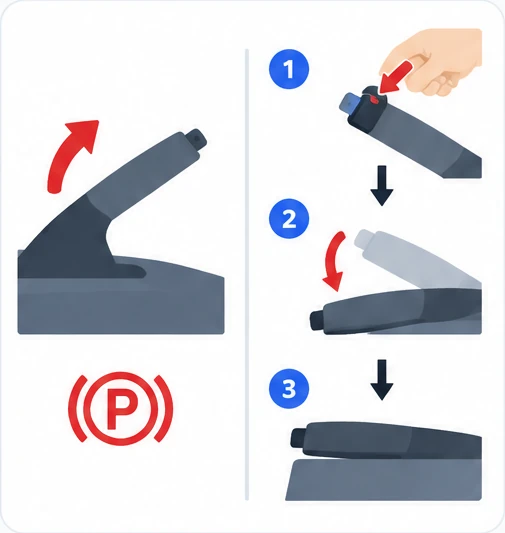
The parking brake is a lever between the front seats.

Peugeot 2008 I parking brake lever between the front seats
  1. Apply: pull the lever up to hold the car still. On level ground you do not need to pull it all the way up.
  2. Release: with your foot on the brake pedal, pull the lever up gently, press the trigger, then lower the lever fully.

If the parking brake warning lamp and the STOP warning lamp come on while you are driving, with an audible signal and a message, the parking brake is still on or has not been fully released.

Warning: on a steep slope, turn your wheels towards the kerb, apply the parking brake, engage a gear opposite to the direction the car is facing and switch off the ignition. When you come back, remember that a gear is engaged before you start the engine.

If you notice excessive lever travel or that the brake is less effective, have it checked, even between services. Checks on this safety system must be carried out by a PEUGEOT dealer or a qualified workshop.

5-speed manual gearbox: to engage reverse, move the gear lever to the right, then pull it back.

6-speed manual gearbox:

  • To engage 5th or 6th gear, move the gear lever fully to the right. If you do not, you could engage 3rd or 4th by mistake and cause permanent damage to the gearbox.
  • To engage reverse, raise the ring under the knob and move the gear lever to the left, then forwards.

With either manual gearbox, only engage reverse when the car is stationary with the engine at idle. As a safety precaution and to help the engine start, always select neutral and press the clutch pedal.

Electronic gearbox (ETG6)

The ETG6 is a 6-speed electronically controlled gearbox with two modes: automated mode, where the gearbox changes gear for you, and manual mode, where you change gear sequentially. In automated mode you can still change gear yourself with the steering mounted paddles, for example when overtaking. Do not drive with your hand resting on the gear selector, as this risks damaging the gearbox.

Scroll the table sideways.

PositionMeaningHow to select
RReverseWith your foot on the brake, lift the selector and push it forwards
NNeutralWith your foot on the brake, select this position to start the engine
AAutomatic modeMove the selector backwards
M + / -Manual mode, sequential changesMove the selector to the left, then push forwards to change up or pull back to change down

Steering mounted paddles: pull the + paddle towards you to change up, and the - paddle towards you to change down. The paddles cannot select neutral or engage or disengage reverse.

Instrument panel display: you will see N (neutral), R (reverse), 1 to 6 (gears in manual mode) and AUTO, which comes on in automatic mode and goes off in sequential mode. When the foot on brake warning lamp flashes, for example when starting the engine, press the brake. An audible signal sounds when you engage reverse.

Starting and moving off:

  1. Neutral: put the selector in position N.
  2. Brake: press the brake pedal fully.
  3. Start: start the engine.
  4. Choose a mode: select A (automated), M (manual) or R (reverse).
  5. Parking brake: release the parking brake.
  6. Move off: take your foot off the brake pedal, then accelerate.

AUTO and 1, 1 or R appears in the instrument panel. If the engine does not start and N flashes, move the selector to A, then back to N. If the "Foot on the brake" message appears, press the brake pedal harder.

Automatic mode: select position A after starting. AUTO and the engaged gear appear on the instrument panel. The gearbox works in auto-adaptive mode and keeps choosing the best gear for your driving style and the road profile. For maximum acceleration, for example when overtaking, press the accelerator firmly past the point of resistance.

One-off manual change: while in automatic mode, use the + or - paddle. The gearbox engages the gear if engine speed allows, and AUTO stays on. After a few moments without using the paddles, the gearbox returns to automatic operation.

Manual mode: select position M after starting, pull the selector towards + to change up and push it towards - to change down. The gears appear one after the other on the instrument panel. Changes are only made if engine speed allows, and you do not need to lift off the accelerator. When braking or slowing down, the gearbox changes down automatically so you can accelerate again in the right gear. At very low speed, a request for reverse is only carried out once the car has stopped, and a warning lamp appears on the instrument panel.

Warning: under sharp acceleration, the gearbox will not change up unless you use the paddles. Never select N while moving, and only engage R when the car is stationary with the brake pedal pressed.

Stopping: before switching off, you can move to N or leave a gear engaged, in which case the car cannot move. In both cases, apply the parking brake. When the car is stopped with the engine running, put the selector in N. Before working in the engine compartment, make sure the selector is in N and the parking brake is applied.

Malfunction: if, with the ignition on, the gearbox warning lamp and AUTO flash with an audible signal and a message, the gearbox has a fault. Have it checked by a PEUGEOT dealer or a qualified workshop.

Always press the brake pedal fully when starting the engine, and always apply the parking brake when you park.

Automatic gearbox (EAT6)

The EAT6 is a 6-speed automatic gearbox. You can use fully automatic operation, with sport and snow programmes, or change gear sequentially yourself. The gearbox panel has the gear selector, the S (sport) button and the snow button.

Scroll the table sideways.

PositionMeaningUse
PParkCar stopped, parking brake on or off; starting the engine
RReverseReversing, car stationary, engine at idle
NNeutralCar stopped, parking brake on; starting the engine
DAutomatic operationNormal driving
M + / -Manual operationPush forwards to change up, pull back to change down

The instrument panel shows the selected position (P, R, N or D), S for the sport programme, a symbol for the snow programme, 1 to 6 for the gear in manual operation, and - for an invalid value in manual mode.

Starting and moving off:

  1. Select P or N: with your foot on the brake pedal, select P or N.
  2. Start: start the engine. If these conditions are not met, you will hear an audible signal and see a warning message.
  3. Brake: with the engine running, press the brake pedal.
  4. Parking brake: release the parking brake.
  5. Select a position: select R, D or M.
  6. Move off: release the brake pedal gradually. The car moves off immediately.

If you select N by mistake while driving, let the engine return to idle, then select D before accelerating. Below -23°C, leave the engine idling for four minutes to protect the engine and gearbox.

Warning: with the engine idling and the brakes released, the car moves in R, D or M even without the accelerator. Never leave children alone in the car with the engine running. When doing maintenance with the engine running, apply the parking brake and select P.

Automatic operation: select D. The gearbox works in auto-adaptive mode and chooses the most suitable gear for your driving style, the road profile and the load in the car. For maximum acceleration, press the accelerator fully down (kick-down): the gearbox changes down or holds the gear until maximum engine speed. When braking, it changes down to give effective engine braking. If you release the accelerator sharply, it will not change up, for safety reasons. Never select N while moving, and never select P or R unless the car is completely stationary.

Reverse: selecting R with the ignition on activates the rear parking sensors automatically. The parking-sensor warnings are shown on the instrument panel and touchscreen.

Sport programme: press the S button after starting the engine. The gearbox favours a more dynamic driving style and S appears on the instrument panel.

Snow programme: with the engine running, press the snow button. The gearbox adapts to slippery roads, improving starting and handling when grip is poor, and its symbol appears on the instrument panel. Press the selected button again at any time to return to auto-adaptive mode.

Manual operation: select M, then move the selector towards + to change up or towards - to change down. Gears only change if road speed and engine speed allow; otherwise the gearbox works temporarily in automatic mode. D disappears and the gears appear one after the other. If the engine is under-revving or over-revving, the selected gear flashes for a few seconds before the actual gear is shown. You can switch from D to M at any time. When the car is stationary or crawling, the gearbox engages first gear automatically. The sport and snow programmes do not work in manual mode. If the selector sits between two positions, the invalid value symbol appears.

Stopping: before switching off, select P or N, and in both cases apply the parking brake. If the selector is not in P when you open the driver's door, or approximately 45 seconds after switching off the ignition, a warning message appears. Move the selector to P and the message disappears. On flooded roads or when crossing a ford, drive at walking pace.

Malfunction: if a warning lamp comes on with an audible signal and a message while the ignition is on, the gearbox has a fault. It switches to back-up mode and is locked in 3rd gear. You may feel a strong jolt when changing from P to R or from N to R, but this does not damage the gearbox. Do not exceed 62 mph (100 km/h), local speed limits permitting, and contact a PEUGEOT dealer or a qualified workshop as soon as possible.

Warning: you risk damaging the gearbox if you press the accelerator and brake at the same time, or force the selector out of P when the battery is flat.

To save fuel during a long stop with the engine running, such as in a traffic jam, put the selector in N and apply the parking brake.

Gear shift indicator

The gear shift indicator helps reduce fuel consumption by telling you when to change up. It cannot be deactivated.

Depending on the situation and your car's equipment, it may suggest skipping one or more gears, and you can do so without going through the gears in between. The advice is only optional: the road layout, traffic and safety still matter most, and you decide whether to follow it.

For example, if you are in third gear and press the accelerator, the system may suggest a higher gear. The advice appears as an arrow on the instrument panel, and with a manual gearbox the arrow may show the recommended gear.

  • The advice adapts to driving conditions (slope, load, etc.) and your actions (power demand, acceleration, braking, etc.).
  • The system never suggests first gear, reverse or a lower gear.
  • With an electronic or automatic gearbox, it only works in manual mode.

Hill start assist

Hill start assist holds your car still for approximately 2 seconds when you start on a gradient, giving you time to move your foot from the brake to the accelerator.

It only works when:

  • the car is completely stationary, with your foot on the brake pedal,
  • certain conditions of gradient are met,
  • the driver's door is closed.

Uphill, with the car stationary, it holds the car briefly when you release the brake pedal if you are:

  • in first gear or neutral with a manual gearbox (depending on version),
  • in position A or M with an electronic gearbox,
  • in position D or M with an automatic gearbox.

Downhill, with the car stationary and reverse engaged, it holds the car briefly when you release the brake pedal.

Warning: do not leave the car while hill start assist is holding it. If you need to leave it with the engine running, apply the parking brake and check that the parking brake warning lamp stays on. The function cannot be deactivated, but applying the parking brake interrupts it.

If the system develops a fault, its warning lamps come on. Contact a PEUGEOT dealer or a qualified workshop to have it checked.

Stop & Start

Stop & Start puts the engine on standby (STOP mode) when you stop in traffic, such as at red lights or in jams. It restarts automatically (START mode) as soon as you want to move off, instantly, quickly and silently. It cuts fuel consumption, exhaust emissions and noise when stationary.

STOP mode: the ECO indicator lamp comes on and the engine goes on standby:

  • with the Diesel e-HDi engine, below 12 mph (20 km/h) when you put the gear lever in neutral and release the clutch pedal,
  • with PureTech petrol and BlueHDi Diesel engines, when the car is stationary.

A counter records the time spent in STOP mode during a journey and resets each time you switch on the ignition with the key. STOP mode is unavailable for a few seconds after you come out of reverse, to make parking easier. Stop & Start does not affect functions such as braking or power steering. Never refuel in STOP mode: switch off the ignition with the key first.

STOP mode does not activate when:

  • the driver's door is open,
  • the driver's seat belt is not fastened,
  • the car has not exceeded 6 mph (10 km/h) since the last engine start with the key,
  • the engine is needed to keep the cabin at a comfortable temperature,
  • demisting is active,
  • certain conditions (battery charge, engine temperature, braking assistance, exterior temperature, etc.) need the engine running.

In these cases the ECO lamp flashes for a few seconds, then goes off. This is normal.

START mode: the ECO lamp goes off and the engine starts:

  • with a manual gearbox, when you press the clutch pedal,
  • with an electronic or automatic gearbox, when you release the brake pedal with the selector in A / D or M,
  • or, with the selector in N and the brake released, when you move it to A / D or M,
  • or when you engage reverse.

With a manual gearbox in STOP mode, if you engage a gear without pressing the clutch fully, a warning lamp or message asks you to press the clutch to restart the engine.

START mode activates automatically, for safety or comfort, when:

  • you open the driver's door,
  • you unfasten the driver's seat belt,
  • the car exceeds 7 mph (11 km/h) with an electronic gearbox,
  • certain conditions (battery charge, engine temperature, braking assistance, air conditioning setting, etc.) need the engine running.

The ECO lamp flashes for a few seconds, then goes off. This is normal.

Switching it off and on:

  1. Deactivate: with the ignition on, press the ECO OFF switch. The lamp in the switch comes on and a message appears. If the engine was in STOP mode, it restarts immediately.
  2. Reactivate: press the ECO OFF switch again. The lamp goes off and a message appears.

The system reactivates automatically every time you start the engine with the key.

Warning: deactivate Stop & Start before doing anything under the bonnet, to avoid injury if the engine switches to START mode. You should also deactivate it before driving through flooded areas.

Fault: if the ECO OFF switch lamp flashes and then stays on, have the system checked by a PEUGEOT dealer or a qualified workshop. If a fault occurs in STOP mode, the car may stall and all the instrument panel warning lamps come on. Switch off the ignition, then restart with the key.

Stop & Start needs a 12 V battery of special specification and technology. All work on it must be carried out only by a PEUGEOT dealer or a qualified workshop.

Frequently Asked Questions

Why does my Peugeot 2008 Stop & Start not switch the engine off?

STOP mode does not activate if the driver's door is open, the driver's seat belt is unfastened, you have not exceeded 6 mph (10 km/h) since starting with the key, demisting is on, or the engine is needed for cabin temperature or other conditions. The ECO lamp then flashes for a few seconds, which is normal.

How deep can I drive through water in a Peugeot 2008?

strongly advises against driving on flooded roads, but if you must, the water should be no deeper than 15 cm. Switch off Stop & Start, do not exceed 6 mph (10 km/h), and do not stop or switch off the engine.

What happens if the EAT6 automatic gearbox has a fault?

A warning lamp comes on with an audible signal and a message, and the gearbox goes into back-up mode locked in 3rd gear. Do not exceed 62 mph (100 km/h) and contact a PEUGEOT dealer or a qualified workshop as soon as possible.

Can I turn off hill start assist on my Peugeot 2008?

No, hill start assist cannot be deactivated. Applying the parking brake does interrupt its operation.

Knowing how your 2008's gearbox, parking brake and Stop & Start behave makes everyday driving smoother and safer. If a warning lamp comes on or something does not work as described, contact a PEUGEOT dealer or a qualified workshop.

More Peugeot 2008 Guides

If a lamp lights up while you drive, see our guides to the Peugeot 2008 red warning lights, Peugeot 2008 orange warning lights and Peugeot 2008 green and blue indicator lamps.

Don't forget to follow us on Instagram for more Peugeot guides!

This is an independent guide, not an official Peugeot publication. If in doubt, contact a PEUGEOT dealer or a qualified workshop before carrying out any work.

Related guides: Peugeot 2008 model guides.

Cover adapted from a photograph by Vauxford — Wikimedia Commons, CC BY-SA 4.0 (AI edited).
Related guides

Guide ·

Peugeot 2008 Bulb Replacement (2016-present)

Changing a bulb on your Peugeot 2008 is a job you can often do yourself, as long as you know which bulb goes where and how to reach it. This guide lists the front and rear lamps with their bulb types, explains …

Guide ·

Peugeot 2008 Gauges and Service Indicator (2016-present)

Your Peugeot 2008 has several gauges and indicators that show the state of the car between services. This guide explains the service indicator, the coolant temperature gauge, the oil level checks and the AdBlue…

Guide ·

Peugeot 2008 Fuse Box and Fuses (2016-present)

Your Peugeot 2008 has fuseboxes in the passenger compartment and under the bonnet. This guide shows you how to reach the fuse extraction tweezers, how to change a fuse safely, and which fuse protects which func…