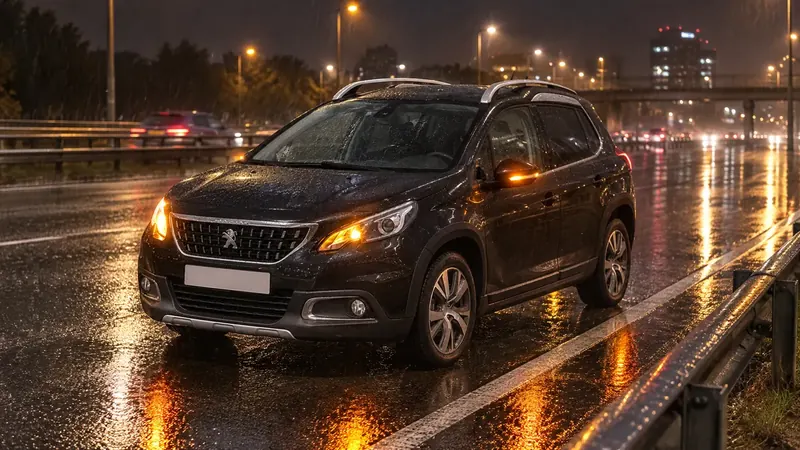
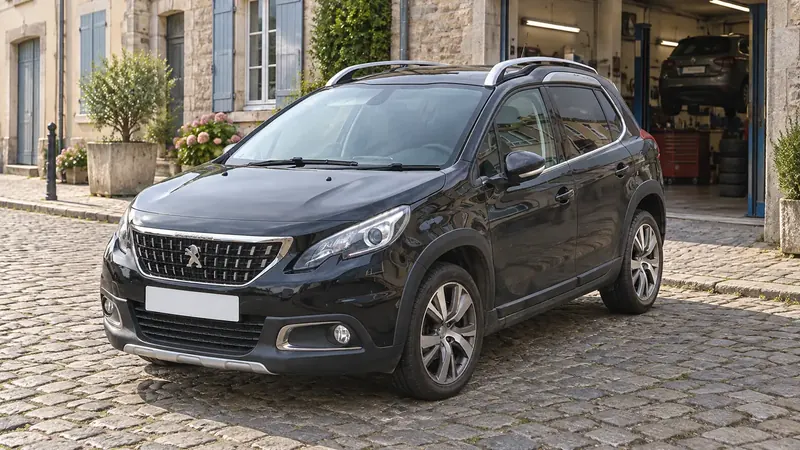
Hello and welcome. In this post, we'll look at how to pair Bluetooth and use Apple CarPlay or Android Auto on the Peugeot 2008 I (2016-present). The PEUGEOT Connect Radio is the touchscreen multimedia system in your Peugeot 2008. It handles the radio and DAB digital radio, music from USB sticks and portable devices, photos and text messages, and your Bluetooth telephone. It also connects your smartphone through MirrorLink™, CarPlay® or Android Auto. Some functions and settings depend on the version and configuration of your car, so you may not see all of them on your 2008.
How do I connect Apple CarPlay in my Peugeot 2008?
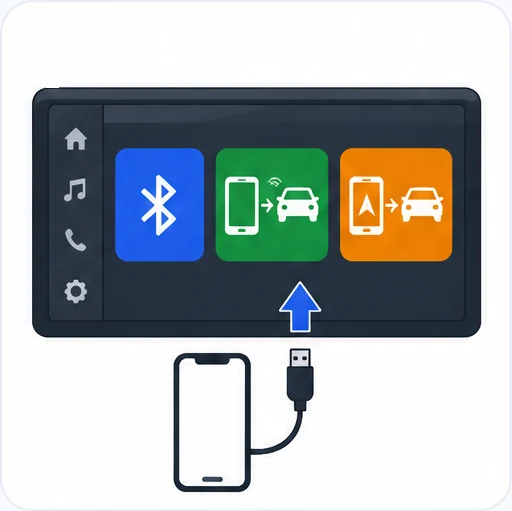
Connect your smartphone with a USB cable and press Telephone to display the CarPlay interface. If it is already connected by Bluetooth, press Telephone, then PHONE, then CarPlay.
Quick Reference
Scroll the table sideways.
Section
In short
PEUGEOT Connect Radio
System basics, pairing safety and standby message
Applications
View photos from USB and manage text messages
Radio
Tune, preset stations, RDS, TA and audio settings
DAB (Digital Audio Broadcasting) radio
Select DAB band and use FM-DAB Tracking
Media
USB, AUX, Bluetooth streaming, Apple players, supported files
Telephone
Smartphone mirroring, Bluetooth pairing, calls and ringtone
PEUGEOT Connect Radio
The PEUGEOT Connect Radio combines the multimedia audio system, applications and the Bluetooth® telephone. The functions and settings vary depending on the version and configuration of your car.
Pairing safety: Pair a Bluetooth mobile telephone with the hands-free system only when the car is stationary and the ignition is on, because pairing needs your full attention.
Protection: The system is protected so that it will only operate in your car.
Energy Economy Mode: When this message appears, the system is about to go into standby.
Open Source Software: For the OSS codes used by the system, ask a PEUGEOT dealer or a qualified workshop for details.
Applications
The Applications menu lets you view photos from a USB memory stick and manage text messages from your telephone.
To protect the system, do not use a USB hub. The system can read folders and image files in these formats:.tiff,.gif,.jpg/jpeg,.bmp and.png.
Viewing photos:
Insert the stick: Insert a USB memory stick in the USB port.
Open Applications: Press Applications to display the primary page.
Open Photos: Press Photos.
Choose a folder: Select a folder.
Choose an image: Select the image you want to view.
See details: Press the details button to display the information about the photo.
Go back: Press the back arrow to go back a level.
Managing messages on the SMS tab:
Open Applications: Press Applications to display the primary page.
Open SMS: Press SMS, then select the SMS tab.
Display settings: Press the settings button to choose how messages are displayed.
Find a recipient: Press the search button to search for and select a recipient.
Managing quick messages:
Open the tab: Select the Quick messages tab.
Display settings: Press the settings button to choose how messages are displayed.
New message: Press the new message button to write a new message.
Delete: Press the basket next to a message to delete it.
Open a message: Press the button next to a message to display the secondary page.
Edit: On the secondary page, press the edit button to change the existing text, the new message button to write a new one, or the basket to delete the message.
Radio
All radio functions start from the Radio Media button, and most settings sit on the secondary page under OPTIONS.
Selecting a station: Press Radio Media to display the primary page, then use one of these methods:
Automatic search: Press one of the search buttons to find radio stations automatically.
Manual search: Move the cursor up or down to search through the frequencies.
Direct entry: Press the frequency, enter the FM or AM value using the virtual keypad, then press OK to confirm.
Electrical equipment not approved by the Brand, such as a USB charger plugged into the 12 V socket, can affect radio reception. Hills, buildings, tunnels and basement car parks can also block reception, including in RDS mode. This is normal for radio waves and does not mean the audio system is faulty.
Changing waveband:
Open Radio Media: Press Radio Media to display the primary page.
Open options: Press OPTIONS to go to the secondary page.
Change band: Press Band to change the waveband.
Confirm: Press in the grey zone.
Presetting a station: Select a station or frequency, then make a short press on the star outline. If the star is already solid, the station is already preset. Alternatively, select a station or frequency, press Preset, then make a long press on one of the buttons to store the station.
Activating or deactivating RDS:
Open Radio Media: Press Radio Media to display the primary page.
Open options: Press OPTIONS to go to the secondary page.
Switch RDS: Activate or deactivate RDS.
Confirm: Press in the grey zone.
With RDS on, the radio retunes to alternative frequencies so you can keep listening to the same station. Radio stations do not cover 100% of the country, so you can still lose a station during a journey.
Displaying text information: The Radio Text function shows information sent by the station about the station or the song playing. Press Radio Media, press OPTIONS, activate or deactivate News, then press in the grey zone to confirm.
Playing TA messages: The TA (Traffic Announcement) function gives priority to traffic alerts. It needs good reception of a station that broadcasts them. During an announcement, the current media is interrupted, and it carries on playing when the message ends. Press Radio Media, press OPTIONS, activate or deactivate TA, then press in the grey zone to confirm.
Audio settings:
Open Radio Media: Press Radio Media to display the primary page.
Open options: Press OPTIONS to go to the secondary page.
Open settings: Press Audio settings.
Choose a tab: Select the Tone, Balance, Sound, Voice or Ringtones tab and adjust the settings.
Confirm: Press the back arrow.
Tone: The Ambience settings and Bass, Medium and Treble are separate for each audio source.
Balance: The All passengers, Driver and Front only settings are shared by all sources.
Sound: Activate or deactivate Volume linked to speed, Auxiliary input and Touch tones.
Digital radio gives higher quality reception. The different multiplexes offer a choice of stations listed in alphabetical order.
Selecting DAB:
Open Radio Media: Press Radio Media to display the primary page.
Open options: Press OPTIONS to go to the secondary page.
Choose DAB: Press Band and select the DAB band.
Confirm: Press in the grey zone.
DAB does not cover 100% of the country. When the digital signal is poor, FM-DAB Tracking keeps you on the same station by switching to the matching FM analogue station, if there is one.
Activating FM-DAB Tracking:
Open Radio Media: Press Radio Media to display the primary page.
Open options: Press OPTIONS to go to the secondary page.
Switch tracking: Activate or deactivate FM-DAB Tracking.
Confirm: Press in the grey zone.
When the system switches to FM, there is a delay of a few seconds and sometimes a change in volume. It switches back to DAB once the digital signal is good again. If the station is not available on FM, or FM-DAB Tracking is off, the sound cuts out while the digital signal is too weak.
Media
You can play music from a USB memory stick, a portable device, your smartphone over Bluetooth or an Apple® player.
USB: Insert the USB memory stick in the USB port, or connect the USB device with a suitable cable (not supplied). To protect the system, do not use a USB hub. On the first connection, the system builds playlists in temporary memory, which can take from a few seconds to several minutes. Fewer non-music files and folders mean a shorter wait. The playlists update every time you switch off the ignition or connect a USB memory stick. They are memorised, so if nothing changes, loading is quicker next time.
Auxiliary socket (AUX): Depending on equipment, and only if Auxiliary input is checked in the audio settings.
Connect: Connect the portable device (MP3 player, etc.) to the jack socket with an audio cable (not supplied).
Device volume: Set the volume on the portable device to a high level first.
System volume: Then adjust the volume of the audio system.
You control playback from the portable device.
Selecting the source: Press Radio Media to display the primary page, press SOURCES, then choose the source.
Bluetooth® audio streaming: Streaming lets you listen to music from your smartphone. The Bluetooth profile must be activated. Set the volume on the smartphone to a high level first, then adjust the system volume. If play does not start on its own, start playback from the smartphone. You control it from the smartphone or the system's touch buttons. Once connected in Streaming mode, the smartphone counts as a media source.
Connecting Apple® players: Connect the player to the USB port with a suitable cable (not supplied). Play starts automatically and you control it through the audio system. The classifications available are those of the player (artists, albums, genres, playlists, audiobooks, podcasts), or a library structure. The default is by artist. To change it, go back to the first level of the menu, select the classification you want (playlists, for example) and confirm, then go down through the menu to your track. The audio system software may not be compatible with the generation of your Apple® player.
Information and advice:
The system supports USB Mass Storage devices, BlackBerry® devices and Apple® players via the USB ports. The adapter cable is not supplied.
Connected devices are managed with the audio system controls.
Devices not recognised on connection must use the auxiliary socket with a Jack cable (not supplied) or Bluetooth streaming, depending on compatibility.
Do not use a USB hub.
Playable file types:.wav,.wma,.aac,.ogg and.mp3, with a bit rate between 32 Kbps and 320 Kbps. VBR (Variable Bit Rate) is supported.
No other file types (.mp4, etc.) can be read.wma files should be to the wma 9 standard.
Supported sampling frequencies: 11, 22, 44 and 48 kHz.
Keep file names to 20 characters, without special characters such as " ?.; ù, to avoid reading or display problems.
Use only USB memory sticks in FAT32 format (File Allocation Table).
Use the original USB cable for the portable device where possible.
For burned CDR or CDRW discs, choose ISO 9660 level 1, 2 or Joliet when burning. Other formats may not play correctly.
Use the same burning standard on each disc, at the lowest speed possible (4x maximum), for the best sound. For a multi-session CD, Joliet is recommended.
Telephone
The Telephone menu connects your smartphone through MirrorLink™, CarPlay® or Android Auto, and handles Bluetooth® pairing and calls.
Using a smartphone while driving is prohibited, because it needs your full attention. Do all these operations with the car stationary. Applications can only be viewed when the car is stationary, and the display stops once the car moves.
MirrorLink™: This shows smartphone applications adapted for MirrorLink™ on the car screen. It needs a compatible smartphone and applications. The smartphone must be unlocked, and you should update its operating system and keep the date and time correct on both the smartphone and the system. For the list of eligible smartphones, ask a PEUGEOT dealer or a qualified workshop.
MirrorLink™ with the telephone not connected by Bluetooth:
Connect: Connect a USB cable. The smartphone charges while connected.
Open Telephone: On the system, press Telephone to display the primary page.
Start MirrorLink™: Press MirrorLink™ to start the application. Depending on the smartphone, you may need to activate the MirrorLink™ function on it.
Accept: Accept the screen pages that appear to start and complete the connection.
It is recommended that Bluetooth is switched on on the smartphone when you connect it.
MirrorLink™ with the telephone connected by Bluetooth:
Open Telephone: Press Telephone to display the primary page.
Secondary page: Press PHONE.
Start MirrorLink™: Press MirrorLink™ to start the application.
Once connected, a page shows the MirrorLink™ applications already on your smartphone. The audio sources stay available through touch buttons in the upper bar, and the system menus remain available through the dedicated buttons. Applications may take a while to appear, depending on your network quality.
CarPlay®: This shows CarPlay® compatible applications on the car screen once CarPlay® has been activated on the smartphone. Keep the smartphone's operating system updated. For the list of eligible smartphones, ask a PEUGEOT dealer or a qualified workshop.
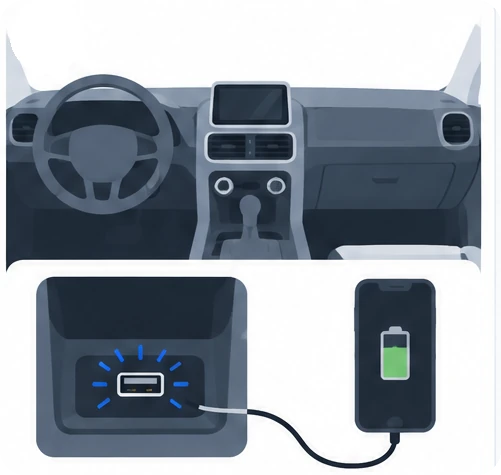
Connect: Connect a USB cable. The smartphone charges while connected.
Open CarPlay®: Press Telephone to display the CarPlay® interface.
If the smartphone is already connected by Bluetooth, connect the USB cable, press Telephone, press PHONE to go to the secondary page, then press CarPlay. Connecting the USB cable switches off the system's Bluetooth mode. You can open CarPlay® navigation at any time with the system's Navigation button.
Android Auto: First download the Android Auto application on your smartphone. It needs a compatible smartphone and applications. The smartphone must be unlocked, with its operating system, date and time up to date on both the smartphone and the system. For the list of eligible smartphones, ask a PEUGEOT dealer or a qualified workshop.
Android Auto with the telephone not connected by Bluetooth:
Connect: Connect a USB cable. The smartphone charges while connected.
Open Telephone: Press Telephone to display the primary page.
Start Android Auto: Press Android Auto. Depending on the smartphone, you may need to activate the Android Auto function on it.
Accept: Accept the screen pages that appear to start and complete the connection.
Android Auto with the telephone connected by Bluetooth: Press Telephone, press TEL to display the secondary page, then press Android Auto. Audio sources stay available in the upper bar, and the system menus through the dedicated buttons. Applications may take a while to appear, depending on your network.
Pairing a Bluetooth® telephone: Pair only with the car stationary and the ignition on. Activate Bluetooth on the telephone and make sure it is visible to all.
From the telephone: Select the system's name in the list of devices detected, then accept the connection request on the system.
Or from the system: Press Telephone, press Bluetooth search, then select your telephone in the list.
Check the code: Make sure the code is the same on the system and the telephone to complete the pairing.
If pairing fails, switch Bluetooth off and on again on your telephone. Depending on the telephone, you may be asked whether to transfer your contacts and messages.
Automatic reconnection: When you return to the car, the last telephone connected is recognised and connects within about 30 seconds of switching on the ignition, as long as Bluetooth is on. To change the connection profile:
Open Telephone: Press Telephone to display the primary page.
Secondary page: Press PHONE.
Paired devices: Press Bluetooth connection.
Device details: Press the details button for the telephone.
Choose profiles: Select one or more of Telephone (hands-free kit, telephone only), Streaming (wireless playing of the audio files on the telephone) and Internet data.
Confirm: Press OK.
Whether the system can connect to just one profile depends on the telephone, and all three profiles may connect by default. Available services depend on the network, SIM card and the device's Bluetooth compatibility, so check your telephone's manual and your operator. Compatible profiles are HFP, OPP, PBAP, A2DP, AVRCP, MAP and PAN. For compatibility and further help, ask a PEUGEOT dealer or a qualified workshop.
Managing paired telephones: Press Telephone, press PHONE, then press Bluetooth connection. Press a telephone's name to disconnect it, and press again to connect it. To delete one, press the basket at the top right of the screen, then press the basket next to the telephone.
Receiving a call: A ring and a pop-up on the screen announce the call. Make a short press on the steering mounted PHONE button to accept it. Make a long press on the same button, or press End call, to reject it.
Making a call: Using the telephone while driving is not recommended. Park the car and use the steering mounted controls.
New number: Press Telephone, enter the number on the keypad, then press Call.
Contact: Press Telephone, or make a long press on the steering mounted PHONE button, press Contacts, select the contact, then press Call.
Recent number: Press Telephone, or make a long press on the steering mounted button, press Recent calls, then select the contact.
You can always call directly from the telephone, but park the car first.
Setting the ringtone volume: Press Telephone, press OPTIONS to go to the secondary page, press Ring volume, then use the arrows or the cursor to set the volume.
Frequently Asked Questions
Why won't my Peugeot 2008 let me pair my phone while driving?
Pairing a Bluetooth telephone must be done with the car stationary and the ignition on, because it needs your full attention. Park safely, then pair from the telephone or with Bluetooth search on the system.
What music files will the Peugeot 2008 play from USB?
It plays.wav,.wma,.aac,.ogg and.mp3 files with a bit rate between 32 Kbps and 320 Kbps, from USB memory sticks in FAT32 format. Other types, such as.mp4, cannot be read.
Why does my DAB radio keep cutting out in my 2008?
DAB does not cover the whole country, and the sound cuts out when the digital signal is too weak if FM-DAB Tracking is off or the station is not on FM. Activate FM-DAB Tracking under OPTIONS to switch to the matching FM station.
How do I connect Apple CarPlay in my Peugeot 2008?
Connect your smartphone with a USB cable and press Telephone to display the CarPlay® interface. If it is already connected by Bluetooth, press Telephone, then PHONE, then CarPlay.
Once your phone is paired and your favourite stations are preset, the PEUGEOT Connect Radio in your 2008 is simple to live with. Do any setting up with the car parked, and check for any function that depends on your car's version.
Don't forget to follow us on Instagram for more Peugeot guides!
This is an independent guide, not an official Peugeot publication. If in doubt, contact a PEUGEOT dealer or a qualified workshop before carrying out any work.
Changing a bulb on your Peugeot 2008 is a job you can often do yourself, as long as you know which bulb goes where and how to reach it. This guide lists the front and rear lamps with their bulb types, explains …
Your Peugeot 2008 has several gauges and indicators that show the state of the car between services. This guide explains the service indicator, the coolant temperature gauge, the oil level checks and the AdBlue…
Your Peugeot 2008 has fuseboxes in the passenger compartment and under the bonnet. This guide shows you how to reach the fuse extraction tweezers, how to change a fuse safely, and which fuse protects which func…