Top up the AdBlue as soon as the first alert tells you the reserve level has been reached.
Choosing and buying AdBlue
- Use only AdBlue that meets the ISO 22241 standard.
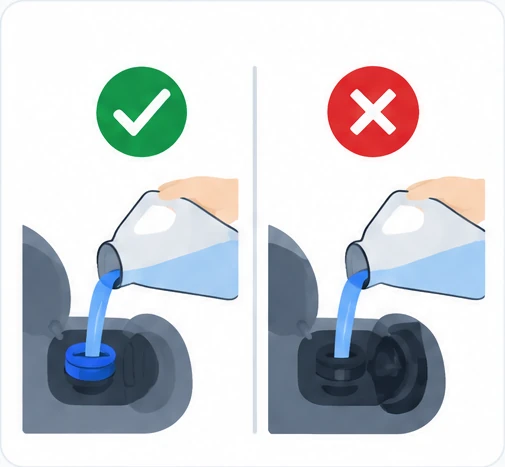
- Never transfer AdBlue to another container, as it would lose its purity.
- Never dilute AdBlue with water.
- You can buy AdBlue from a PEUGEOT dealer or a qualified workshop.
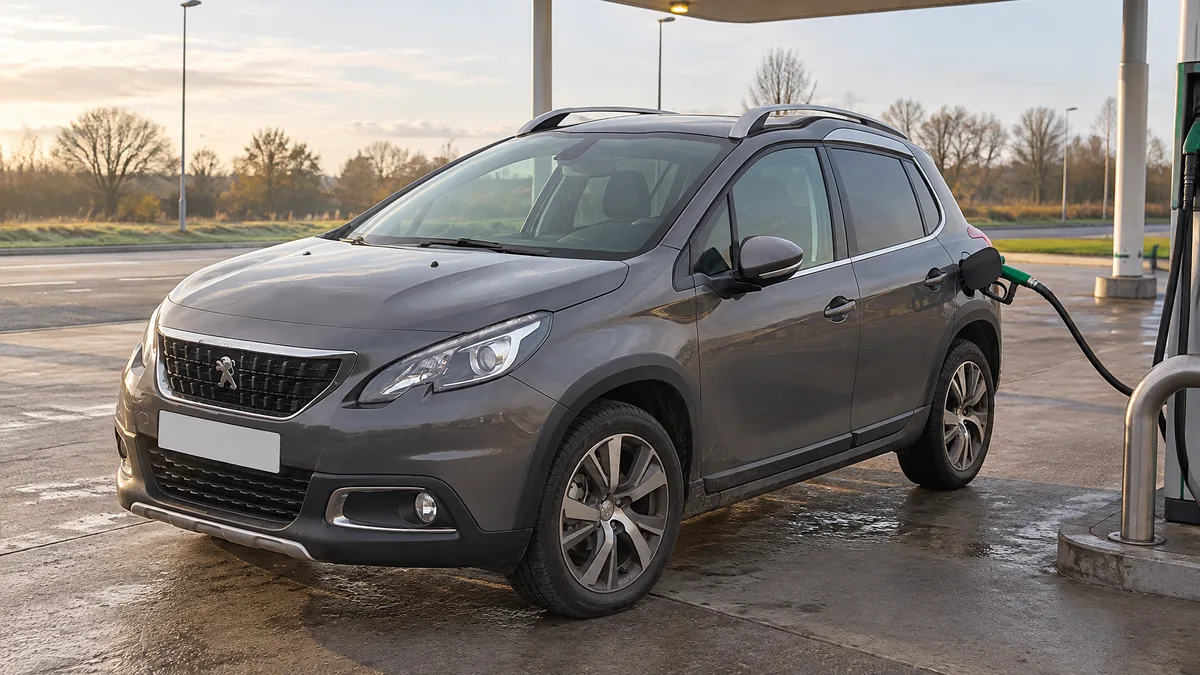
- On versions where the AdBlue tank is reached through the fuel filler flap, you can also use a service station with AdBlue pumps designed for private vehicles.
- Never top up from an AdBlue dispenser meant for heavy goods vehicles.
Precautions for use
AdBlue is a urea-based solution. It is non-flammable, colourless and odourless when kept in a cool place.
- Skin contact: wash the area with soap and water.
- Eye contact: rinse your eyes with large amounts of water or an eye wash solution for at least 15 minutes. If burning or irritation persists, get medical attention.
- If swallowed: rinse your mouth straight away with clean water, then drink plenty of water.
- Vapour: in some conditions, such as high temperatures, ammonia may be released. Do not breathe in the vapour, as ammonia irritates the eyes, nose and throat.
Keep AdBlue out of the reach of children, in its original container or bottle.
Storage
AdBlue freezes at about -11°C and deteriorates above 25°C. Store it in a cool place out of direct sunlight, and it will keep for at least a year. If it has frozen, you can use it once it has fully thawed. Never keep flasks or cans of AdBlue in your car.
Before you start
- Park level: park the car on a flat, level surface.
- Check the temperature in winter: make sure the car is above -11°C. If not, the AdBlue cannot be poured in because of freezing, so park somewhere warmer for a few hours first.
- Switch off: switch off the ignition and remove the key to stop the engine.
Never pour AdBlue into the Diesel fuel tank. If you have run out and see the message "Add AdBlue: Starting impossible", you must add at least 5 litres.
Access through the boot (1.6 litre BlueHDi Euro 6.1)
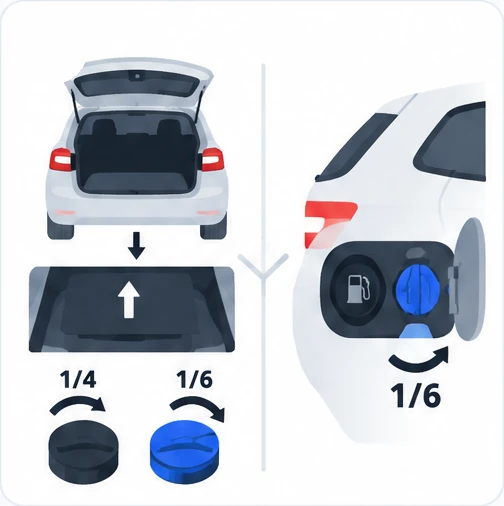
- Clear the boot floor: raise the boot carpet and, depending on equipment, lift out the spare wheel and/or the storage box.
- Black cap: without pressing, turn the black cap a quarter turn anti-clockwise and lift it off.
- Blue cap: turn the blue cap 1/6 of a turn anti-clockwise.
- Remove: lift off the blue cap.
Access through the fuel flap (1.5 BlueHDi euro 6.2)
- Open the flap: with the car unlocked, open the fuel filler flap.
- Blue cap: turn the blue cap of the AdBlue tank 1/6 of a turn anti-clockwise.
- Remove: take off the blue cap.
Refilling
- From a container or bottle: check the use-by date, read the label instructions carefully, then pour the contents into the AdBlue tank. To avoid overflowing, add between 10 and 13 litres.
- At a service station: insert the AdBlue pump nozzle and fill until the nozzle stops automatically. To avoid overflowing, stop after the first automatic cut-out.
If the tank is completely empty, confirmed by the alert messages and the engine not starting, you must add at least 5 litres. If you splash AdBlue on the bodywork, rinse it off straight away with cold water or wipe it with a damp cloth. If it has crystallised, clean it off with a sponge and hot water.
After refilling through the boot (1.6 litre BlueHDi Euro 6.1)
- Blue cap: refit the blue cap and turn it 1/6 of a turn clockwise, to its stop.
- Black cap: refit the black cap and turn it a quarter turn clockwise without pressing. Make sure the mark on the cap lines up with the mark on the support.
- Boot floor: depending on equipment, put the spare wheel and/or the storage box back in the bottom of the boot.
- Finish: refit the boot carpet and close the tailgate.
After refilling through the fuel filler flap (1.5 litre BlueHDi Euro 6.2)
- Blue cap: refit the blue cap and turn it 1/6 of a turn clockwise, to its stop.
- Finish: close the fuel filler flap.
Starting after running out of AdBlue
- Wait: after topping up, wait at least 5 minutes before you switch on the ignition, open the driver's door, unlock the car or insert the key in the switch.
- Ignition on: switch on the ignition.
- Start: after at least 10 seconds, start the engine.
Do not put empty AdBlue bottles or containers in your household waste. Place them in a suitable container or take them to your dealer.
Frequently Asked Questions
How far can I drive my Peugeot 2008 after the AdBlue warning comes on?
Once the reserve alert appears, you can drive a further 1,500 miles (2,400 km) before the AdBlue tank is empty. Top up as soon as the first alert appears.
How much AdBlue do I need to add if the tank is empty?
If the tank is completely empty and the engine will not start, you must add at least 5 litres. When using containers, add between 10 and 13 litres to avoid overflowing.
Can I fill my Peugeot 2008 with AdBlue from a lorry pump?
No. Never top up from an AdBlue dispenser reserved for heavy goods vehicles. Use only pumps designed for private vehicles, on versions where the tank is reached through the fuel filler flap.
Why won't my 2008 start straight after adding AdBlue?
After topping up from empty, wait at least 5 minutes before switching on the ignition, opening the driver's door, unlocking the car or inserting the key. Then switch on the ignition and wait at least 10 seconds before starting the engine.
Topping up AdBlue on your Peugeot 2008 is a simple job once you know which access type your car has. Fill up when the first alert appears, use the right fluid, and you will avoid being caught out by an engine that refuses to start.
More Peugeot 2008 Guides
To understand the alerts linked to AdBlue and the SCR system, see our guides to the Peugeot 2008 orange warning lights and the Peugeot 2008 red warning lights.
Don't forget to follow us on Instagram for more Peugeot guides!
This is an independent guide, not an official Peugeot publication. If in doubt, contact a PEUGEOT dealer or a qualified workshop before carrying out any work.
Related guides: Peugeot 2008 model guides.
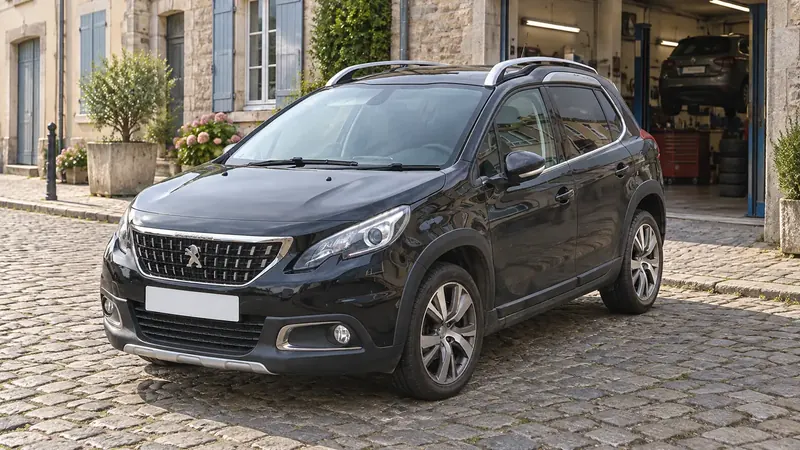
Cover adapted from a photograph by Vauxford — Wikimedia Commons, CC BY-SA 4.0 (AI edited).