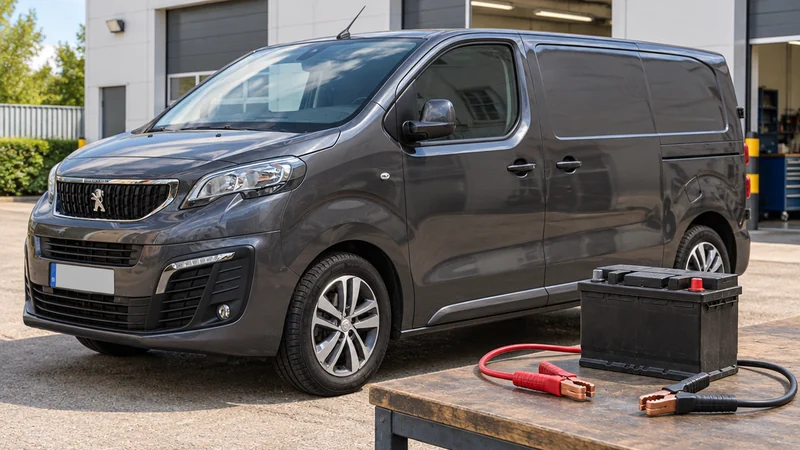
Peugeot Expert III 12V Battery and Jump Starting
Hello and welcome. In this post we look at the 12 V battery on the Peugeot Expert III van (2016-2024). We cover where to find it, jump starting from another battery, charging with a charger, and disco
AdBlue on the Peugeot Expert 2016-2024 is filled via the front left-hand door. How much to add, which pumps to avoid, and how to restart after running dry.
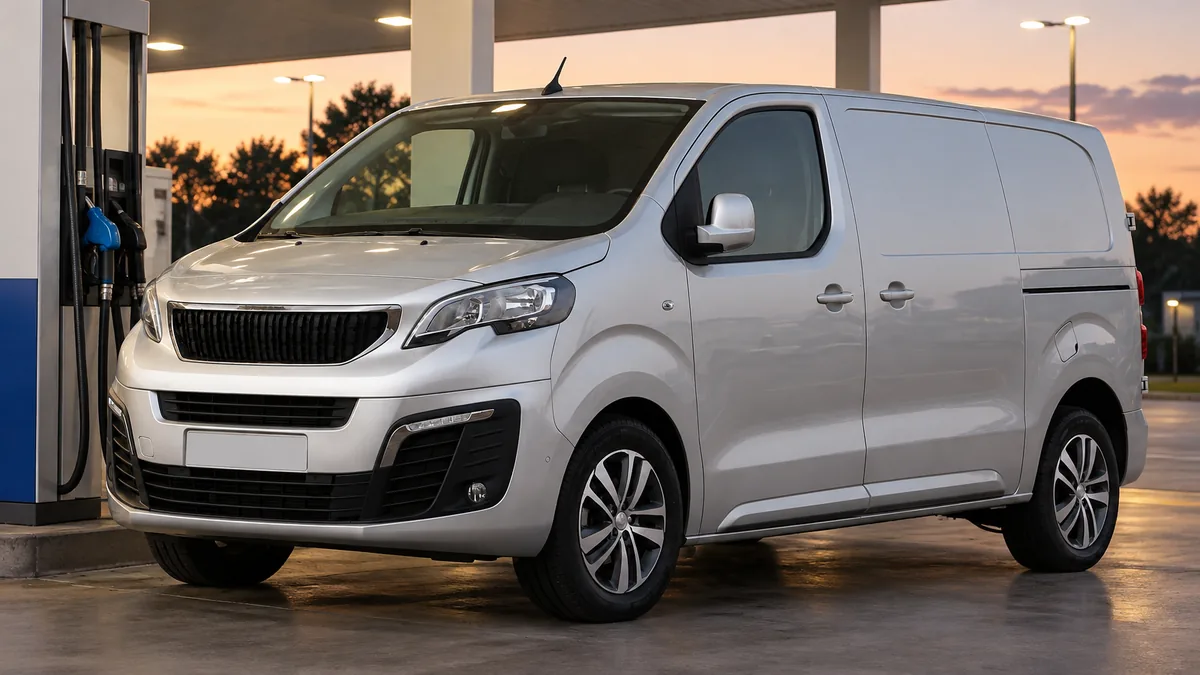
On the Peugeot Expert III built from 2016 to 2024, AdBlue goes into its own tank, sealed by a blue cap, which you reach by opening the front left-hand door. The tank holds about 20 litres. How much you put in and how you restart the van after it has run dry both affect whether the system registers the top-up.
You reach the AdBlue filler on the Peugeot Expert by opening the front left-hand door. It is sealed by a blue cap. Open the door, turn the cap a sixth of a turn anti-clockwise, lift it off and fill.
Never pour AdBlue into the Diesel fuel tank. If you splash any on the bodywork, rinse it off straight away with cold water or wipe it with a damp cloth. If it has already crystallised, clean it off with a sponge and hot water.
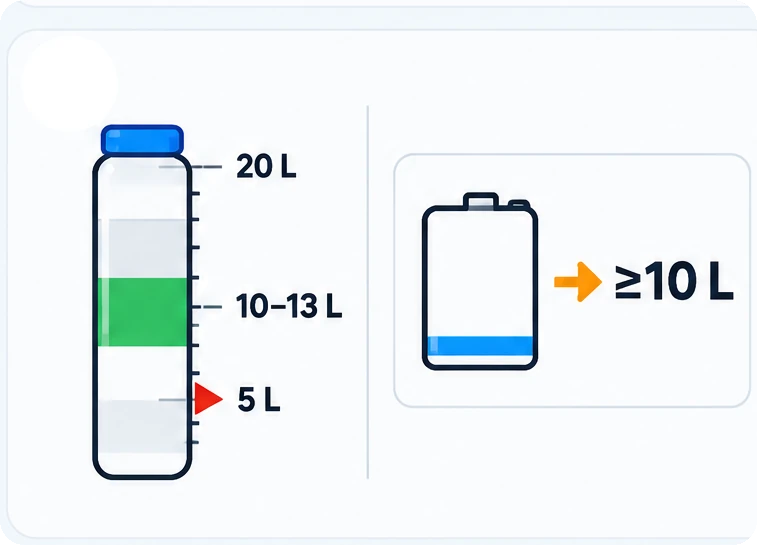
The tank holds about 20 litres. The figures below help you avoid overfilling and make sure the system detects what you have added.
Scroll the table sideways.
| Situation | What to do |
|---|---|
| Tank capacity | About 20 litres |
| Topping up from containers | Add between 10 and 13 litres |
| Topping up at a service station pump | Stop after the nozzle's first automatic cut-out |
| Small intermediate top-up | Only 5 litres or more is registered |
| Tank completely empty | Add at least 10 litres |
A completely empty tank is confirmed by the message “Top up AdBlue: Starting impossible”. Don't panic if the new level doesn't show straight away. Detection can take a few minutes of driving.
The SCR system uses AdBlue, a urea-based liquid. With it, a catalytic converter turns up to 85% of the nitrogen oxides in the exhaust into nitrogen and water. It works alongside the Diesel Particle Filter on BlueHDi engines so they meet the Euro 6 standard.
Scroll the table sideways.
| Stage | Distance |
|---|---|
| Range from a full tank | About 5,000 km, roughly 3,000 miles |
| First alert, reserve level reached | 2,400 km, about 1,500 miles, of range left |
| Further alerts | Several more during the remaining 2,400 km |
| Tank empty | Vehicle immobilised |
The range varies considerably with driving style and the vehicle itself. The best time to top up is as soon as the first reserve alert appears, rather than running down through the later warnings. If you expect to cover more than 5,000 km between two services, plan on topping up between them.
Once the AdBlue tank is empty, a device required by law stops the engine from restarting. When topping up after a breakdown caused by lack of AdBlue, follow these steps.
A faulty SCR system means the van no longer meets Euro 6 and starts polluting. Once a malfunction is confirmed, get to a PEUGEOT dealer or a qualified workshop as soon as possible. After 1,100 km, about 685 miles, a device automatically stops the engine from starting. Whether the problem is a fault or an empty tank, a range indicator shows how far you can still drive before the van is immobilised.
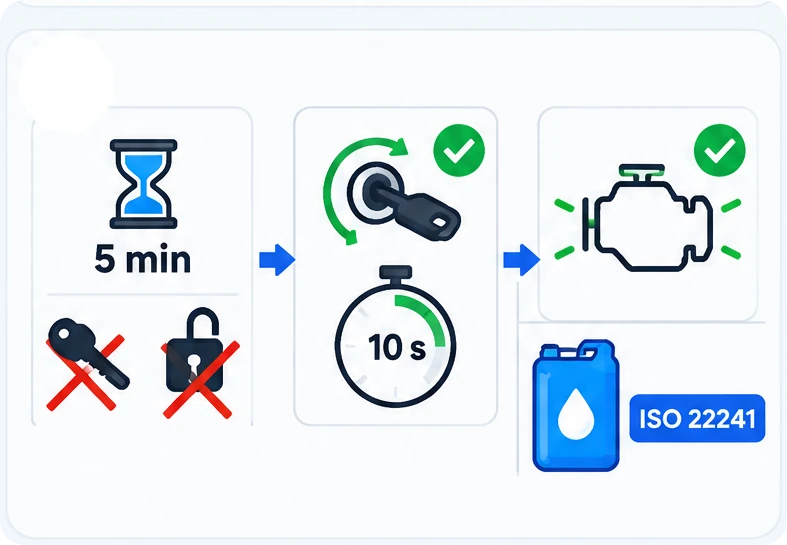
AdBlue freezes below around -11°C. The SCR system has a heater for the AdBlue tank, so you can keep driving in very cold weather. Frozen AdBlue can't be poured into the tank, though, so make sure the van is above -11°C before you top up.
AdBlue deteriorates above +25°C. Keep containers in a cool place out of direct sunlight and the fluid will last at least a year. If a container has frozen, you can use it once it has completely thawed at room temperature. Don't store AdBlue containers in the van. Keep them out of reach of children, in their original container.
AdBlue is non-flammable, colourless and odourless when kept cool. In some conditions, high temperatures for example, ammonia may be released. Don't inhale it, because the vapour irritates the eyes, nose and throat.
No. Pumps reserved for heavy goods vehicles must never be used on the Expert. Use a pump designed for passenger vehicles, or buy containers from a PEUGEOT dealer or a qualified workshop.
Detection isn't always instant, and it can take a few minutes of driving before the new level registers. Also check how much you added, because the system ignores intermediate top-ups of less than 5 litres.
AdBlue freezes below around -11°C, but the SCR system heats the tank so you can keep driving. Frozen AdBlue can't be poured, though. If it's that cold, move the van somewhere warmer for a few hours before you pour.
No. AdBlue containers should never be stored in the vehicle. Keep them somewhere cool, out of direct sunlight and away from children, and the fluid will last at least a year.
If the first reserve alert comes up mid-week, a 10 litre container poured into the tank via the front left-hand door will stop it from turning into a van that won't start on Monday morning.
Don't forget to follow us on Instagram for more Peugeot guides!
This is an independent guide, not an official Peugeot publication. If in doubt, contact a PEUGEOT dealer or a qualified workshop before carrying out any work.
Related guides: Peugeot Expert model guides; Peugeot Expert III red warning lights; Peugeot Expert III orange warning lights; Peugeot Expert III green and blue warning lights.
Cover adapted from a photograph by Vauxford — Wikimedia Commons, CC BY-SA 4.0 (AI edited).
Hello and welcome. In this post we look at the 12 V battery on the Peugeot Expert III van (2016-2024). We cover where to find it, jump starting from another battery, charging with a charger, and disco
Hello and welcome. In this post we look at tyre under-inflation detection on the Peugeot Expert III van (2016-2024). We cover how it works, what to do when the alert comes on, reinitialising the syste
Hello and welcome. In this post, we'll look at what to do if you get a flat tyre on your Peugeot Expert III van (2016-2024). We cover the temporary puncture repair kit, the spare wheel and how to chan