Peugeot 508 II 12V Battery and Jump Starting
Hello and welcome. This article covers the 12 V battery on the Peugeot 508 II (2018-2023): reaching it, jump starting, charging with a charger, and disconnecting and reconnecting it. We also look at t
Peugeot 508 II engine data, towing limits, nose weights, hybrid battery figures and where to find the VIN, manufacturer's label and tyre pressure label.
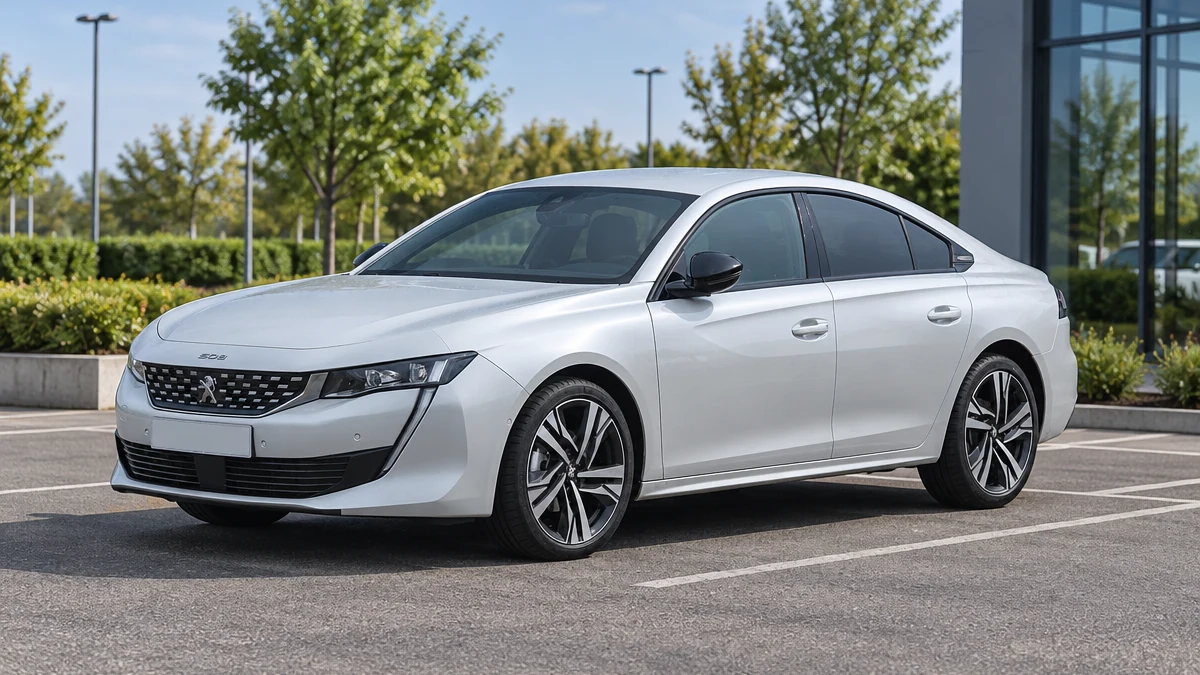
Hello and welcome. In this post, we'll look at the technical specifications of the Peugeot 508 II. You'll find the engine data and towed loads for the petrol, diesel and rechargeable hybrid versions, a note on the dimensions, and where the identification markings are on your car.
Scroll the table sideways.
| Section | In short |
|---|---|
| Engine technical data and towed loads | Where to find values, altitude rule, towing warnings |
| Engines and towed loads - Petrol | Petrol engine data and towing limits |
| Engines and towed loads - Diesel BlueHDi | BlueHDi diesel engine data and towing limits |
| Engines and towed loads - Diesel | HDi 180 diesel data and towing limits |
| Engines and towed loads - Rechargeable hybrid | Hybrid engine, motor, battery and towing figures |
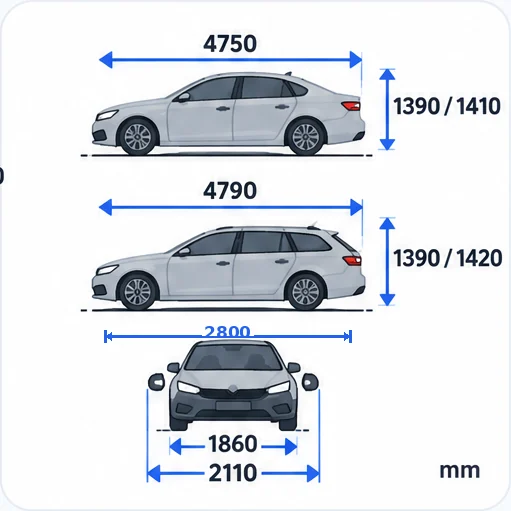
| Dimensions (mm) | Hatchback and SW dimensions, measured unladen |
| Identification markings | Where to find the VIN and labels |
The engine characteristics are given in your car's registration document and in sales brochures. The tables only show the values available at the time of publication. If a value is missing, contact a PEUGEOT dealer or a qualified workshop.
The maximum power figure is the value type-approved on a test bed, under conditions set by European legislation (Directive 1999/99/EC).
The weights and towed loads for your car are shown on the registration document, in sales brochures and on the manufacturer's plate or label. Keep these points in mind:
When you tow, follow these safety warnings:
There are six petrol engines, all running on unleaded fuel. Model codes start with FP... or F3... for the Hatchback and FR... or F4... for the SW.
Scroll the table sideways.
| Engine (gearbox) | Codes / model code | Cubic capacity (cc) | Max. power: EC standard (kW) |
|---|---|---|---|
| PureTech 130 S&S EAT8 (Automatic 8-speed) | EB2ADTS ATN8 STT Euro 6.3 / 6.4 / HNST | 1,199 | 96 |
| THP 150 EAT6 (Automatic 6-speed) | EP6FDTMD AT6III Euro 5 / 5GXV | 1,598 | 110 |
| THP 165 EAT6 (Automatic 6-speed) | EP6FDTM AT6III Euro 5 / 5GYV | 1,598 | 121 |
| PureTech 180 S&S EAT8 (Automatic 8-speed) | EP6FADTXD ATN8 STT Euro 6.3 / 5GFT | 1,598 | 133 |
| PureTech 215 EAT8 (Automatic 8-speed) | EP6FADTXM ATN8 Euro 6.1 / EGZP | 1,598 | 158 |
| PureTech 225 S&S EAT8 (Automatic 8-speed) | EP6FADTX ATN8 STT Euro 6.3 / 5GGT | 1,598 | 165 |
The braked trailer figures apply within the GTW limit, on a 10% or 12% gradient.
Scroll the table sideways.
| Engine | Braked trailer (kg) | Unbraked trailer (kg) | Max. nose weight (kg) |
|---|---|---|---|
| PureTech 130 S&S EAT8 | Hatchback 1,330, SW 1,290 | Hatchback 735, SW 745 | 70 |
| THP 150 EAT6 | 600 | 600 | 75 |
| THP 165 EAT6 | 600 | 600 | 75 |
| PureTech 180 S&S EAT8 | Hatchback 1,600, SW 1,600 | Hatchback 745, SW 745 | 75 |
| PureTech 215 EAT8 | Hatchback 600, SW 600 | Hatchback 600, SW 600 | 75 |
| PureTech 225 S&S EAT8 | Hatchback 1,600, SW 1,600 | Hatchback 745, SW 745 | 75 |
There are two BlueHDi diesel engines, both with an automatic 8-speed gearbox and both available as Hatchback and SW. Model codes start with FB... or FH... for the Hatchback and FC... or FJ... for the SW.
Scroll the table sideways.
| Engine | Codes / model code | Cubic capacity (cc) | Max. power: EC standard (kW) |
|---|---|---|---|
| BlueHDi 130 S&S EAT8 | DV5RC ATN8 STT Euro 6.3 / 6.4 / YHZT | 1,499 | 96 |
| BlueHDi 180 S&S EAT8 | DW10FC AMN8 STT Euro 6.2 / EHZR | 1,997 | 133 |
The braked trailer figures apply within the GTW limit, on a 10% or 12% gradient. The values are the same for the Hatchback and SW.
Scroll the table sideways.
| Engine | Braked trailer (kg) | Unbraked trailer (kg) | Max. nose weight (kg) |
|---|---|---|---|
| BlueHDi 130 S&S EAT8 | 1,500 | 745 | 75 |
| BlueHDi 180 S&S EAT8 | 1,800 | 750 | 75 |
The HDi 180 EAT8 has an automatic 8-speed gearbox and runs on diesel. Its codes are DW10FC AMN8 Euro 5, with model code EHZN (Hatchback FH..., SW FJ...). It has a cubic capacity of 1,997 cc and a maximum power of 133 kW (EC standard).
Scroll the table sideways.
| Towing value | Hatchback | SW |
|---|---|---|
| Braked trailer, within the GTW limit, on a 10% or 12% gradient (kg) | 600 (1,800 for Russia only) | 600 (1,800 for Russia only) |
| Unbraked trailer (kg) | 600 (750 for Russia only) | 600 (750 for Russia only) |
| Maximum authorised nose weight (kg) | 75 | 75 |
There are two rechargeable hybrid versions. Model codes start with F3... for the Hatchback and F4... for the SW.
Scroll the table sideways.
| Specification | HYBRID 225 e-EAT8 | PSE HYBRID4 360 e-EAT8 |
|---|---|---|
| Codes | EP6FADTXHPD EATN8 FWD Euro 6.3 / 6.4 | EP6FADTXHPR EATN8 AWD Euro 6.3 / 6.4 |
| Model code | DGZT | 5GBT |
| Braked trailer, within the GTW limit, on a 10% or 12% gradient (kg) | Hatchback 1,330, SW 1,340 | Hatchback 1,260, SW 1,270 |
| Unbraked trailer (kg) | Hatchback 600, SW 600 | Hatchback 530, SW 530 |
| Maximum authorised nose weight (kg) | Hatchback 54, SW 62 | Hatchback 75, SW 75 |
| Petrol engine | PureTech 180 | PureTech 200 |
| Gearbox | Electric automatic 8-speed | Electric automatic 8-speed |
| Cubic capacity (cc) | 1,598 | 1,598 |
| Petrol engine max. power: EC standard (kW) | 133 | 147 |
| Fuel | Unleaded | Unleaded |
| Electric motor technology | Synchronous with permanent magnets | Synchronous with permanent magnets |
| Electric motor max. power: EC standard (kW) | 81 | Front: 81, Rear: 83 |
| Traction battery technology | Lithium-Ion | Lithium-Ion |
| Voltage (Volts AC) | 240-400 | 240-400 |
| Installed capacity (kWh) | 11.6 / 12.4 | 11.6 / 12.4 |
| Combined power (kW) | 165 | 265 |
The dimensions are given in millimetres for both the Hatchback and the SW. These dimensions were measured on an unladen car.
Your car carries several visible markings that identify it.
The manufacturer's label shows:
The tyres/paint code label shows:
Your car may have been fitted from new with tyres that have higher load and speed indices than those on the label. This does not change the tyre pressures (on cold tyres). If you change the type of tyres, ask a PEUGEOT dealer which tyre fits are approved for your car.
Never go faster than 62 mph (100 km/h) when towing, and always follow the local laws.
Yes. The GTW and towed load values are valid up to 1,000 metres. Reduce the towed load by 10% for each additional 1,000 metres.
The tyres/paint code label is on the driver's door. It shows the unladen and laden tyre pressures, the tyre specification, the spare tyre pressure and the paint colour code.
Yes. When the outside temperature is above 37°C, reduce the towed weight, because the car may limit its performance to protect the engine.
Knowing your 508's engine data and towing limits helps you load and tow safely, and knowing where the labels are saves time when you need a code or a tyre pressure. If a figure is missing or you are not sure which one applies to your car, check the registration document or ask a PEUGEOT dealer or a qualified workshop.
To understand the lamps on your instrument panel, read our guides to the red warnings, orange warnings and blue and green warnings on the Peugeot 508.
Don't forget to follow us on Instagram for more Peugeot guides!
This is an independent guide, not an official Peugeot publication. If in doubt, contact a PEUGEOT dealer or a qualified workshop before carrying out any work.
Related guides: Peugeot 508 model guides.
Cover adapted from a photograph by Vauxford — Wikimedia Commons, CC BY-SA 4.0 (AI edited).
Hello and welcome. This article covers the 12 V battery on the Peugeot 508 II (2018-2023): reaching it, jump starting, charging with a charger, and disconnecting and reconnecting it. We also look at t
Hello and welcome. This article looks at the under-inflation detection system on the Peugeot 508 II (2018-2023). We cover what the alert means, reinitialising the system after adjusting pressures, and
Hello and welcome. In this post we look at the 12 V battery on the Peugeot 508 I (2014-present). We cover jump starting from another battery, charging with a charger, disconnecting and reconnecting, a