Peugeot 308 Hybrid Engine and Performance Review
Peugeot 308 hybrids decoded: the self-charging Hybrid 136 and the 180, 195 and 225 plug-ins, with official outputs, battery sizes and towing limits.
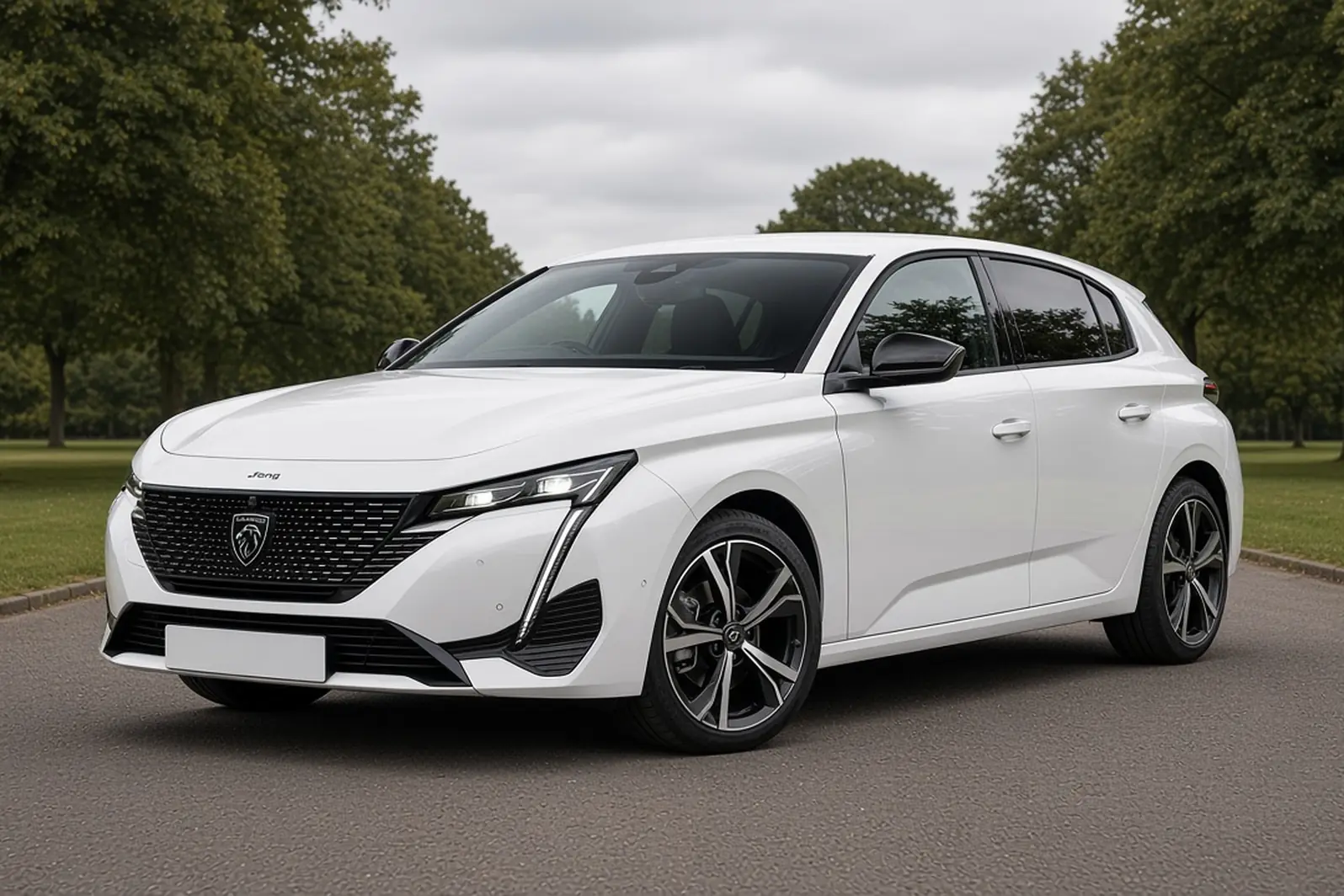
"Hybrid" covers a lot of ground in the current Peugeot 308 range. On a hatchback or SW badged Hybrid 136, it means a self-charging petrol car with a small electric boost. On a Plug-in Hybrid 180, 195 or 225, it means a car with a battery big enough for useful electric-only driving, which you charge from the mains. Here's how to tell them apart and which one suits you.
Quick Guide to 308 Hybrid Badges
Scroll the table sideways.
| Badge | Type | Plug in? | Battery |
|---|---|---|---|
| Hybrid 136 e-DCS6 | Mild hybrid (48 V) | No | 0.9 kWh |
| Plug-in Hybrid 180 e-EAT8 | Plug-in hybrid | Yes | 12.4 kWh |
| Plug-in Hybrid 225 e-EAT8 | Plug-in hybrid | Yes | 12.4 kWh |
| Plug-in Hybrid 195 e-DCS7 | Plug-in hybrid | Yes | 17.2 kWh |
| Plug-in Hybrid 225 e-DCS7 | Plug-in hybrid | Yes | 17.2 kWh |
All figures in this guide come from the English Peugeot 308 owner's handbook.
The Plug-in Hybrids
Every plug-in 308 uses a 1,598 cc PureTech turbo petrol engine, a permanent-magnet synchronous electric motor and a lithium-ion battery. The earlier cars use the 8-speed e-EAT8 automatic; later ones switched to a 7-speed dual-clutch (e-DCS7) with a bigger battery.
Scroll the table sideways.
| 180 e-EAT8 | 225 e-EAT8 | 195 e-DCS7 | 225 e-DCS7 | |
|---|---|---|---|---|
| Petrol engine | PureTech 150, 110 kW | PureTech 180, 132 kW | PureTech 150, 110 kW | PureTech 180, 132 kW |
| Electric motor | 81 kW | 81 kW | 81 kW | 81 kW |
| Battery | 12.4 kWh | 12.4 kWh | 17.2 kWh | 17.2 kWh |
| Combined power | 133 kW | 165 kW | 143 kW | 165 kW |
| Braked trailer, hatch / SW | 1,500 / 1,450 kg | 1,500 / 1,450 kg | 1,360 / 1,315 kg | 1,360 / 1,315 kg |
| Unbraked trailer | 750 kg | 750 kg | 750 kg | 750 kg |
The nose weight limit is 70 kg throughout.
e-EAT8 or e-DCS7?
If you're buying used, the gearbox code tells you a lot. The e-DCS7 cars have a battery almost 40% larger (17.2 vs 12.4 kWh), which means more electric-only miles between charges. The older e-EAT8 cars, however, can tow more: 1,500 kg against 1,360 kg for the hatchback.
Between the two power outputs, the higher-powered versions mostly help with overtaking and with a full load on board. For most commuting, the 180 or 195 does the job, and the electric motor's instant response does most of the work at town speeds.
Living with a plug-in 308
- Charge as often as you can. A plug-in hybrid's economy depends entirely on starting journeys with charge in the battery.
- Boot space: the plug-in hybrid gives up some boot space compared with the petrol 308 (412 litres) because of where the battery sits.
- Long journeys: once the battery is flat, you're driving a 1.6 petrol car carrying extra weight, so a diesel or mild hybrid may suit high-mileage drivers better.
- Company cars: in the UK, low official CO2 figures put plug-in hybrids in lower benefit-in-kind bands than petrol or diesel cars.
The Hybrid 136: Self-Charging
The Hybrid 136 is a simpler system aimed at drivers who can't plug in:
Scroll the table sideways.
| Hybrid 136 e-DCS6 | |
|---|---|
| Petrol engine | PureTech 136, 1,199 cc, 100 kW |
| Gearbox | 6-speed electric dual-clutch automatic |
| Electric motor | 21 kW, permanent-magnet synchronous |
| Battery | Lithium-ion, 48 V, 0.9 kWh |
| Braked trailer, hatch / SW | 1,150 / 1,100 kg |
| Unbraked trailer, hatch / SW | 720 / 750 kg |
The electric motor sits in the gearbox and is recharged as you slow down. It helps the engine when pulling away and in slow traffic, so the petrol engine works less in town. You drive and refuel it just like a normal petrol automatic.
Which 308 Hybrid Is Right for You?
- You can charge at home and mostly do short trips: a plug-in hybrid. Choose the e-DCS7 for more electric range, or the e-EAT8 if you tow.
- You can't charge, but drive mostly in town: the Hybrid 136.
- You mostly drive long motorway distances: look at the BlueHDi 130 diesel in our Peugeot 308 engine and performance review.
For everything else about the car, read our Peugeot 308 review.
Related guides
Choosing an engine for a Peugeot 308 used to be simple: petrol or diesel. The third-generation car (2021 onwards) offers a much wider spread, from a three-cylinder turbo petrol to a 48-volt hybrid, two generations of...
The third-generation 308 moved almost everything onto screens: a digital instrument panel and a 10-inch touchscreen with configurable "i-Toggle" shortcuts. Once you know where things are, it's quick to use. This guide...
The 308's digital instrument panel shows a lot more than speed and revs. Alongside the warning lamps there are status readouts for servicing, oil level, engine temperature, AdBlue (on diesels) and, on plug-in hybrids...