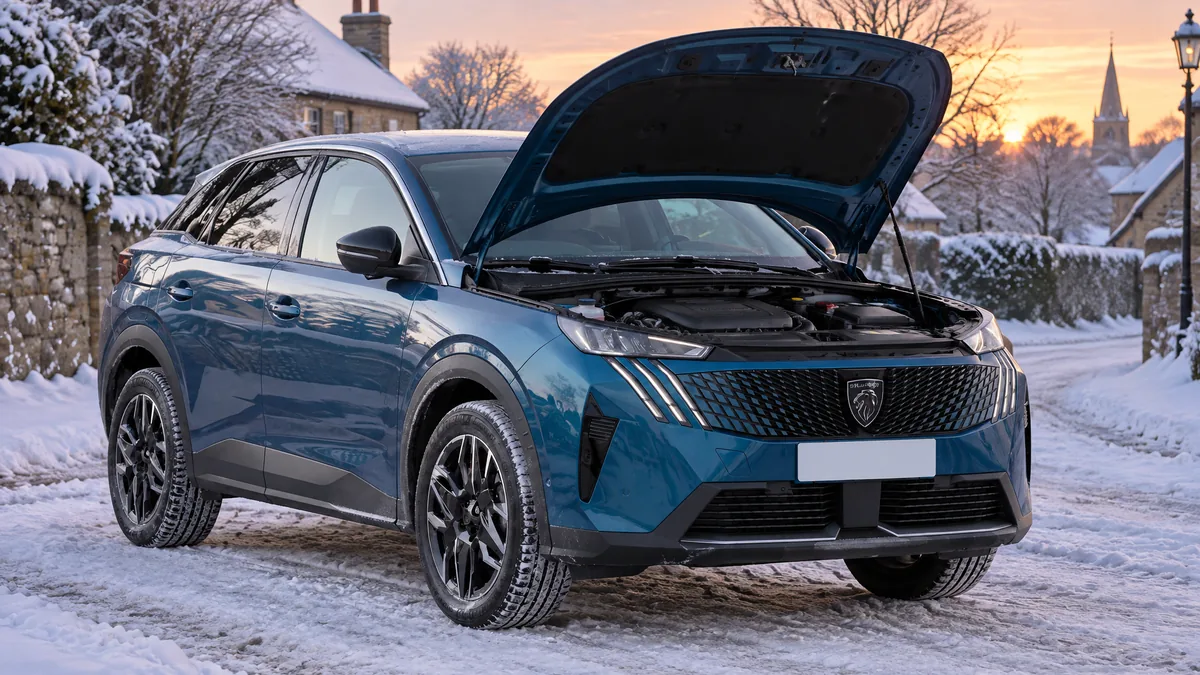
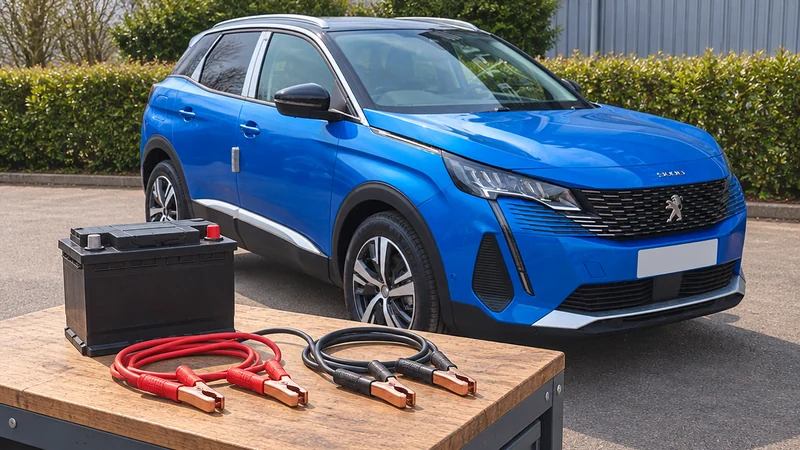
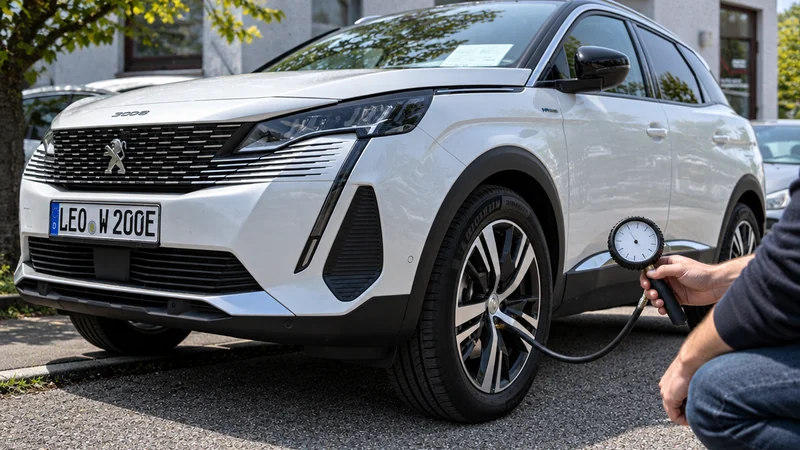
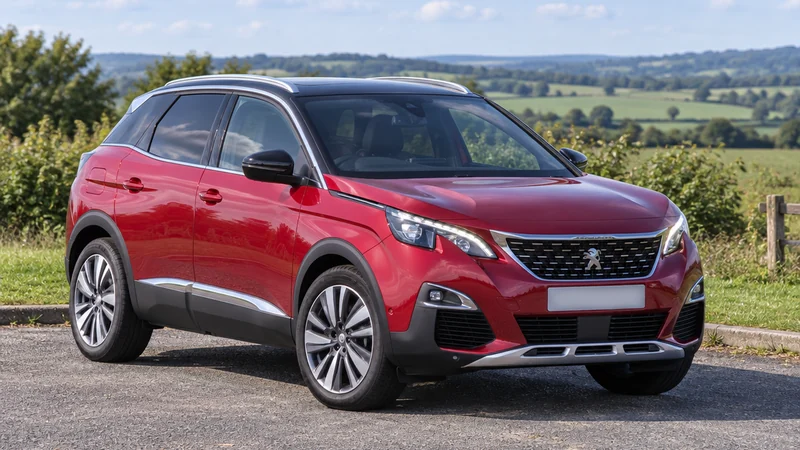
Hello and welcome. In this post, we'll look at where the 12 V battery is and how to jump-start the car on the Peugeot 3008 III (2024-2025). A flat 12 V battery can stop your Peugeot 3008 from starting, but you can usually get going again with a backup battery, a booster or a battery charger. This guide explains how to reach the battery and jump start the car. It also covers charging the battery, disconnecting and reconnecting it, and what to expect afterwards. The procedures differ between petrol, hybrid and rechargeable hybrid versions, and some details depend on your car's equipment, so follow the section that matches your 3008.
Where is the 3008 battery, and how do I jump-start it?
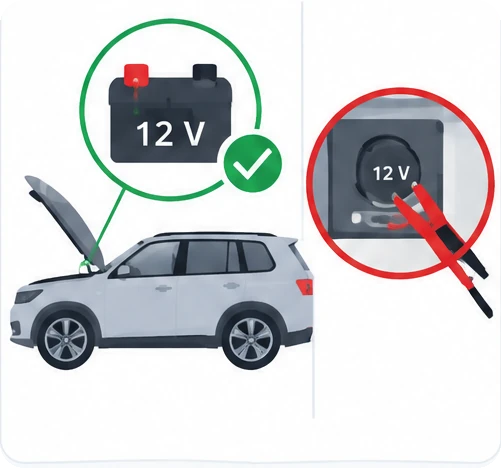
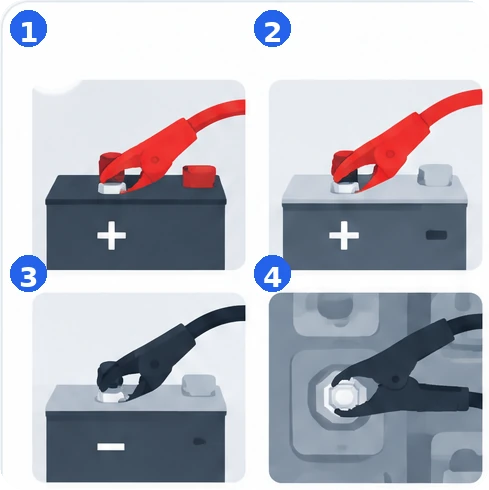
The 12 V battery is in the engine compartment. Connect the red lead to your positive terminal first, then to the donor positive; connect the black lead to the donor negative first, then to the earth point on your engine block. Do not jump-start from a 12 V socket.
Quick Reference
Scroll the table sideways.
Section
In short
Lead-acid starter batteries
Safety rules, disposal and warnings before touching the battery
For petrol versions
Jump starting, charging and disconnecting on petrol cars
For hybrid versions
Jump starting and charging the 12 V and 48 V batteries
For rechargeable hybrid versions
Two accessory batteries: access, charging and disconnecting order
Following reconnection
Wait 1 minute, then reset some equipment
Lead-acid starter batteries
Lead-acid starter batteries contain harmful substances: sulphuric acid and lead. They must be disposed of in line with regulations and must never be thrown away with household waste. Take your used battery to a designated collection point.
Before you handle the battery, keep these safety rules in mind:
Protect your eyes and face before handling the battery.
Work on the battery only in a well ventilated area, away from naked flames and sources of sparks, to avoid any risk of explosion or fire.
Wash your hands afterwards.
Never connect the negative jump lead to the metal part of the electronic control units or to the back of the LED headlamps, as this can destroy them. Connect it to the remote earth point provided for this purpose.
Never try to charge a frozen battery, as there is a risk of explosion. Have a frozen battery checked by a PEUGEOT dealer or a qualified workshop. They will check that the internal components are not damaged and that the case has not cracked, as a cracked case could leak toxic and corrosive acid.
Never try to start the engine by pushing the car.
Electric vehicles: if the accessory battery is flat, you can no longer start the motor or recharge the traction battery. Before you work on the accessory battery, select mode P and switch off the ignition. Then check that the instrument panel is off and that the car is not being charged. Do not use the accessory battery to jump-start another vehicle or to charge another vehicle's battery.
The symbols on the battery mean:
No sparks or naked flames, no smoking.
Always protect your eyes. Explosive gases can cause blindness and injury.
Keep the battery out of the reach of children.
The battery contains sulphuric acid, which can make you go blind or cause severe burns.
Refer to for more information.
Explosive gases can be present close to the battery.
For petrol versions
On petrol versions, the battery is under the bonnet. You use the same terminals to jump start the engine and to charge a flat battery.
Accessing the battery
Release the bonnet: pull the internal release lever, then the external safety catch.
Open up: raise the bonnet.
(+): positive terminal with a quick-release terminal.
(-): negative terminal. You cannot reach it, so a remote earth point is located opposite the battery.
Starting using another battery
If the battery is flat, you can start the engine with a backup battery and jump leads, or with a battery booster. The backup battery can be an external one or the battery of another vehicle. Before you start:
Never start the engine by connecting a battery charger.
Never use a 24 V or higher battery booster.
Check that the backup battery has a nominal voltage of 12 V and a capacity at least equal to that of the flat battery.
Make sure the two vehicles are not touching each other.
Switch off all electrical equipment on both vehicles (audio system, wipers, lighting, etc.).
Keep the jump leads well away from the engine's moving parts (fan, belt, etc.).
Do not disconnect the (+) terminal while the engine is running.
Cover: lift the plastic cover on the (+) terminal, if your car has one.
Red cable: connect it to the (+) terminal of flat battery A (at the metal elbow), then to the (+) terminal of backup battery B or of the booster.
Green or black cable, first end: connect it to the (-) terminal of backup battery B or of the booster, or to an earth point on the assisting vehicle.
Green or black cable, other end: connect it to earth point C.
Assisting vehicle: start its engine and leave it running for a few minutes.
Your car: operate the starter and let the engine run. If it does not start straight away, switch off the ignition and wait a few moments before trying again.
Idle: wait for the engine to return to idle.
Disconnect: remove the jump leads in reverse order.
Cover: refit the plastic cover on the (+) terminal, if your car has one.
Recharge: let the engine run for at least 30 minutes with the car stationary, so the battery reaches an adequate state of charge.
If you drive off straight away before the battery has enough charge, some functions, such as Stop & Start, may be affected.
Charging the battery using a battery charger
Keeping the battery well charged gives it the longest service life. You may need to charge it in these cases:
You mainly use the car for short journeys.
The car will be off the road for several weeks.
Ask a PEUGEOT dealer or a qualified workshop for advice. If you charge the battery yourself, use only a charger compatible with 12 V nominal voltage lead-acid batteries. Follow the charger manufacturer's instructions and never reverse the polarities. You do not need to disconnect the battery.
Ignition: switch it off.
Electrical consumers: switch off the audio system, lighting, wipers, etc.
Charger: switch off charger B before connecting its cables to the battery, to avoid dangerous sparks.
Cables: make sure the charger cables are in good condition.
Cover: lift the plastic cover on the (+) terminal, if your car has one.
Red cable: connect the positive (+) red cable to the (+) terminal of battery A.
Black cable: connect the negative (-) black cable to earth point C on the car.
Finish: when charging is complete, switch off charger B before disconnecting the cables from battery A.
If your car has the 12 V charger label, use only a 12 V charger to avoid irreversible damage to the electrical components.
Disconnecting/Reconnecting the 12 V battery
If the car will not be used for a long time, disconnecting the battery helps it keep enough charge to start the engine. You only need to disconnect the (+) terminal. First:
Openings: close all doors, the boot, the windows and the roof.
Electrical devices: switch off the audio system, wipers, lamps, etc.
Ignition: switch it off and wait for 4 minutes.
To disconnect the (+) terminal:
Cover: depending on equipment, lift the plastic cover on the (+) terminal.
Lever: raise lever A fully to release clamp B.
Clamp: lift clamp B off.
To reconnect the (+) terminal:
Lever: raise lever A fully.
Clamp: refit open clamp B on the (+) terminal.
Push: push clamp B fully down.
Lock: lower lever A to lock clamp B.
Cover: depending on equipment, lower the plastic cover on the (+) terminal.
Do not force the lever. If the clamp is not positioned correctly, it cannot lock, so start the procedure again. Stop & Start may not work during the first trip after you start the engine again. It will only come back after the car has been parked for a continuous period. That period depends on the outside temperature and the battery's state of charge, and can be up to about 8 hours.
For hybrid versions
On hybrid versions, the hybrid system starts the car, but it still needs a 12 V supply. There are several reasons why the car may not start. If the 12 V battery is flat, you can provide the 12 V supply with a backup battery and jump leads, a battery booster or a battery charger.
Starting using another battery
Never use a 24 V or higher battery booster.
Check that the backup battery has a nominal voltage of 12 V and a capacity at least equal to that of the flat battery.
Make sure the two vehicles are not touching each other.
Switch off all electrical equipment on both vehicles (audio system, wipers, lighting, etc.).
Keep the jump leads well away from the engine's moving parts (fan, belt, etc.).
Do not disconnect the (+) terminal while the engine is running.
Cover: lift the plastic cover on the (+) terminal, if your car has one.
Red cable: connect it to the (+) terminal of flat battery A (at the metal elbow), then to the (+) terminal of backup battery B or of the booster.
Green or black cable, first end: connect it to the (-) terminal of backup battery B or of the booster, or to an earth point on the assisting vehicle.
Green or black cable, other end: connect it to earth point C.
Assisting vehicle: start its engine and leave it running for a few minutes.
Your car: operate the starter and let the engine run. If it does not start straight away, switch off the ignition and wait a few moments before trying again.
Idle: wait for the engine to return to idle.
Disconnect: remove the jump leads in reverse order.
Cover: refit the plastic cover on the (+) terminal, if your car has one.
Recharge: let the engine run for at least 20 minutes with the car stationary, in a ventilated area so exhaust gases do not build up. This lets the battery reach an adequate state of charge.
If you drive off straight away before the battery has enough charge, some functions, such as e-Auto mode, may be affected.
Charging the 12 V battery using a battery charger
Keeping the battery well charged gives it the longest service life. You may need to charge it, for example if the car will be off the road for several weeks. Ask a PEUGEOT dealer or a qualified workshop for advice.
The hybrid system is connected to the 12 V network through the DC/DC converter, so any work on the battery may affect how the whole system behaves. If you charge the battery yourself, use only a charger compatible with 12 V nominal voltage lead-acid batteries. Follow the charger manufacturer's instructions and never reverse the polarities. You do not need to disconnect the battery.
Ignition: switch it off.
Electrical consumers: switch off the audio system, lighting, wipers, etc.
Charger: switch off charger B before connecting its cables to the battery, to avoid dangerous sparks.
Cables: make sure the charger cables are in good condition.
Cover: lift the plastic cover on the (+) terminal, if your car has one.
Red cable: connect the positive (+) red cable to the (+) terminal of battery A.
Black cable: connect the negative (-) black cable to earth point C on the car.
Finish: when charging is complete, switch off charger B before disconnecting the cables from battery A.
Charging the 48 V battery using a 12 V battery charger
If the car does not start, first follow the jump starting procedure above. If that fails, especially after a long period of storage, the 48 V battery may be flat and need charging. Before you start:
Do not try to charge the hybrid system directly.
The hybrid system is connected to the 12 V network through the DC/DC converter, so any work may affect how the whole system behaves.
Use only a specific 12 V battery charger able to maintain 13.5 V with a high current of 40-50 A (approx. 600 W).
Use only a charger compatible with 12 V nominal voltage lead-acid batteries.
Never use a 24 V or higher battery booster.
Follow the charger manufacturer's instructions and never reverse the polarities.
You do not need to disconnect the battery.
Ignition: switch it off.
Electrical consumers: switch off the audio system, lighting, wipers, etc.
Charger: switch off charger B before connecting its cables to the 12 V battery, to avoid dangerous sparks.
Cables: make sure the charger cables are in good condition.
Cover: lift the plastic cover on the (+) terminal, if your car has one.
Red cable: connect the positive (+) red cable to the (+) terminal of battery A.
Black cable: connect the negative (-) black cable to earth point C on the car.
Wake the car: open the driver's door and switch on the ignition without pressing the brake pedal.
Let it charge: the hybrid system starts charging the 48 V battery automatically after 1 minute with a 12 V supply higher than 13.5 V. The charger should supply about 30-50A. Once the 48 V battery has enough energy, the hybrid system stops charging on its own. This takes between 30 to 40 minutes, depending on the 12 V battery's state of charge.
Charger off: switch off charger B before disconnecting the cables from 12 V battery A.
Cover: refit the plastic cover on the (+) terminal, if your car has one.
Start: operate the starter and let the engine run.
Idle: wait for the engine to return to idle.
Recharge: let the engine run for at least 20 minutes with the car stationary, in a ventilated area so exhaust gases do not build up. This lets the 48 V battery reach an adequate state of charge.
For rechargeable hybrid versions
The rechargeable hybrid system has two accessory batteries: one at the front and one at the centre of the car. If they need replacing, contact a PEUGEOT dealer or a qualified workshop. Never use these batteries to start or jump-start another vehicle.
Accessing the front battery
The front battery is under the bonnet. To reach the (+) terminal:
Release the bonnet: pull the internal release lever, then the external safety catch.
Open up: raise the bonnet.
(+): positive terminal with a quick-release terminal.
(-): negative terminal. You cannot reach it, so a remote earth point is located opposite the battery.
Accessing the central battery
The central battery is in the front armrest storage compartment.
Armrest: open the front armrest.
Floor: unclip the floor of the compartment.
(+): positive terminal, protected by a red plastic cover. You cannot reach it.
(-): negative terminal with a black quick-release connector.
Charging the front battery using a battery charger
Keeping the front battery well charged gives it the longest service life. You may need to charge it in these cases:
You mainly use the car for short journeys.
The car will be off the road for several weeks.
Ask a PEUGEOT dealer or a qualified workshop for advice. If you charge the front battery yourself, use only a charger compatible with 12 V nominal voltage lead-acid batteries. Follow the charger manufacturer's instructions and never reverse the polarities. You do not need to disconnect the battery.
Ignition: switch it off.
Electrical consumers: switch off the audio system, lighting, wipers, etc.
Charger: switch off charger B before connecting its cables to the battery, to avoid dangerous sparks.
Cables: make sure the charger cables are in good condition.
Cover: lift the plastic cover on the (+) terminal, if your car has one.
Red cable: connect the positive (+) red cable to the (+) terminal on battery A.
Black cable: connect the negative (-) black cable to earth point C on the car.
Finish: when charging is complete, switch off charger B before disconnecting the cables from battery A.
Disconnecting/reconnecting the accessory batteries
Use this procedure if the car will be left unused for a long time. Before disconnecting the batteries:
Doors: open the driver's door and the boot.
Other doors: close all the other doors.
Electrical consumers: switch off the audio system, wipers, lamps, etc.
Ignition: switch it off and wait for the READY indicator lamp to go out.
Wait: allow a waiting time of 4 minutes.
Never change the order of the steps below, as this risks irreversible damage. To disconnect:
Central battery: disconnect the (-) terminal using the black quick-release connector.
Front battery lever: raise lever A fully to release red quick-release clamp B on the (+) terminal.
Front battery clamp: lift clamp B off.
To reconnect:
Front battery lever: raise lever A fully.
Front battery clamp: refit open clamp B on the (+) terminal.
Push: push clamp B fully down.
Lock: lower lever A to lock clamp B.
Central battery: connect the (-) terminal using the black quick-release connector.
Following reconnection
After you reconnect the battery, switch on the ignition and wait 1 minute before starting the engine. This gives the electronic systems time to initialise. If minor problems remain after this, contact a PEUGEOT dealer or a qualified workshop.
Following the relevant section of, you may need to reinitialise this equipment
Electronic key.
Sunroof.
Electric windows.
Date and time.
Preset radio stations.
When you switch on the ignition after reconnecting the battery, the message "Collision risk detection system fault" appears on the instrument panel. This is perfectly normal, and the message disappears while you drive.
Frequently Asked Questions
How long should I leave my Peugeot 3008 running after a jump start?
On petrol versions, let the engine run for at least 30 minutes with the car stationary. On hybrid versions, it is at least 20 minutes with the car stationary, in a ventilated area.
Where is the 12 V battery on the Peugeot 3008?
The battery is under the bonnet. On rechargeable hybrid versions, there is a second accessory battery in the front armrest storage compartment.
Do I need to disconnect the battery to charge it on my 3008?
No, it is not necessary to disconnect the battery. Use only a charger compatible with 12 V nominal voltage lead-acid batteries, and switch it off before connecting or disconnecting the cables.
Why does my 3008 show "Collision risk detection system fault" after reconnecting the battery?
This message appears when you switch on the ignition after reconnecting the battery, and it is perfectly normal. It disappears while you drive.
A flat battery is rarely more than an inconvenience if you follow the right steps for your version of the 3008. Connect the cables in the correct order and keep the safety rules in mind. Give the battery time to recharge afterwards, and if anything still seems wrong, contact a PEUGEOT dealer or a qualified workshop.
Don't forget to follow us on Instagram for more Peugeot guides!
This is an independent guide, not an official Peugeot publication. If in doubt, contact a PEUGEOT dealer or a qualified workshop before carrying out any work.
Hello and welcome. In this article we look at the 12 V battery on the Peugeot 3008 II (2016-present). We will cover jump starting, charging with a battery charger, and disconnecting and reconnecting t
Hello and welcome. In this article we look at tyre pressures and the under-inflation detection system on the Peugeot 3008 II (2016-present). We will cover how the system works, what to do when the ale
Hello and welcome. In this article we look at the technical specifications of the Peugeot 3008 II (2016-present). We will cover engine figures, towed loads, hybrid motor and battery details, and where