Peugeot 407 I Indicators: Red Warnings (2005-2010)
What each red warning lamp on your Peugeot 407 I means and what to do, from the STOP and braking lamps to oil pressure and punctured tyre alerts.
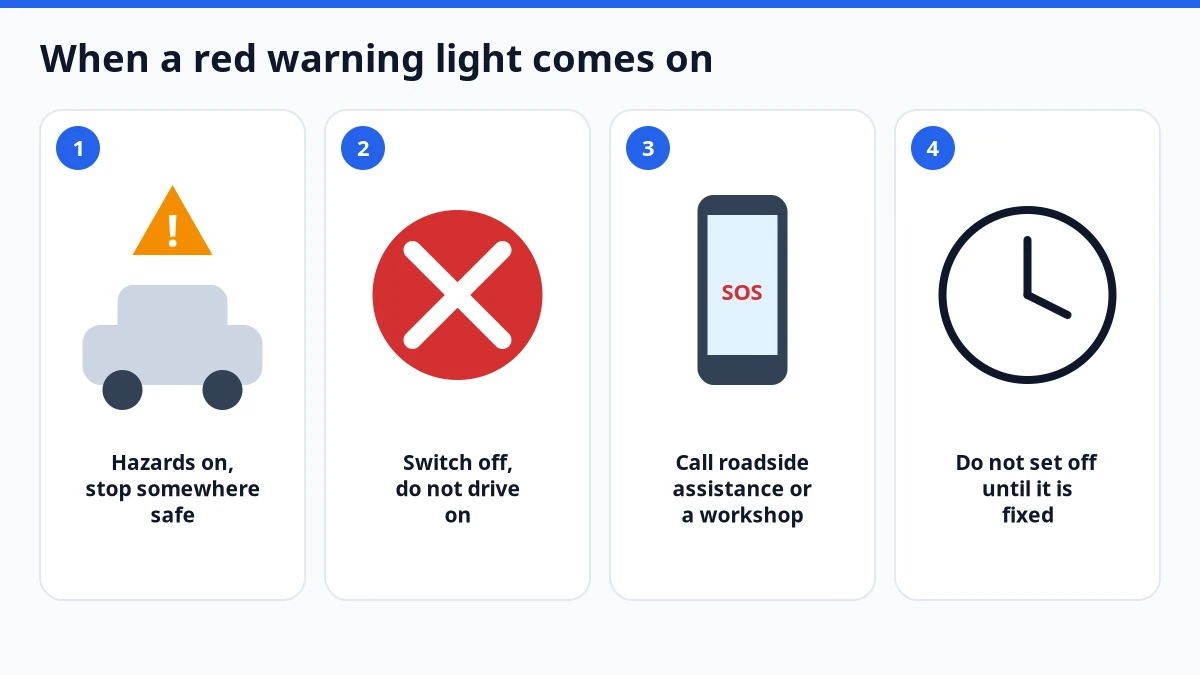
Red warning lamps on your Peugeot 407 point to something that needs your attention straight away. Some ask you to stop as soon as it is safe to do so, while others are reminders, such as an unfastened seat belt or an open door.
This guide covers the Peugeot 407 I (2005-2010) and is based on the handbook edition for vehicles produced from 1 February 2010. Some lamps depend on the version or equipment of your car, so not every lamp listed here will appear on yours.
Quick Reference
Scroll the table sideways.
Warning
Urgency
In short
Braking system warning lamp
Stop safely, get help
Parking brake on, low fluid or EBFD fault
Seat belt warning lamp
Action needed from you
A front seat belt is not fastened
STOP warning lamp
Stop safely, get help
Serious fault, check other lamps
Power steering warning lamp
Get it checked soon
Power steering fault
Parking brake warning lamp
Action needed from you
Parking brake applied or not fully released
Battery charge warning lamp
Get it checked soon
Charging circuit malfunction
Punctured tyre warning lamp
Stop safely, get help
One or more punctured tyres detected
Fuel filler cap warning lamp (according to version)
Action needed from you
Fuel filler cap missing or badly fitted
Door/boot open warning lamp
Action needed from you
A door or the boot is open
Engine oil pressure warning lamp
Stop safely, get help
Engine oil pressure too low
Braking system warning lamp
This red lamp covers three situations. It comes on if the parking brake is applied or not fully released. It also comes on, together with the STOP warning lamp, if the brake fluid level has dropped too far or if there is a malfunction in the electronic brake force distribution (EBFD). In these last two cases, the warning is also repeated on the instrument panel screen.
What to do:
If the lamp is on because of the parking brake:
The lamp is showing that the parking brake is still applied or not fully released.
If the lamp is on together with the STOP warning lamp (low brake fluid level or EBFD malfunction):
Stop immediately, as soon as it is safe to do so.
Consult a PEUGEOT dealer.
Seat belt warning lamp
This red lamp works with the ignition switched on. It comes on if the driver or front passenger has not fastened their seat belt, or has unfastened it.
What to do:
The lamp is telling you that a front seat belt is not fastened.
STOP warning lamp
The STOP lamp can appear on its own or together with another warning lamp. When it is displayed on its own, it indicates a power steering fault. It also comes on together with the engine oil pressure, coolant temperature, braking system or punctured tyre warning lamps.
What to do:
If the STOP lamp is displayed on its own:
It is pointing to a power steering fault.
If it comes on together with another warning lamp:
Stop as soon as it is safe to do so.
Consult a PEUGEOT dealer.
Power steering warning lamp
This red lamp indicates a fault with the power steering. It comes on together with the STOP warning lamp.
What to do:
Consult a PEUGEOT dealer.
Parking brake warning lamp
This red lamp shows that the parking brake is still applied or has not been released correctly. It comes on together with the braking system warning lamp.
What to do:
The lamp is telling you that the parking brake is still on or not properly released.
Battery charge warning lamp
If this red lamp comes on while the engine is running, it indicates a malfunction in the charging circuit, for example at the battery terminals or the alternator belt.
What to do:
Consult a PEUGEOT dealer.
Punctured tyre warning lamp
This red lamp shows that one or more punctured tyres have been detected. A message on the multifunction screen tells you which wheel or wheels are affected. It comes on together with the STOP warning lamp.
What to do:
Stop as soon as it is safe to do so.
Change the damaged wheel.
Have the damaged wheel repaired by a PEUGEOT dealer.
Fuel filler cap warning lamp (according to version)
Fitted on some versions, this lamp works with the engine running and shows that the fuel filler cap is missing or not fitted correctly. It lights up in orange below 6 mph (10 km/h) and turns red once you are travelling above 6 mph (10 km/h).
What to do:
The lamp is telling you that the fuel filler cap is missing or not fitted correctly.
Door/boot open warning lamp
With the engine running, this lamp shows that a door or the boot has not been closed properly. An illustration on the multifunction screen shows which opening is affected. It lights up in orange below 6 mph (10 km/h) and turns red once you are travelling above 6 mph (10 km/h).
What to do:
The lamp and the multifunction screen show you which opening has not been closed properly.
Engine oil pressure warning lamp
This red lamp shows that the engine oil pressure is too low. It comes on together with the STOP warning lamp.
What to do:
If the lamp comes on while the engine is running:
Stop as soon as it is safe to do so.
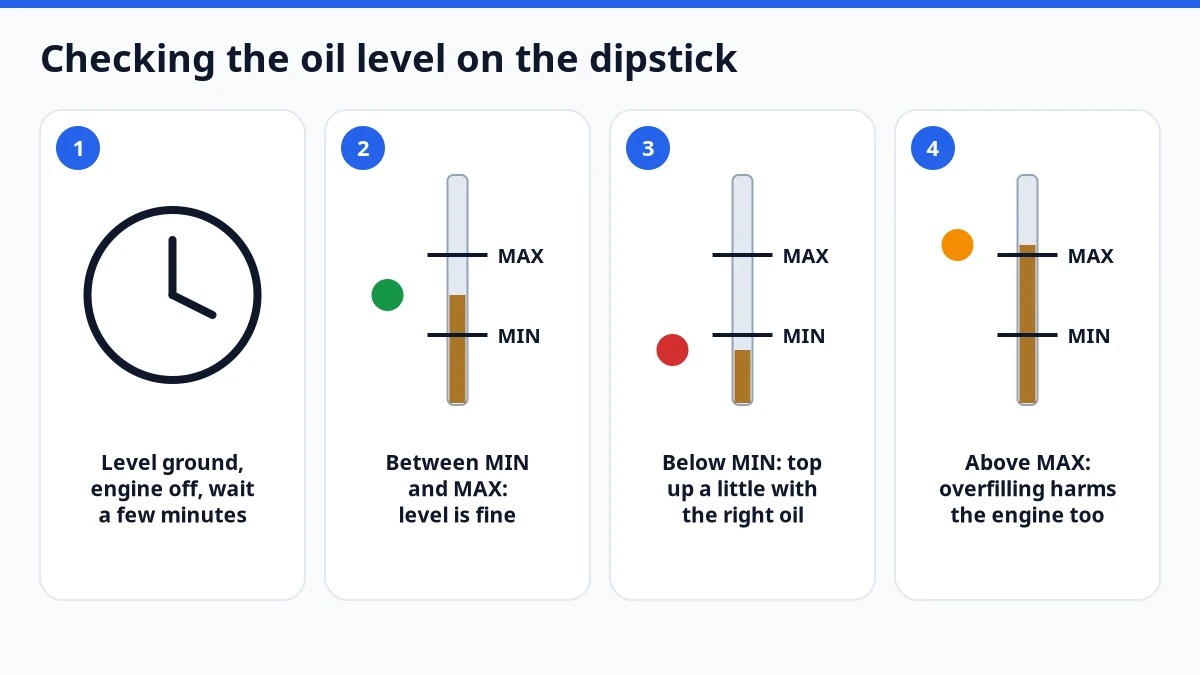
If the engine oil level is low, top up the engine oil.
Contact a PEUGEOT dealer as soon as possible.
If You're Not Sure
If a red lamp comes on and you are not sure what it means, stay calm and stop somewhere safe when you can. Check whether the STOP warning lamp or a message on the multifunction screen is shown with it, then consult a PEUGEOT dealer.
Red lamps on your Peugeot 407 are there to protect you and your car, so it pays to know them before you need them. Keep this guide handy and always follow your handbook's advice for your particular version.
Red warning lamps on your instrument panel point to something that needs your attention straight away. Some ask you to stop as soon as it is safe to do so, while others simply tell you that something has not been...
Orange lamps on your instrument panel flag something that needs your attention. Some point to a fault, some ask you to do something simple, and others just confirm that a function is on or off.
Green and blue warning lamps on your instrument panel are mostly there to keep you informed about systems that are switched on or working. Occasionally one of them can also alert you to a problem, so it is worth...