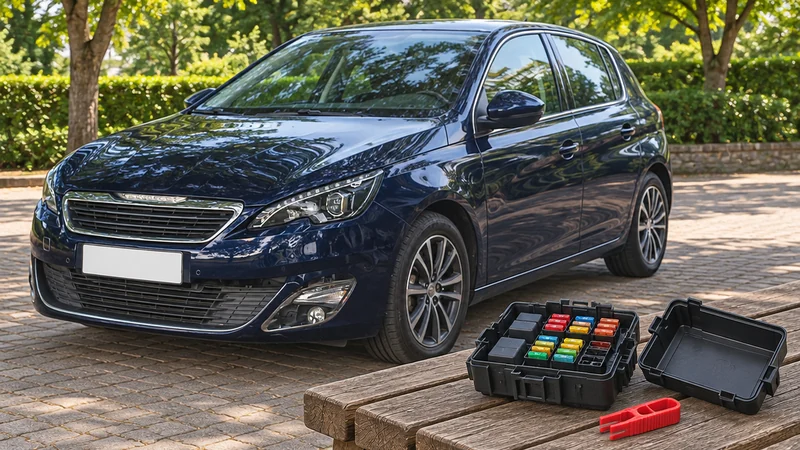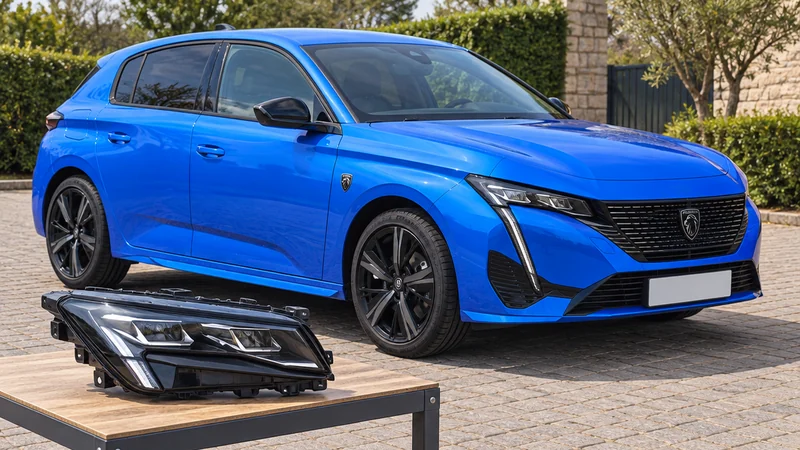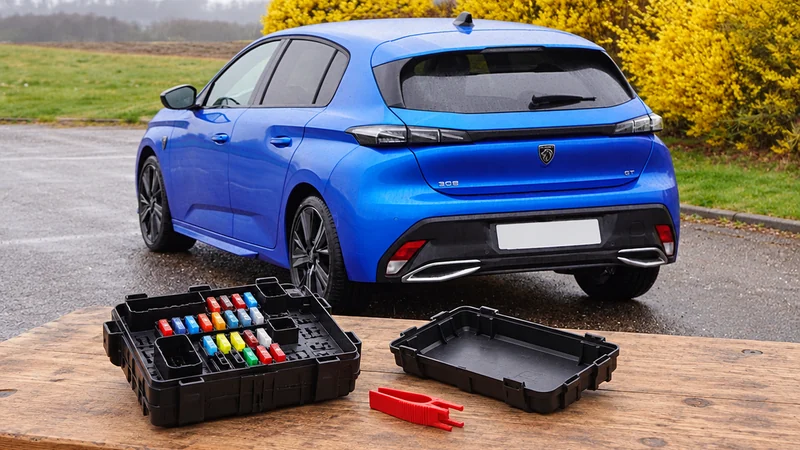
Peugeot 308 Fuse Box and Fuses (2021-2025)
Hello and welcome. In this article we look at the fuses on the Peugeot 308 III (2021-2025). We will cover who should change a fuse and what to know before fitting extra electrical equipment or accesso
How the Peugeot 308 II driving aids work: speed limiter, cruise control, Adaptive Cruise Control, Active Safety Brake, lane keeping and blind spot.
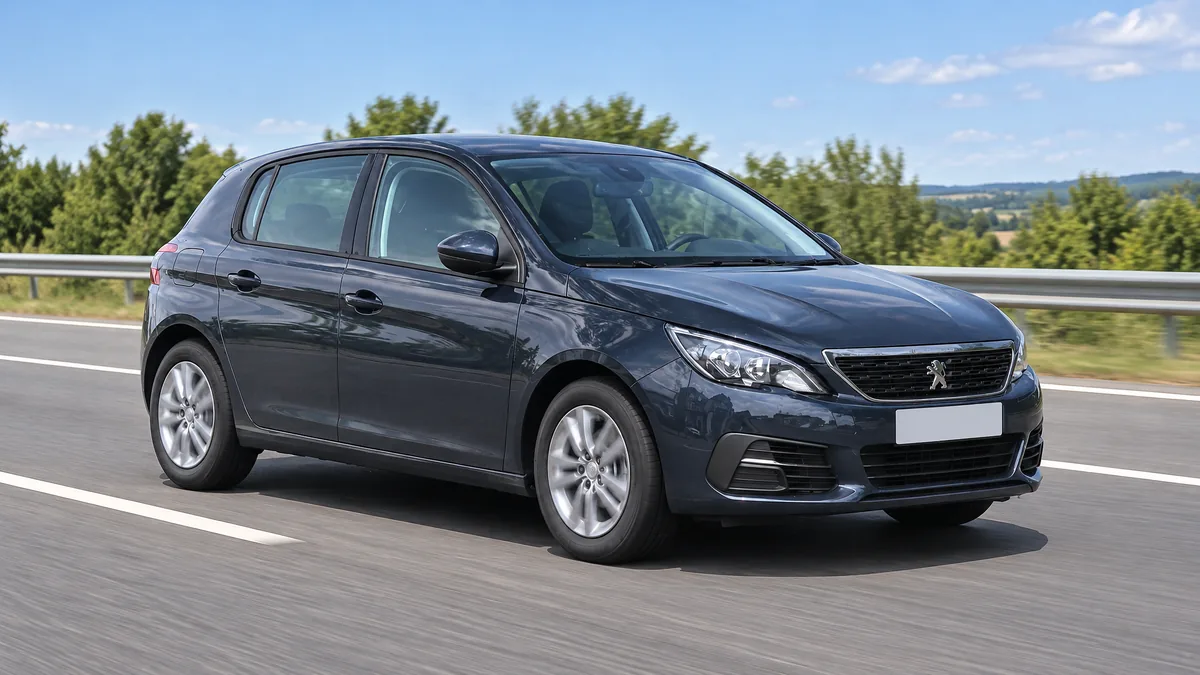
Hello and welcome. In this post, we'll look at the driver assistance systems on the Peugeot 308 II (2015-present). Your Peugeot 308 has several driving and manoeuvring aids that help you control your speed, keep your distance from the vehicle in front, stay in your lane and spot vehicles in your blind spot. We'll cover how each system works, how to switch it on and off, and what its limits are. Some systems and functions depend on the version or equipment fitted, so you may not have all of them on your 308.
Cruise control needs a minimum speed of 19 mph (30 km/h). With a manual gearbox you must be in third gear or higher, and with an automatic gearbox in mode D, or second gear or higher in mode M.
Scroll the table sideways.
| Section | In short |
|---|---|
| Driving and manoeuvring aids - General recommendations | Your responsibilities and what can disturb the sensors |
| Speed Limit Recognition and Recommendation | Shows the speed limit from signs and navigation maps |
| Speed limiter | Stops the car exceeding a speed you set |
| Cruise control | Holds a set speed without the accelerator |
| Adaptive Cruise Control | Holds a set speed and distance to the car ahead |
| Active Safety Brake with Distance Alert and Intelligent emergency braking assistance | Warns of collision risk and brakes automatically |
| Active Lane Keeping Assistance | Steers you back if you drift out of lane |
| Blind Spot Monitoring | Warns of vehicles hidden in your blind spot |
Driving and manoeuvring aids can never replace your own attention. You must follow the Highway Code, stay in control of the car at all times and be able to take back control whenever needed. Adapt your speed to the weather, the traffic and the state of the road. Before you indicate and change lane, it is up to you to check the traffic, judge the distances and speeds of other vehicles and anticipate their movements. The systems cannot go beyond the limits of the laws of physics.
Radar: dirt such as mud or frost, very heavy rain, snow or a damaged bumper can affect the radar and the functions that use it. If the front bumper needs repainting, contact a PEUGEOT dealer or a qualified workshop, because certain types of paint can interfere with the radar.
Driving aids camera: the camera and its functions may be affected or stop working if the windscreen in front of it is dirty, misty, frosty, covered with snow, damaged or covered by a sticker. On versions with a camera only, the message “Driving aids camera: visibility limited, see user guide” tells you the camera is obstructed. In humid and cold weather, demist the windscreen regularly. Poor visibility (weak street lighting, heavy rain, thick fog, snowfall) and dazzle (oncoming headlamps, low sun, reflections on a damp road, leaving a tunnel, alternating shade and light) can also reduce detection. If the windscreen is replaced, contact a PEUGEOT dealer or a qualified workshop to have the camera recalibrated, otherwise the driving aids may not work properly.
Other cameras: images on the touch screen or instrument panel may be distorted by the shape of the ground. In shade, bright sunlight or poor lighting, the image may be darker with less contrast. Obstacles may look further away than they really are.
Sensors: noise from loud vehicles and machinery (such as lorries or pneumatic drills), snow or dead leaves on the road, and damaged bumpers or mirrors can all disturb the sensors and their functions.
This system shows the maximum authorised speed on the instrument panel, based on the speed limits in the country you are driving in. It uses speed limit signs detected by the camera and speed limit details from the navigation system mapping.
Activation / Deactivation: the system switches on automatically every time you start the engine. You set it in the Driving / Vehicle touch screen menu.
On the instrument panel: you see either the detected speed limit or the end of speed limit indication. When the system is active but not detecting any speed limit information, no value is shown. When it detects a limit, it displays the value. Depending on version, the first time you exceed a suggested maximum speed by more than 3 mph (5 km/h) (e.g. 59 mph (95 km/h)), the speed is displayed and flashes for 10 seconds.
Operating limits: the system does not take account of reduced speed limits, in particular those that apply in these cases:
The system may not display the speed limit if it does not detect a speed limit sign within a preset period, or if road signs are obstructed, non-standard, damaged or bent, or if the maps are obsolete or incorrect.
The speed limiter stops your car from going faster than the speed you have programmed. You switch it on manually. The minimum speed setting is 19 mph (30 km/h), and the setting stays in memory when you switch off the ignition.
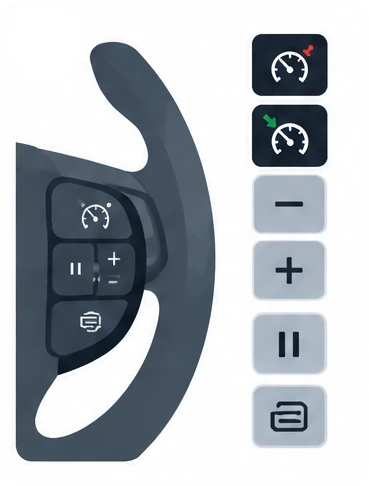
Steering-mounted controls:
The instrument panel shows whether the speed limiter is on or paused, the selected mode, the programmed speed and, depending on version, the speed suggested by the Speed Limit Recognition and Recommendation system.
Switching on and pausing:
An audible warning sounds if your speed stays above the speed setting for an extended period.
Adjusting the limit speed: you do not need to switch the speed limiter on to set the speed. To change it based on your current speed, briefly press button 2 or 3 to change the value in steps of + or - 1 mph (1.6 km/h), or press and hold to change it in steps of + or - 5 mph (8 km/h).
To use a memorised speed from the touch screen:
To use the speed suggested by the Speed Limit Recognition and Recommendation:
Temporarily exceeding the setting: press the accelerator pedal down fully. The speed limiter is deactivated temporarily and the speed setting flashes. Release the pedal to drop back below the programmed speed. Once your speed returns to the setting, the limiter works again and the display stops flashing. If the limit is exceeded without you accelerating, for example on a steep slope, an audible signal sounds immediately.
On a steep descent or under sharp acceleration, the speed limiter cannot stop the car going over the setting. Brake if necessary to control your speed.
Switching off: turn thumbwheel 1 to the “0” position. The speed limiter information disappears from the display.
Malfunction: if the speed limiter develops a fault, dashes are displayed, flashing at first and then fixed.
Cruise control keeps your car at the speed you programme, without you using the accelerator pedal. You switch it on manually. It needs a minimum speed of 19 mph (30 km/h). With a manual gearbox, third gear or higher must be engaged. With an automatic gearbox, mode D, or second gear or higher in mode M, must be engaged.
Depending on engine, cruise control is paused manually with button 4, by pressing the brake or clutch pedal, or if the electronic stability control (ESC) system is triggered for safety reasons. Depending on engine, with a manual gearbox and Stop & Start, cruise control stays active after a gear change. Switching off the ignition cancels any speed setting.
Steering-mounted controls:
The instrument panel shows the pause or resume status, the selected mode, the speed setting and, depending on version, the speed suggested by the Speed Limit Recognition and Recommendation system.
Switching on and pausing:
Changing the cruise speed: cruise control must be active. Briefly press button 2 or 3 to change the value in steps of + or - 1 mph (km/h), or press and hold to change it in steps of + or - 5 mph (km/h). Pressing and holding changes your car's speed quickly, so as a precaution set a cruise speed fairly close to your current speed to avoid sudden acceleration or slowing down.
To use a memorised speed from the touch screen:
Adaptive Cruise Control keeps your car at the speed you set while keeping a safe distance, chosen by you, from the vehicle in front (the target vehicle). It manages acceleration and slowing down automatically using a radar in the front bumper. With the Stop function (with the EAT8 automatic gearbox), it can brake the car to a complete stop.
The brake lamps come on when the system slows the car down. Driving with brake lamps that are not working perfectly can be dangerous. The system is designed mainly for main roads and motorways, and it only works with moving vehicles travelling in the same direction as you. Some vehicles, such as a lorry, may not be detected properly or may be misread by the camera and/or radar, which can lead to the car accelerating or braking at the wrong moment.
How it works: the system matches your speed to the vehicle in front to keep a constant distance. If that vehicle is slower, the system slows your car, or stops it completely with the EAT8 automatic gearbox, using engine braking and the braking system. If the vehicle in front speeds up or changes lane, the system accelerates progressively back to your programmed speed. If you use a direction indicator to overtake a slower vehicle, the system lets you get temporarily closer to help the overtake, without ever going over the speed setting.
This system cannot replace the need to keep to speed limits and safe distances, or your own attention. Keep both hands on the steering wheel and your feet near the brake and accelerator pedals at all times.
Steering-mounted controls:
Switching on:
Switching off the ignition cancels any speed setting you chose. The inter-vehicle distance is set to “Normal” (2 dashes) by default, otherwise the last value you selected is used when you switch the system on.
Pausing: you can pause the system yourself by:
It also pauses automatically:
Once paused, the system can only restart when all the safety conditions are met again. Until then, the message “Activation not possible, conditions unsuitable” is displayed.
Reactivating: with a manual gearbox, accelerate to at least 19 mph (30 km/h), then press button 2, 3 or 4. With the EAT8 automatic gearbox, after the system has braked the car to a complete stop, it holds the car still and cruise control is paused. Press the accelerator pedal to move off, then reactivate the function above 19 mph (30 km/h) with button 2, 3 or 4. If you do nothing after stopping, the electric parking brake is applied automatically after a while (approximately 5 minutes). As a safety measure, wait until your current speed is close to the speed setting before reactivating with button 4.
Changing the speed setting: with the engine running and cruise control on (green), short presses on button 2 or 3 change the setting in steps of 1 mph (km/h), and pressing and holding changes it in steps of 5 mph (km/h). Holding the button for a long time changes your car's speed quickly, so take care.
To use the speed suggested by the speed limit sign recognition system:
As a precaution, choose a cruise speed close to your current speed to avoid sudden acceleration or slowing down.
Changing the inter-vehicle distance: there are three settings: “Distant” (3 dashes), “Normal” (2 dashes) and “Close” (1 dash).
This setting stays in memory whatever the state of the system, even when you switch off the ignition. It also applies to the stopping distance (with EAT6 and EAT8 automatic gearbox).
Exceeding the setting: you can go above the speed setting temporarily by pressing the accelerator pedal. During this time the system no longer manages the braking system, the speed setting disappears from the display and “Cruise control suspended” is shown. Release the pedal to return to the programmed speed.
Messages and alerts: select the DRIVING or Driving aids display mode to see these on the instrument panel. They are not displayed in any set order.
Scroll the table sideways.
| Message | What it means |
|---|---|
| “Cruise control paused” or “Cruise control suspended” | Shown after a brief acceleration by you |
| “Cruise control active” | No vehicle detected |
| “Cruise control paused” | Vehicle detected |
| “Cruise control active” | Vehicle detected |
| “Take back control” (orange) | Brake or accelerate, depending on the situation |
| “Take back control” (red) | Take back control immediately: the system cannot manage the current driving situation |
| “Activation not possible, conditions unsuitable” | The system refuses to activate because the necessary conditions are not met |
This system warns you when your car is at risk of hitting the vehicle in front, and reduces your speed to avoid a collision or make it less severe. It has three functions: Distance Alert, Intelligent emergency braking assistance and Active Safety Brake (automatic emergency braking). It uses a multifunction camera at the top of the windscreen and, depending on version, a radar in the front bumper.
The system is there to assist you and improve road safety, but it does not replace your attention. It remains your responsibility to watch the traffic at all times in line with driving regulations. When the system detects a possible obstacle, it prepares the braking circuit in case automatic braking is needed, which can cause a slight noise and a slight feeling of slowing down.
Deactivation / Activation: the system switches on automatically every time you start the engine. You change the settings in the Driving/Vehicle touch screen menu. When the system is deactivated, a warning lamp comes on and a message is displayed.
Operating conditions:
advises deactivating the system in the vehicle's configuration menu in these cases
The system switches off automatically if it detects a space-saver type spare wheel or a fault with the lateral brake lamps. Driving with faulty brake lamps can be dangerous. Warnings may not be given, may come too late or may seem unjustified, so always stay in control and be ready to react. After an impact, the function stops working automatically: contact a PEUGEOT dealer or a qualified workshop to have it checked.
Distance Alert: this function warns you that your car is at risk of hitting the vehicle in front, or a pedestrian in your lane. You set how sensitive it is in the Driving/Vehicle touch screen menu by choosing one of three thresholds: “Far”, “Normal” or “Close”. The last threshold you chose is kept when you switch off the ignition.
The alert takes account of the car's dynamics, your speed and the speed of the vehicle in front, the conditions around you and how you are driving (use of the pedals, steering wheel and so on) to warn you at the most useful moment. Depending on the risk and your chosen threshold, you may see:
If you approach another vehicle too fast, level 2 may appear straight away without level 1. Level 1 is not displayed when there is a stationary obstacle or when the “Near” trigger threshold has been selected.
Active Lane Keeping Assistance uses a camera at the top of the windscreen to read the lane markings. If it detects that you are about to cross a line without meaning to, it corrects the car's path and alerts you. It is particularly useful on motorways and main roads.
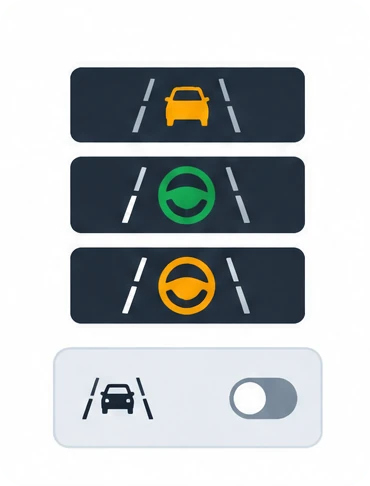
Conditions for operation:
The system only helps if the car risks drifting out of its lane unintentionally. It does not manage your distance from other vehicles, your speed or braking. Hold the wheel with both hands so you can keep control when the system cannot act, for example if the lane markings disappear.
How it works: when the system sees a risk of crossing a detected lane marking or a lane edge (such as a grass border), it corrects the path to bring the car back to its original line. You will feel the steering wheel turn, and the warning lamp flashes during the correction. You can override the correction by holding the wheel firmly, for example during an avoiding manoeuvre. The correction stops straight away if you use the direction indicators.
While the indicators are on, and for a few seconds after you switch them off, the system treats any change of path as intentional and does not correct. However, if Blind Spot Monitoring is activated and a vehicle is detected in your blind spot as you start changing lanes, the system will correct the path even with the indicators on. If the system detects that you are not holding the wheel firmly enough during a correction, it stops the correction and an alert asks you to take back control.
Alerts and messages: select the “Driving aids” tab on the instrument panel to see these. They are not displayed in any set order.
Scroll the table sideways.
| Function status | Display | What it means |
|---|---|---|
| OFF | Grey | Function deactivated. |
| ON | Grey | System active but conditions not met: speed below 44 mph (70 km/h), no lane marking recognised, ASR/DSC systems deactivated or ESC system triggered, or “sport” driving. |
| ON | Grey | Function automatically deactivated or on standby, for example because a trailer or the “space-saver” spare wheel is detected. |
| ON | Green | Lane marking detected and speed above 44 mph (70 km/h). |
| ON | Orange/green | The system is correcting the path on the side where the risk of crossing is detected (orange line). |
Blind Spot Monitoring uses sensors on the sides of the bumpers to warn you when another vehicle (car, truck, motorcycle) is in one of your blind spots, the areas you cannot see from the driving seat. A fixed warning lamp lights up in the door mirror on that side: immediately when you are being overtaken, and after about one second when you are slowly overtaking a vehicle.
Activation / Deactivation: you set the system in the Driving/Vehicle touch screen menu. Its status is kept when you switch off the ignition. It switches off automatically when you tow with a towing device approved by PEUGEOT.
Operating conditions:
Operating limits: no alert is given in these situations:
Malfunction: if the system develops a fault, a warning lamp comes on in the instrument panel with a message. Contact a PEUGEOT dealer or a qualified workshop to have it checked. The system can also suffer temporary interference in some weather conditions, such as rain or hail.
Cruise control needs a minimum speed of 19 mph (30 km/h). With a manual gearbox you must be in third gear or higher, and with an automatic gearbox in mode D, or second gear or higher in mode M.
On versions with a camera only, this message tells you the camera is obstructed. Check the windscreen in front of the camera is not dirty, misty, frosty, covered with snow, damaged or covered by a sticker.
Yes, with the Stop function and the EAT8 automatic gearbox, the system can brake the car to a complete stop. If you do nothing after stopping, the electric parking brake is applied automatically after approximately 5 minutes.
Yes, advises deactivating the system in the vehicle's configuration menu before using an automatic car wash with the engine running. It also advises this when towing a trailer or with snow chains fitted.
The driving aids on your Peugeot 308 can make long journeys easier and help you avoid mistakes, but they only work within their limits and you always stay in charge. Keep the windscreen, bumpers and mirrors clean, and if a system reports a fault, have it checked by a PEUGEOT dealer or a qualified workshop.
If a driving aid warning lamp comes on, check our guides to the Peugeot 308 orange warning lights, the Peugeot 308 green and blue indicator lamps and the Peugeot 308 red warning lights.
Don't forget to follow us on Instagram for more Peugeot guides!
This is an independent guide, not an official Peugeot publication. If in doubt, contact a PEUGEOT dealer or a qualified workshop before carrying out any work.
Related guides: Peugeot 308 model guides.
Cover adapted from a photograph by Vauxford — Wikimedia Commons, CC BY-SA 4.0 (AI edited).
Hello and welcome. In this article we look at the fuses on the Peugeot 308 III (2021-2025). We will cover who should change a fuse and what to know before fitting extra electrical equipment or accesso
Hello and welcome. In this article we look at the fuseboxes and fuses on the Peugeot 308 II (2015-present). We will cover where the fuseboxes are, how a fuse is changed and which functions each fuse p
Hello and welcome. In this article we look at bulb replacement on the Peugeot 308 III (2021-2025). We will cover which lamps are LED, where the front and rear lamps sit, the rear foglamp and reversing