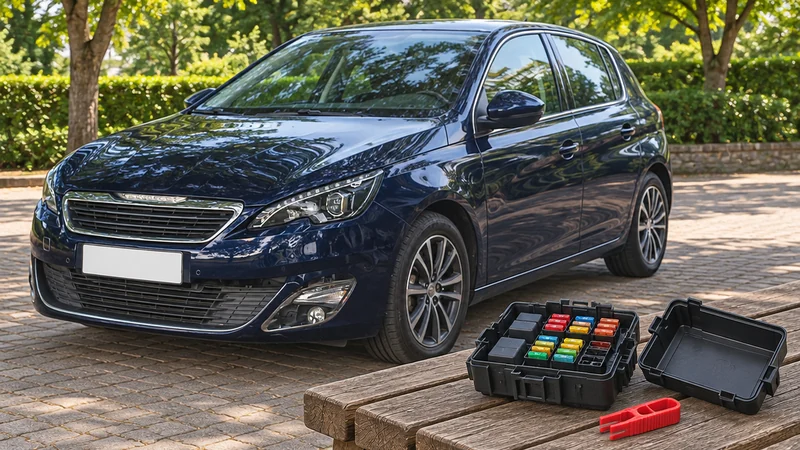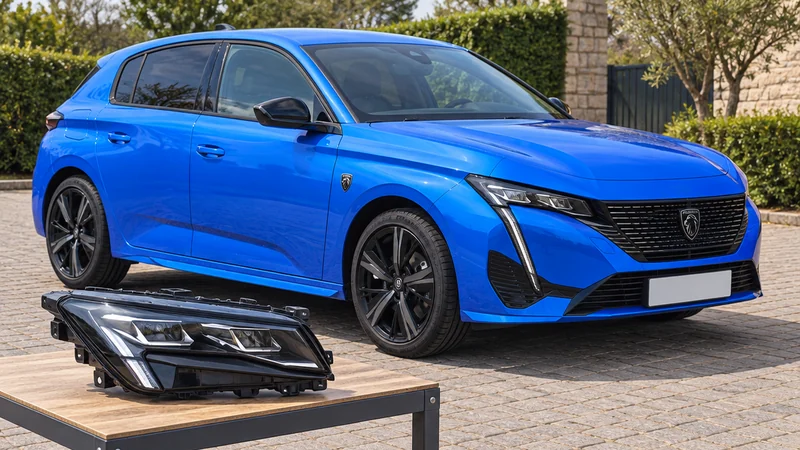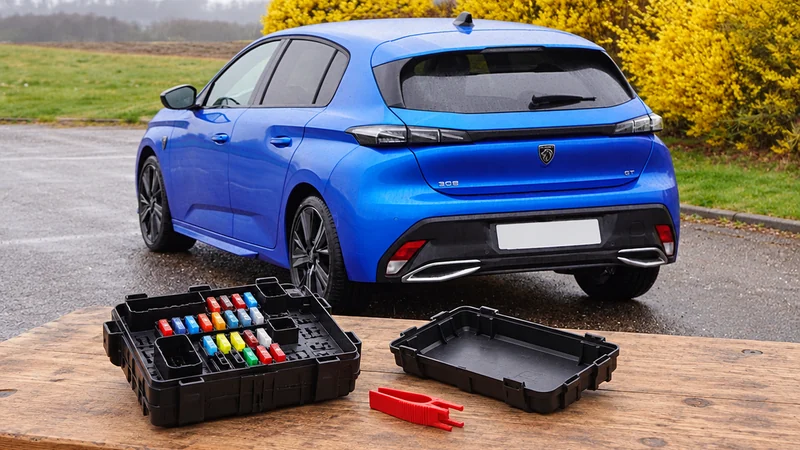
Peugeot 308 Fuse Box and Fuses (2021-2025)
Hello and welcome. In this article we look at the fuses on the Peugeot 308 III (2021-2025). We will cover who should change a fuse and what to know before fitting extra electrical equipment or accesso
Peugeot 308 II AdBlue tank size, where the blue filler is, and what happens if the tank runs empty.
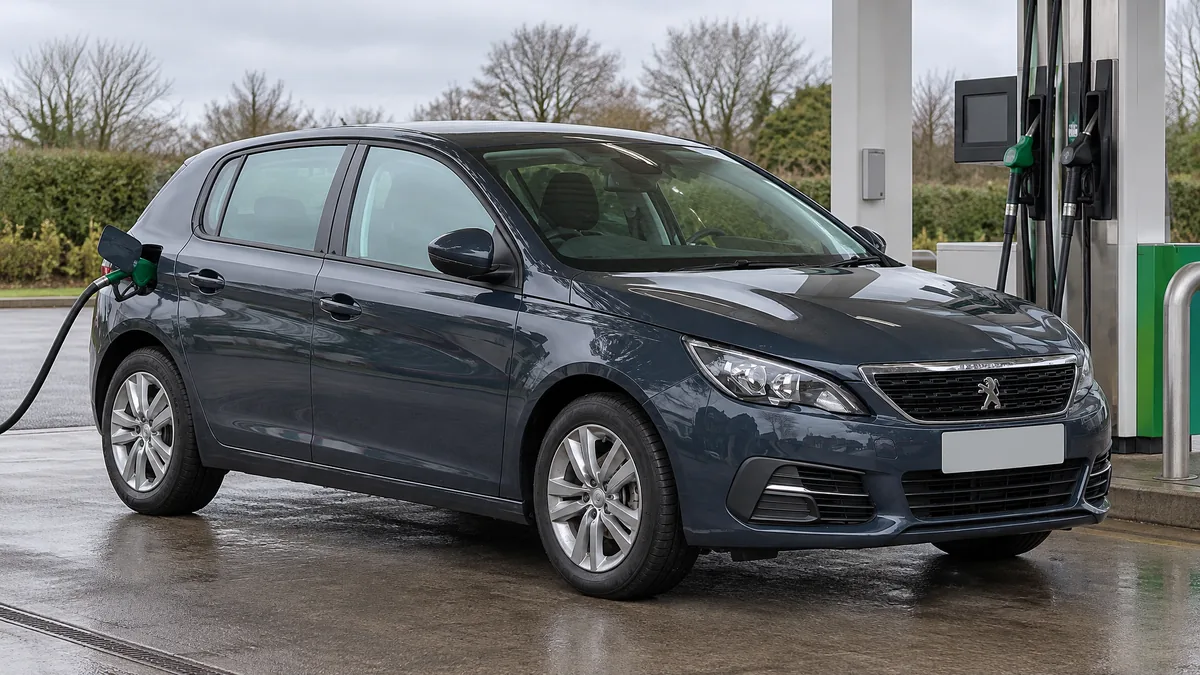
Hello and welcome. In this post, we'll look at the AdBlue tank size and how to refill it on the Peugeot 308 II (2015-present). If your Peugeot 308 has a BlueHDi Diesel engine, it uses AdBlue to clean up its exhaust gases. This guide explains what the SCR system does, how far you can drive on a full AdBlue tank, how to store and handle the fluid safely, and how to top it up yourself. Some details, such as how you reach the AdBlue tank, depend on the version or equipment of your car.
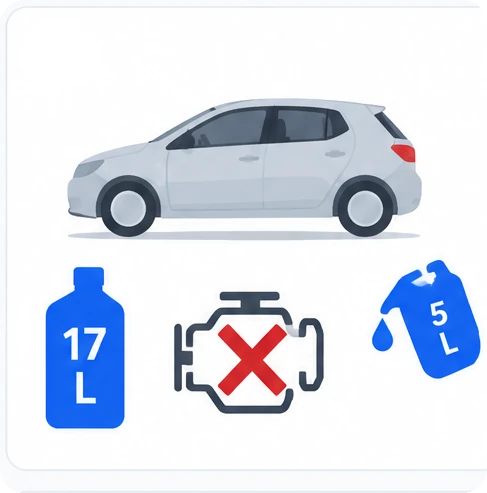
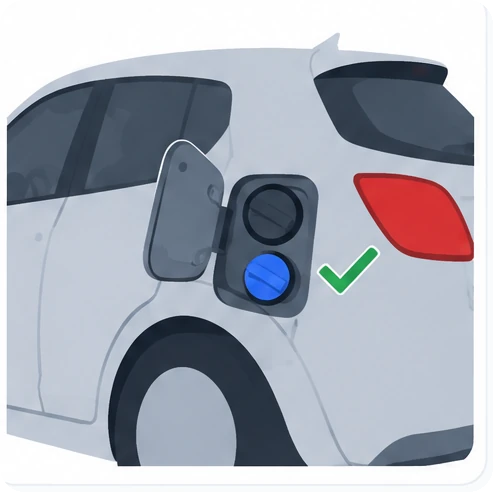
The AdBlue tank is about 17 litres. If the tank runs completely empty, a legal interlock prevents the engine from restarting until you add at least 5 litres. The blue filler is under the fuel flap, separate from the diesel filler.
Scroll the table sideways.
| Section | In short |
|---|---|
| AdBlue (BlueHDi) | Why BlueHDi engines use SCR with a particle filter |
| SCR system | Tank capacity, range, reserve alert and freezing |
| Supply of AdBlue | Buying, storing, handling and topping up AdBlue |
PEUGEOT fits its Diesel engines with a system that combines SCR (Selective Catalytic Reduction) with a Diesel Particle Filter (DPF) to treat the exhaust gases. This helps protect the environment and meet the Euro 6 standard without harming the engine's performance or fuel consumption.
The SCR system uses a liquid called AdBlue, which contains urea. A catalytic converter uses it to turn up to 85% of the nitrogen oxides (NOx) into nitrogen and water, which are harmless to health and the environment.
Take these warnings seriously:
AdBlue freezes at temperatures below around -11°C, but the SCR system includes a heater for the AdBlue tank, so you can keep driving in very cold conditions. For details of the related warning lamps and alerts, see the warning lamp and indicator sections of.
Top up the AdBlue as soon as you get the first alert telling you the reserve level has been reached.
For the SCR system to work correctly:
You can buy AdBlue from a PEUGEOT dealer or a qualified workshop. If your version has access to the AdBlue tank through the fuel filler flap, you can also use a service station with AdBlue pumps specially designed for passenger vehicles.
Storage recommendations
AdBlue freezes at about -11°C and deteriorates above +25°C. Store containers in a cool area, out of direct sunlight, and the fluid will keep for at least a year. If it has frozen, you can use it once it has completely thawed out in the ambient air. Never store AdBlue containers in your car, and always keep them in their original container, out of the reach of children.
Precautions for use
AdBlue is a urea-based solution. It is non-flammable, colourless and odourless when kept in a cool place.
Topping up
A blue cap under the fuel filler flap shows you where the AdBlue tank is. Never pour AdBlue into the Diesel fuel tank.
To avoid overfilling the tank, top up between 10 and 13 litres when using containers, or stop after the third automatic cut-off of the nozzle at a service station. If you splash or spill AdBlue on the bodywork, rinse it off straight away with cold water or wipe it with a damp cloth. If it has crystallised, clean it off with a sponge and hot water.
After a breakdown caused by running out of AdBlue
The AdBlue tank holds about 17 litres, which gives a range of approximately 4,000 miles (6,500 km) depending on your driving style. When topping up from containers, add between 10 and 13 litres to avoid overfilling.
Once the reserve level alert is triggered, you can drive for a further 1,500 miles (2,400 km) before the tank is empty and the car is immobilised. A range indicator shows the distance left.
Look for the blue cap under the fuel filler flap. Turn it anti-clockwise to open it, and never pour AdBlue into the Diesel fuel tank.
After a breakdown caused by an empty AdBlue tank, wait around 5 minutes before switching on the ignition, without opening the driver's door, unlocking the car or bringing the key inside. Then switch on the ignition and wait 10 seconds before starting the engine.
Topping up AdBlue on your Peugeot 308 is a simple job once you know where the blue cap is and how much to add. Top up as soon as the first alert appears, use only ISO 22241 fluid, and you will avoid being stopped by an empty tank.
To understand the alerts linked to AdBlue and the SCR system, see our guides to Peugeot 308 orange warning lights and Peugeot 308 red warning lights.
Don't forget to follow us on Instagram for more Peugeot guides!
This is an independent guide, not an official Peugeot publication. If in doubt, contact a PEUGEOT dealer or a qualified workshop before carrying out any work.
Related guides: Peugeot 308 model guides; Peugeot 308 ii 2015 current 12v battery and jump starting.
Cover adapted from a photograph by Vauxford — Wikimedia Commons, CC BY-SA 4.0 (AI edited).
Hello and welcome. In this article we look at the fuses on the Peugeot 308 III (2021-2025). We will cover who should change a fuse and what to know before fitting extra electrical equipment or accesso
Hello and welcome. In this article we look at the fuseboxes and fuses on the Peugeot 308 II (2015-present). We will cover where the fuseboxes are, how a fuse is changed and which functions each fuse p
Hello and welcome. In this article we look at bulb replacement on the Peugeot 308 III (2021-2025). We will cover which lamps are LED, where the front and rear lamps sit, the rear foglamp and reversing