Top up the AdBlue as soon as the first alert tells you the reserve level has been reached. For the SCR system to work correctly:
- Use only AdBlue fluid that meets the ISO 22241 standard.
- Never transfer AdBlue to another container, as it would lose its purity.
- Never dilute AdBlue with water.
You can buy AdBlue from a PEUGEOT dealer or a qualified workshop, and from service stations with AdBlue pumps specially designed for passenger vehicles.
Recommendations on storage
AdBlue freezes at about -11°C and deteriorates above +25°C. Store the containers in a cool area, out of direct sunlight. In these conditions, the fluid keeps for at least a year. If the fluid has frozen, you can use it once it has completely thawed out at room temperature. Never store AdBlue containers in your car.
Precautions for use
AdBlue is a urea-based solution. It is non-flammable, colourless and odourless when kept in a cool place. Always store it in its original container, out of the reach of children.
- Skin contact: wash the area with soap and running water.
- Eye contact: rinse your eyes immediately with large amounts of water or an eye wash solution for at least 15 minutes. Seek medical attention if a burning sensation or irritation persists.
- If swallowed: rinse your mouth straight away with clean water, then drink plenty of water.
- Vapours: in certain conditions, such as high temperature, ammonia may be released. Do not inhale the fluid, as ammonia vapours irritate the eyes, nose and throat.
Procedure
Before you start, park your car on a flat, level surface. In wintry conditions, make sure the car's temperature is above -11°C, otherwise the AdBlue may be frozen and you will not be able to pour it into the tank. If so, park the car somewhere warmer for a few hours first.
- Switch off the engine: switch off the ignition and remove the key from the switch, or with Keyless Entry and Start, press the "START/STOP" button.
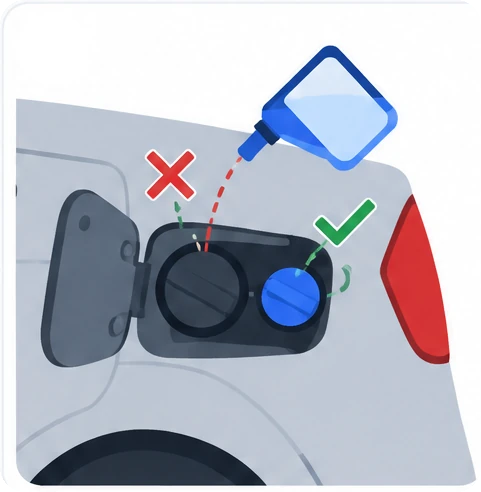
- Open the tank: turn the blue cap of the AdBlue tank anti-clockwise and remove it.
- If using a container: check the expiry date and read the label instructions carefully, then pour the contents into the AdBlue tank.
- If using a pump: insert the nozzle and fill the tank until the nozzle cuts out automatically.
To avoid overfilling the tank and to make sure the top-up registers:
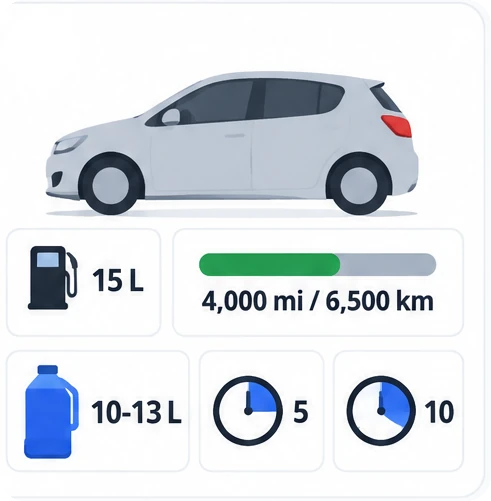
- Add between 10 and 13 litres when using AdBlue containers.
- Stop after the nozzle's first automatic cut-out at a service station.
- The system only registers intermediate top-ups of 5 litres or more.
- If the tank is completely empty, confirmed by the message "Top up AdBlue: Starting impossible", you must add at least 10 litres.
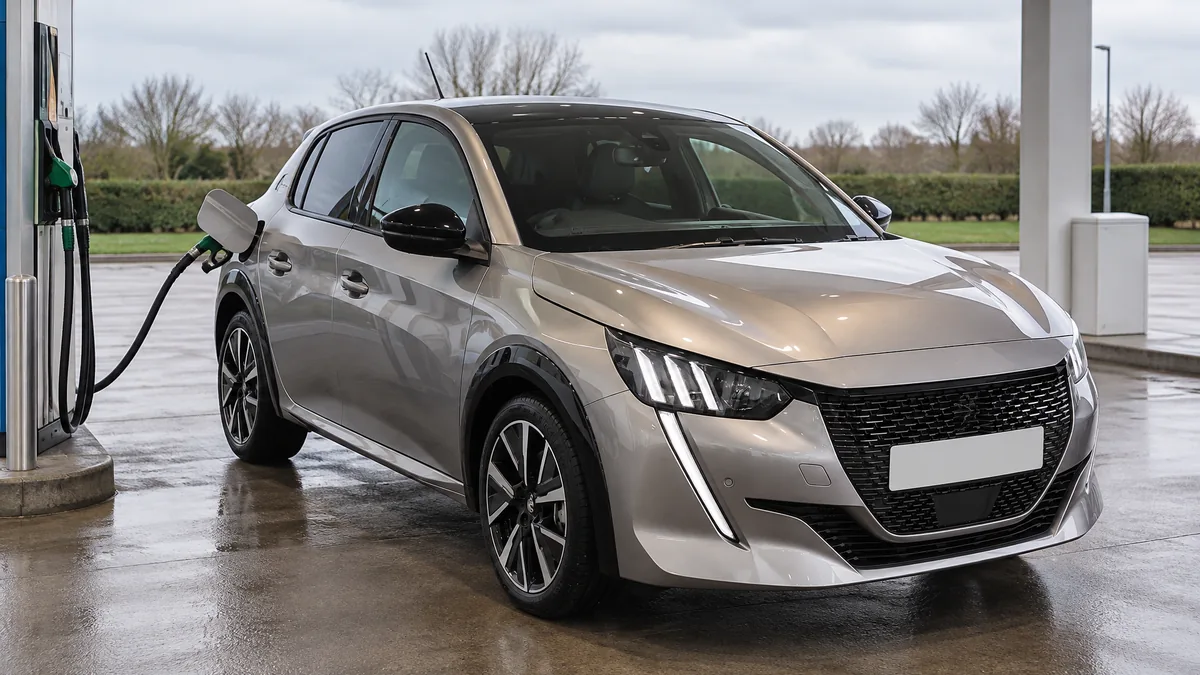
Never pour AdBlue into the Diesel fuel tank. If you splash or spill any on the bodywork, rinse it off immediately with cold water or wipe it with a damp cloth. If it has crystallised, clean it off with a sponge and hot water.
If you are topping up after a breakdown caused by running out of AdBlue, wait around 5 minutes before switching on the ignition. During this time, do not open the driver's door, unlock the car, insert the key into the ignition switch or bring the Keyless Entry and Start key into the passenger compartment. Then switch on the ignition and wait 10 seconds before starting the engine.
The top-up may not be detected straight away: it can take a few minutes of driving before the system registers it.
Frequently Asked Questions
How far can I drive on a Peugeot 208 after the AdBlue warning comes on?
Once the reserve alert is triggered, you can drive a further 1,500 miles (2,400 km) before the tank is empty and the car is immobilised. Top up as soon as the first alert appears.
How much AdBlue should I put in my Peugeot 208?
Add between 10 and 13 litres from containers, or stop after the nozzle's first automatic cut-out at a pump. If the tank is completely empty, add at least 10 litres, and remember the system only registers top-ups of 5 litres or more.
Why won't my Peugeot 208 start after topping up AdBlue?
After a breakdown caused by running out of AdBlue, wait around 5 minutes before switching on the ignition, without opening the driver's door, unlocking the car or bringing the key inside, then wait 10 seconds before starting. It may also take a few minutes of driving before the top-up is detected.
Does AdBlue freeze in winter?
Yes, AdBlue freezes below around -11°C, but the SCR system has a tank heater so you can keep driving in very cold conditions. To top up, the car's temperature needs to be above -11°C, so park it somewhere warmer for a few hours if needed.
Keeping your 208's AdBlue topped up is quick to do yourself and stops the engine from being immobilised. Use the right fluid, add the correct amount, and keep this guide handy for the next time the reserve alert appears.
More Peugeot 208 Guides
To understand the AdBlue and SCR alerts on your dashboard, see our guides to Peugeot 208 orange warning lights and Peugeot 208 red warning lights.
Don't forget to follow us on Instagram for more Peugeot guides!
This is an independent guide, not an official Peugeot publication. If in doubt, contact a PEUGEOT dealer or a qualified workshop before carrying out any work.
Related guides: Peugeot 208 model guides; Peugeot 208 ii 2019 2023 bulb replacement.
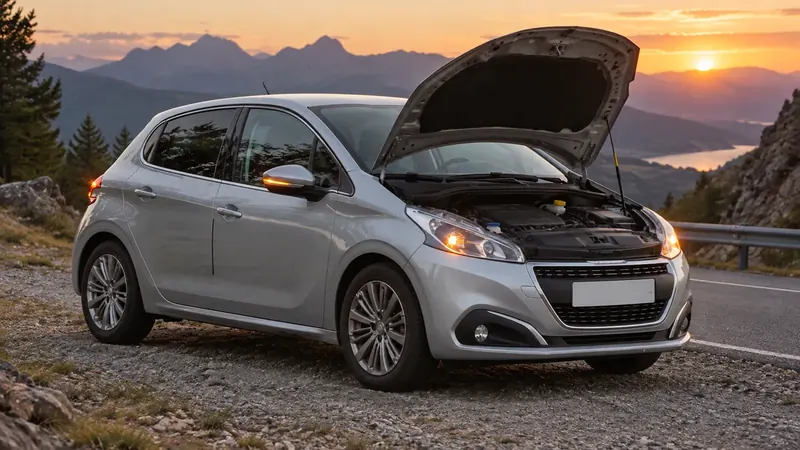
Cover adapted from a photograph by Vauxford — Wikimedia Commons, CC BY-SA 4.0 (AI edited).