Peugeot 208Updated 8 min read

Peugeot 208 I Specifications and Dimensions

Peugeot 208 I engine data, towed loads for petrol and diesel versions, Commercial version dimensions and where to find the VIN and labels.

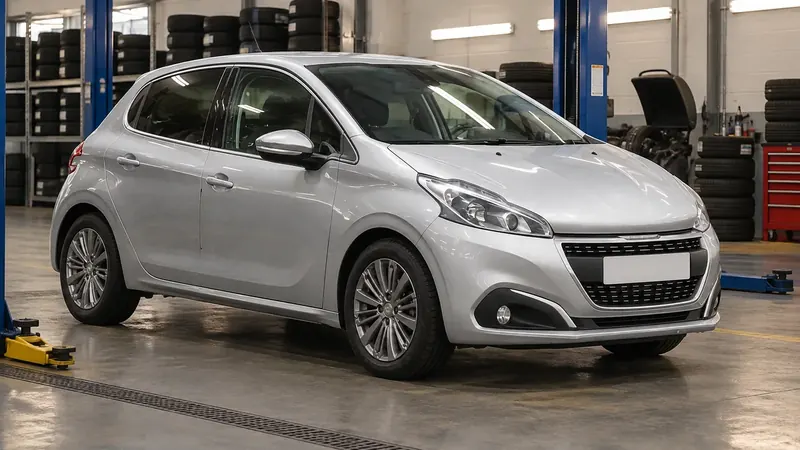
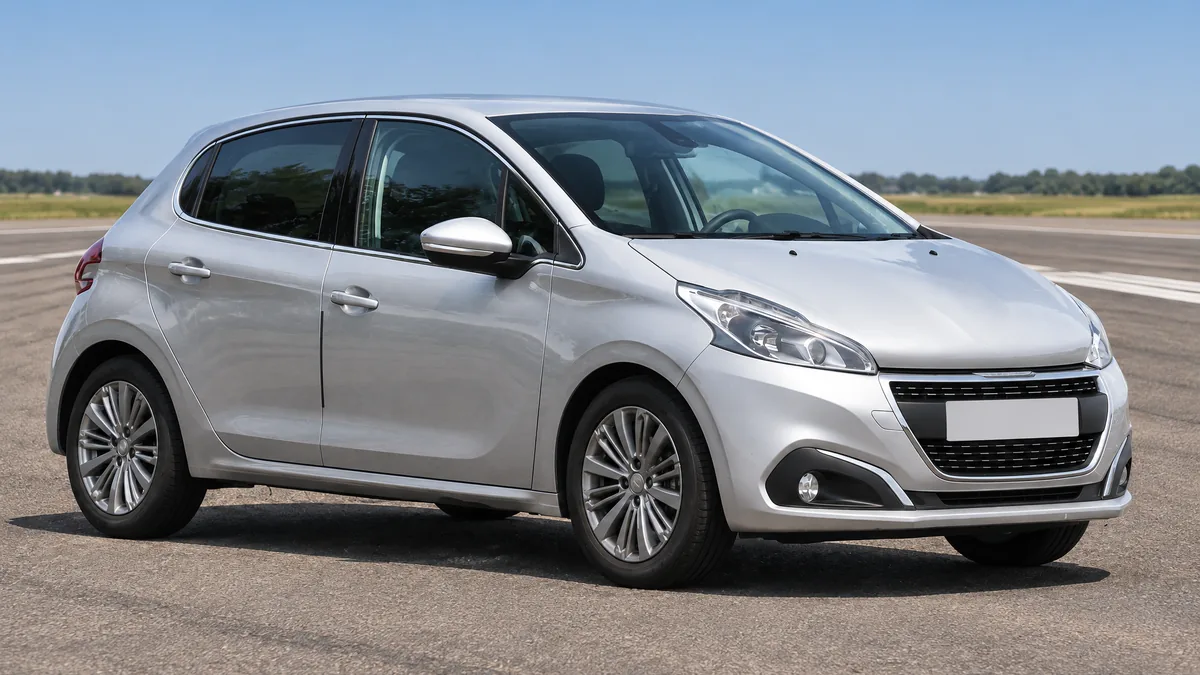
Peugeot 208 (2015-present) on an empty airfield under a clear sky
Image adapted from a photo by Harvey Bold, CC0.

Hello and welcome. In this post, we'll look at the technical specifications and body dimensions on the Peugeot 208 I (2015-present). This guide brings together the technical specifications for your Peugeot 208: engine data, towed loads for the petrol and diesel versions, the load space dimensions of the Commercial version and the identification markings on the car. It also covers the safety points you need to know before you tow a trailer.

What are the dimensions of a Peugeot 208 I?

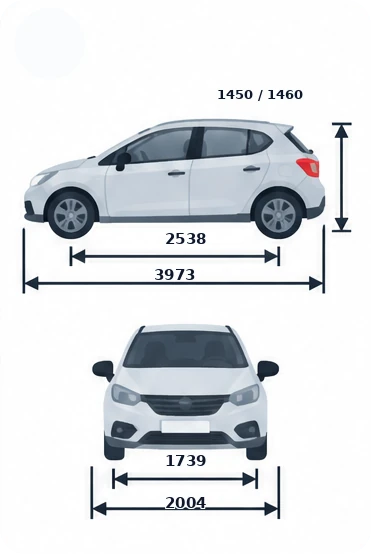
The unladen body dimensions, including length, width, height and wheelbase, are listed in millimetres in the dimensions section below.

Peugeot 208 I unladen body dimensions in millimetres: length, wheelbase, height and width

Quick Reference

Scroll the table sideways.

SectionIn short
Engine technical data and towed loadsWhere to find engine data, plus towing safety rules
Engines and towed loads - PETROLPetrol engine codes, power and trailer weights
Engines and towed loads - DIESELDiesel engine codes, power and trailer weights
Dimensions (mm)Load space dimensions of the Commercial version
Identification markingsWhere to find the VIN and identification labels

Engine technical data and towed loads

Your 208's engine characteristics are given in the vehicle's registration document and in sales brochures. The maximum power is the value type-approved on a test bed, under conditions defined in European legislation (Directive 1999/99/EC).

The weights and towed loads for your car are also in the registration document and sales brochures, and on the manufacturer's plate or label. Keep these points in mind:

  • Altitude: the GTW (Gross Train Weight) and towed load values are valid up to a maximum altitude of 1,000 metres. Reduce the towed load by 10% for each additional 1,000 metres of altitude.
  • Nose weight: the maximum authorised nose weight is the weight permitted on the towbar.

Before you tow, note these safety warnings:

  • Hot weather: in high exterior temperatures, the car may limit its performance to protect the engine. Above 37°C, limit the towed weight.
  • Light loads: towing with a lightly loaded car can adversely affect roadholding.
  • Braking: braking distances are longer when you tow a trailer.
  • Speed: never exceed approximately 60 mph (100 km/h) when towing, and observe the local legislation in force.

In high exterior temperatures, let the engine idle for 1 to 2 minutes after you stop to help it cool. For more information, contact a PEUGEOT dealer or a qualified workshop.

Engines and towed loads - PETROL

These are the petrol engines listed below. All of them run on unleaded fuel. The 1.2 PureTech engines have a cubic capacity of 1,199 cm3 and the 1.6 VTi 115 has 1,598 cm3.

Scroll the table sideways.

Engine (gearbox)CodeModel codesMax. power (kW)
1.2 PureTech 68 (Manual 5-speed, BVM5)EB2FB MAHMP650
1.2 PureTech 68 (Manual 5-speed, BVM5)EB2FAD MACCHMMP - CCHMMP/150
1.2 PureTech 82 (Manual 5-speed, BVM5)EB2F MAHMZ6 - HMZ060
1.2 PureTech 82 S&S (Manual 5-speed STT, BVM5)EB2FA MA STTHMRP/S60
1.2 PureTech 110 S&S (Manual 5-speed STT, BVM5)EB2DT/DTM BE STTHNZ6/S - HNV6/S HNV0/DS80
1.2 PureTech 110 S&S (Automatic 6-speed STT, BVA6)EB2DT/DTM AT6III STTHNZT/S - HNVT/S HNVA/DS80
1.2 PureTech 110 S&S (Manual 6-speed STT, BVM6)EB2ADT MB6 STTCCHNPS/S - CCHNPS/1S81
1.2 PureTech 110 S&S (Automatic 6-speed STT, BVA6)EB2ADT AT6III STTCCHNPN/S - CCHNPN/1S81
1.6 VTi 115 (Automatic 6-speed, BVA6)EC5F AT6IIICUNFPT88

The trailer weights below apply to a braked trailer within the GTW limit on a 12% slope. The maximum authorised nose weight is 46 kg for every petrol engine.

Scroll the table sideways.

CodeBraked trailer (kg)Unbraked trailer (kg)
EB2FB MA450 (PV), 485 (SMV)450
EB2FAD MA450 (PV), 485 (SMV)450
EB2F MA820 (PV/SMV), 920 (LCV)520
EB2FA MA STT820520
EB2DT/DTM BE STT960 (EB2DT), 450 (EB2DTM)570 (EB2DT), 450 (EB2DTM)
EB2DT/DTM AT6III STT960 (EB2DT), 450 (EB2DTM)560 (EB2DT), 450 (EB2DTM)
EB2ADT MB6 STT1,000570
EB2ADT AT6III STT960560
EC5F AT6III970570

PV means Passenger Vehicle, SMV means Specialised Motor Vehicle and LCV means Light Commercial Vehicle.

Engines and towed loads - DIESEL

These are the diesel engines listed below. The 1.6 engines have a cubic capacity of 1,560 cm3 and the 1.5 BlueHDi 100 S&S has 1,499 cm3.

Scroll the table sideways.

Engine (gearbox)CodeModel codesMax. power (kW)
1.6 HDi 75 (Manual 5-speed, BVM5)DV6EM BE9HKC55
1.6 BlueHDi 75 (Manual 5-speed, BVM5)DV6FE BEBHW655
1.6 BlueHDi 75 S&S (Manual 5-speed STT, BVM5)DV6FE BE STTBHW6/1S55
1.6 litre HDi 92 (Manual 5-speed, BVM5)DV6D/DM BE9HP0 - 9HJC68
1.5 BlueHDi 100 S&S (Manual 6-speed STT, BVM6)DV5RD MB6 STTYHYS/S75
1.6 BlueHDi 100 (Manual 5-speed, BVM5)DV6FD BEBHY670
1.6 BlueHDi 100 S&S (Manual 5-speed STT, BVM5)DV6FD BE STTBHY6/1S70
1.6 BlueHDi 120 S&S (Manual 6-speed STT, BVM6)DV6FC MCM STTBHZM/S88

The trailer weights below apply to a braked trailer within the GTW limit on a 10 or 12% slope. The recommended nose weight is 46 kg for every diesel engine.

Scroll the table sideways.

CodeBraked trailer (kg)Unbraked trailer (kg)
DV6EM BE970570
DV6FE BE660570
DV6FE BE STT410410
DV6D/DM BE970570
DV5RD MB6 STT975570
DV6FD BE970570
DV6FD BE STT970, 1,100 (LCV)570
DV6FC MCM STT960570

LCV means Light Commercial Vehicle.

Dimensions (mm)

These dimensions were measured on an unladen car. For the Commercial version, these figures apply:

  • Number of seats: 2 people
  • Effective boot volume: 1.062 m3
  • Effective floor length: 1.335 m
  • Effective width for wheel arches: 1.042 m
  • Effective width in the centre: 1.061 m
  • Effective height in the centre: 0.857 m

Identification markings

Your 208 carries several visible markings that identify the car. Here is where to find each one:

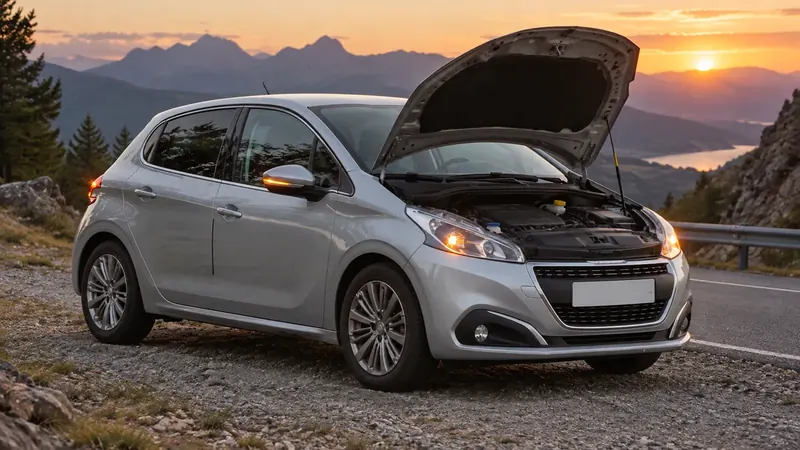
  • A. VIN under the bonnet: the Vehicle Identification Number is engraved on the bodywork near the suspension damper mounting.
  • B. VIN on the dashboard: the number is on a label you can see through the windscreen.
  • C. Manufacturer's label: this tamperproof label is on the front pillar, driver's side.
  • D. Tyre/paint label: this label is on the centre pillar, driver's side.

The manufacturer's label shows:

  • the name of the manufacturer
  • the European Whole Vehicle Type Approval number
  • the Vehicle Identification Number (VIN)
  • the maximum authorised vehicle weight (Gross Vehicle Weight or GVW)
  • the maximum authorised vehicle + trailer weight (Gross Train Weight or GTW)
  • the maximum weight on the front axle
  • the maximum weight on the rear axle

The tyre/paint label shows:

  • the tyre pressures, unladen and laden
  • the tyre specification: dimensions, type, and load and speed indices
  • the spare tyre pressure
  • the paint colour code

Your car may have been fitted from new with tyres that have higher load and speed indices than those on the label. This does not change the inflation pressure.

Frequently Asked Questions

Where is the VIN on a Peugeot 208?

The VIN is engraved on the bodywork under the bonnet, near the suspension damper mounting. It is also on a label on the dashboard that you can see through the windscreen.

Where is the tyre pressure label on my Peugeot 208?

The tyre/paint label is on the centre pillar, driver's side. It shows the unladen and laden tyre pressures, the tyre specification, the spare tyre pressure and the paint colour code.

What is the maximum nose weight on a Peugeot 208 towbar?

The maximum authorised nose weight is 46 kg for every petrol and diesel engine listed. For petrol engines this is the maximum authorised nose weight, and for diesel engines it is the recommended nose weight.

How fast can I drive when towing with a Peugeot 208?

Never exceed approximately 60 mph (100 km/h) when towing, and observe the local legislation in force. Remember that braking distances are longer with a trailer.

Keep these figures in mind before you hitch up a trailer or load up your 208, and always check the registration document and manufacturer's label for the exact values for your car. If you are unsure about anything, ask a PEUGEOT dealer or a qualified workshop.

More Peugeot 208 Guides

If a lamp lights up on your dashboard, see our guides to the Peugeot 208 red warning lights, the Peugeot 208 orange warning lights and the Peugeot 208 green and blue indicator lamps.

Don't forget to follow us on Instagram for more Peugeot guides!

This is an independent guide, not an official Peugeot publication. If in doubt, contact a PEUGEOT dealer or a qualified workshop before carrying out any work.

Related guides: Peugeot 208 model guides.

Cover adapted from a photograph by Harvey Bold — Wikimedia Commons, CC0 (AI edited).
Related guides

Guide ·

Peugeot 208 AdBlue Refilling (2015-present)

BlueHDi Diesel engines on the Peugeot 208 use AdBlue to clean up their exhaust gases. This guide explains what the SCR system does, how far you can drive on a tank of AdBlue, how to store and handle the fluid s…

Guide ·

Peugeot 208 12 V Battery and Jump Starting (2015-present)

A flat 12 V battery is one of the most common reasons a car will not start. This guide explains how to reach the battery on your Peugeot 208, how to start the engine using another battery or a booster, how to c…