Peugeot 5008 Fuse Box and Fuses (2017-present)
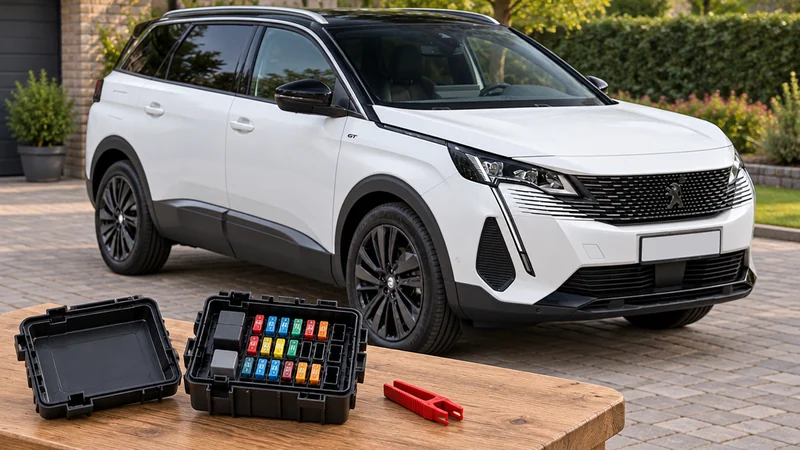
Hello and welcome. In this article we look at the fuseboxes and fuses on the Peugeot 5008 II (2017-present). We will cover where the two fuseboxes are, how a fuse is changed and which fuse protects wh
Peugeot 5008 II fuel tank capacity, the 6-litre reserve, which side the filler flap is on, and how to restart a 1.5 BlueHDi after running out of fuel.
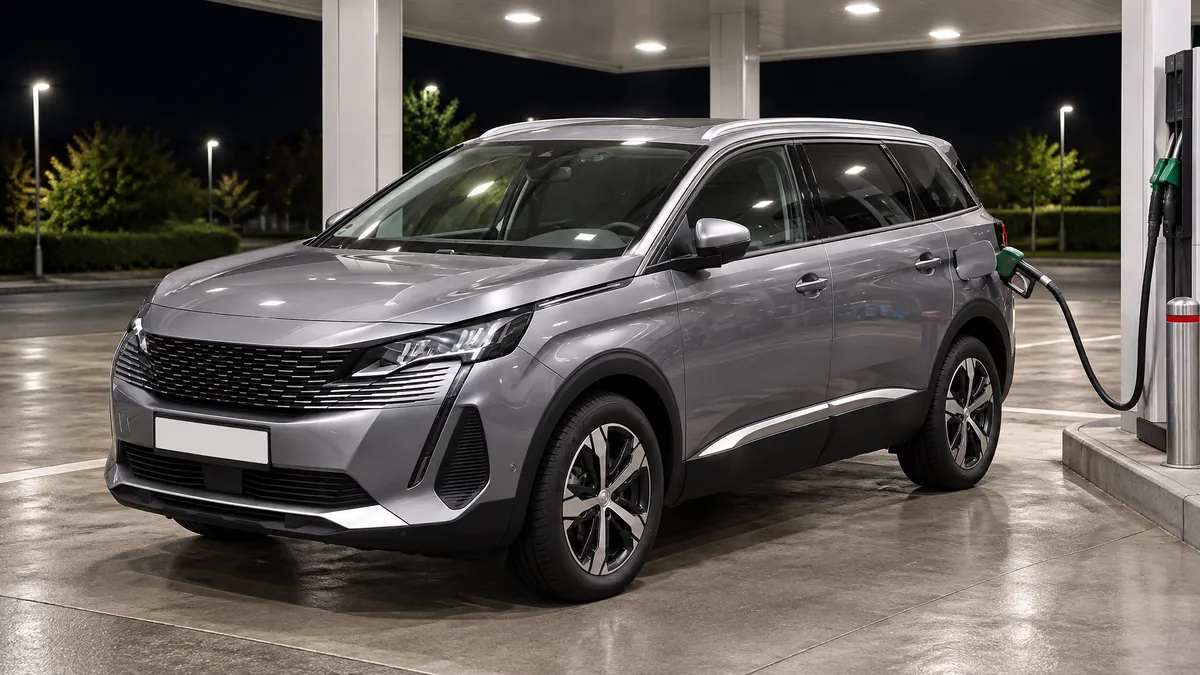
The Peugeot 5008 II (2017-present) features a 56-litre fuel tank with roughly 6 litres in reserve, and requires at least 10 litres per top-up for the fuel gauge to update. Plug-in hybrid models also include a pressure-equalising delay on the filler flap after you press the dashboard button.
The tank holds approximately 56 litres, with a reserve of approximately 6 litres. When the low fuel warning lamp first comes on, about 6 litres remain. A small arrow next to the lamp shows which side the filler flap is on.
Scroll the table sideways.
| Section | In short |
|---|---|
| Low fuel level | 56 L tank capacity, 6 L reserve and warning arrow |
| Refuelling | Filler flap opening, hybrid delay and compatible fuels |
| Diesel misfuel prevention device | Mechanical restrictor that blocks petrol nozzles |
| Restarting a 1.5 BlueHDi after running out of fuel | Ignition priming steps after running the tank dry |
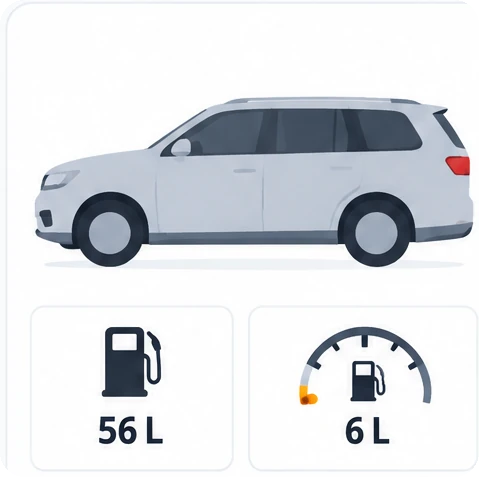
gives these fuel tank figures
When the fuel reaches the low level, a warning lamp lights up on the instrument panel, with a message and an audible signal. When the lamp first comes on, about 6 litres of fuel remain.
Until you add enough fuel, the lamp, message and audible signal appear every time you switch on the ignition. While you drive, the message and audible signal repeat more and more often as the fuel level drops towards 0. Refuel as soon as possible so you do not run out of fuel.
A small arrow next to the warning lamp shows which side of the car the fuel filler flap is on.
If your car has Stop & Start or e-Auto mode, never refuel with the engine in STOP mode or in stand-by. You must switch off the ignition first.
Always add at least 10 litres of fuel, otherwise the fuel gauge will not register it. When you open the filler flap, you may hear air rushing in. This is entirely normal and comes from the fuel system being sealed. Depending on the version, the filler cap is built into the filler flap or has to be unscrewed.
To refuel in complete safety:
On rechargeable hybrid vehicles, the filler flap may not open for several minutes after you press the button on the dashboard. You will hear a sound when it opens. If the flap is stuck, press and hold the dashboard button for more than 3 seconds.
Your car has a catalytic converter, which helps reduce harmful emissions in the exhaust gases. Petrol engines must use unleaded fuel, and the filler neck is narrower so that only unleaded petrol nozzles fit.
If you have put the wrong fuel in your car, you must have the fuel tank drained and filled with the correct fuel before the engine is started.
Depending on the country of sale, Diesel cars have a mechanical misfuel prevention device that stops you filling the tank with petrol. It sits in the filler neck and you can see it when the filler cap is removed.
If you put a petrol nozzle into the filler neck of a Diesel car, the nozzle touches the device's flap. The flap stays closed and you cannot fill the tank. Do not force it: use a Diesel nozzle instead.
The device does not stop you filling from a jerrycan, whatever the fuel type.
Diesel pump nozzles can be different in other countries, so the device may make refuelling impossible abroad. Before you travel, check with a PEUGEOT dealer that your car suits the fuel pumps in the countries you plan to visit.
If a Diesel engine runs out of fuel, you need to prime the fuel system. Before you start, it is essential to put at least 5 litres of Diesel into the tank.
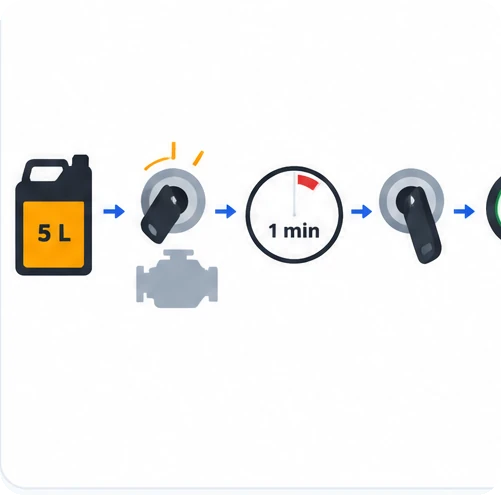
On 1.5 BlueHDi engines:
If the engine does not start at the first attempt, do not keep trying. Start the procedure again from the beginning.
The Peugeot 5008 II fuel tank holds approximately 56 litres, with a reserve of approximately 6 litres.
Look at the low fuel warning lamp on the instrument panel. A small arrow next to it shows which side of the car the fuel filler flap is on.
You need to add at least 10 litres of fuel for the fuel gauge to register it.
Put at least 5 litres of Diesel in the tank, then on 1.5 BlueHDi engines switch on the ignition without starting, wait around 1 minute, switch off and then start the engine. If it does not start first time, repeat the procedure rather than carrying on trying.
Refuelling your 5008 is simple once you know where the flap is, which fuel to use and when to stop filling. Keep an eye on the low fuel warning, and if anything goes wrong at the pump, follow the steps in or contact a PEUGEOT dealer or a qualified workshop.
To understand the other lamps on your dashboard, see our guides to Peugeot 5008 red warning lights, Peugeot 5008 orange warning lights and Peugeot 5008 green and blue indicator lamps.
Don't forget to follow us on Instagram for more Peugeot guides!
This is an independent guide, not an official Peugeot publication. If in doubt, contact a PEUGEOT dealer or a qualified workshop before carrying out any work.
Related guides: Peugeot 5008 model guides; Peugeot 5008 ii 2017 current 12v battery and jump starting.
Cover adapted from a photograph by © M 93 — Wikimedia Commons, CC BY-SA 3.0 de (AI edited).
Hello and welcome. In this article we look at the fuseboxes and fuses on the Peugeot 5008 II (2017-present). We will cover where the two fuseboxes are, how a fuse is changed and which fuse protects wh
Hello and welcome. In this article we look at the 12 V battery on the Peugeot 5008 II (2017-present). We will cover safe handling, jump starting, charging, and disconnecting and reconnecting it, along
Hello and welcome. In this post we gather the technical specifications for the Peugeot 5008 II (2017-present). We'll look at engine and gearbox data, towed loads and nose weights, hybrid motor and bat